
Is a Quartz Pool Finish Upgrade Worth It?
A quartz pool finish upgrade is one of the smartest investments a pool owner can make — and here’s the short answer on why:
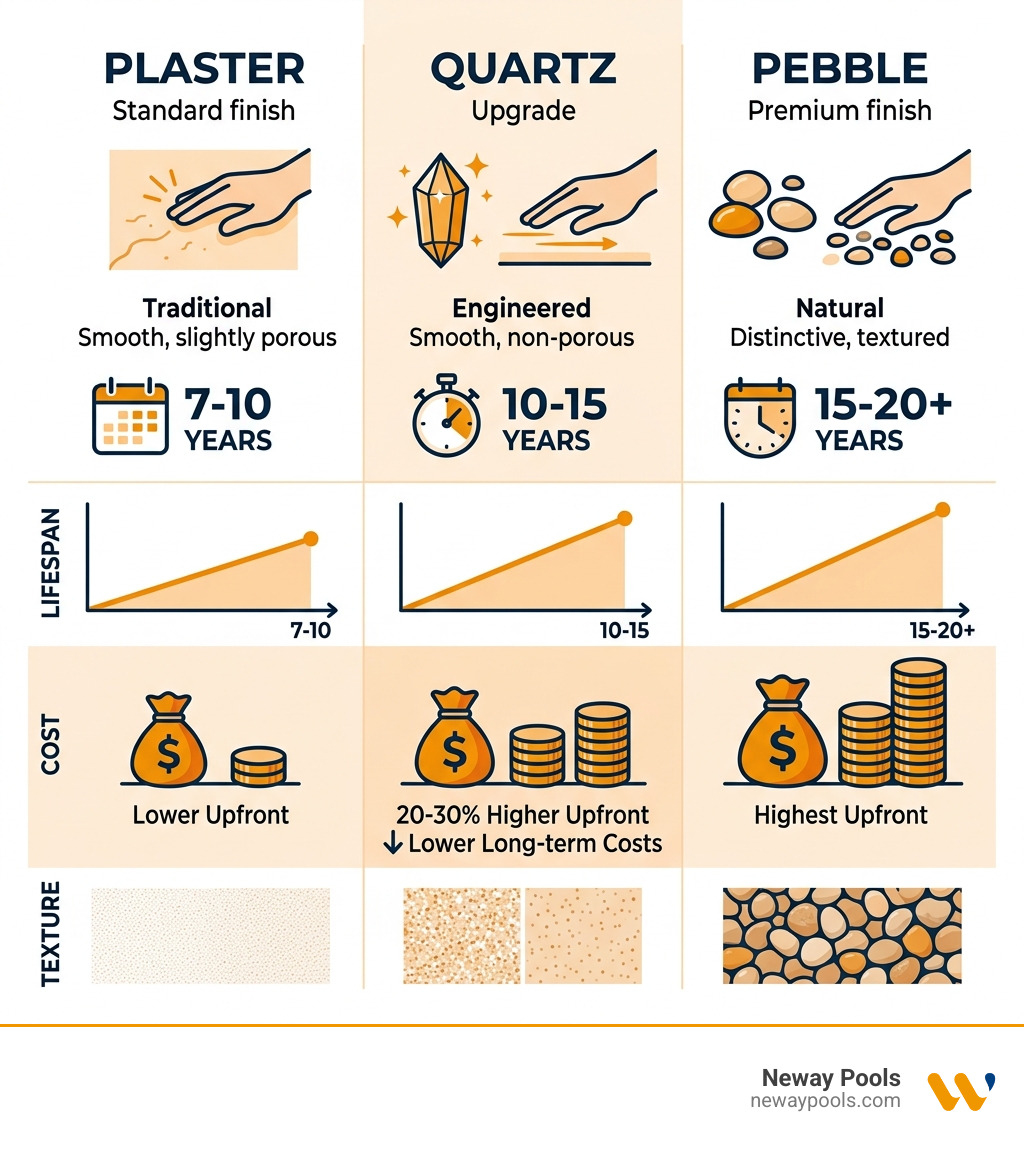
- Longer lifespan: Quartz lasts 10-15 years, versus 7-10 years for standard plaster
- Better durability: Quartz is one of Earth’s hardest minerals, resisting staining, etching, and chemical erosion
- Smoother feel: Softer underfoot than pebble, more refined than traditional plaster
- 20-30% higher upfront cost than marcite plaster, but lower long-term resurfacing costs
- Color stability: Ceramic-coated quartz granules resist fading and UV bleaching
- Best for harsh climates: Especially valuable in Florida and the Southeast, where plaster can degrade in as few as 5 years
Your pool’s interior finish does more than look pretty. It protects the entire shell, affects how water feels on your skin, and shapes how your backyard looks every single day. Traditional plaster has been the default for decades — but it’s porous, prone to staining, and tends to roughen up faster than most homeowners expect.
Quartz changes that equation. It bridges the gap between basic plaster and premium pebble: more durable than one, smoother than the other — and increasingly the go-to choice for homeowners who want a finish that holds up and looks great for years.
I’m Lucas Pimenta, General Manager here at Neway Pools, with over 20 years of experience guiding homeowners through every stage of pool design and construction — including helping them navigate the right quartz pool finish upgrade for their climate, budget, and lifestyle. Below, I’ll walk you through everything you need to make a confident, informed decision.
Understanding the Quartz Pool Finish Upgrade
When we talk about a quartz pool finish upgrade, we are looking at a material that was specifically engineered to solve the “diva moments” of traditional plaster. In the industry, we often refer to it as a high-tech hybrid. It takes the smooth application of cement and marble dust but reinforces it with crushed quartz aggregate.
Quartz is one of nature’s hardest minerals, ranking significantly higher on the Mohs scale of mineral hardness than the marble dust used in standard marcite. This hardness makes the surface non-porous and chemically inert. In plain English: your pool water won’t “eat” your finish as easily when the pH drifts, and algae has a much harder time taking root.
Silica-Based vs. Marble-Based Quartz
One of the most important things for homeowners in our service areas—from the humid coast of Wilmington, NC, to the heat of Panama City, FL—to understand is the difference between silica-based and marble-based quartz.
Standard quartz finishes often use marble as the primary filler. However, premium options like PebbleQuartz Pool Finish: The Preferred Quartz Finish utilize a silica-based aggregate. Silica is much more durable than marble, providing a surface that can withstand the intense UV rays and heavy bather loads common in the Southeast. This is a critical component of a high-quality gunite pools guide overview when planning a long-term backyard investment.
The Role of Ceramic-Coated Granules
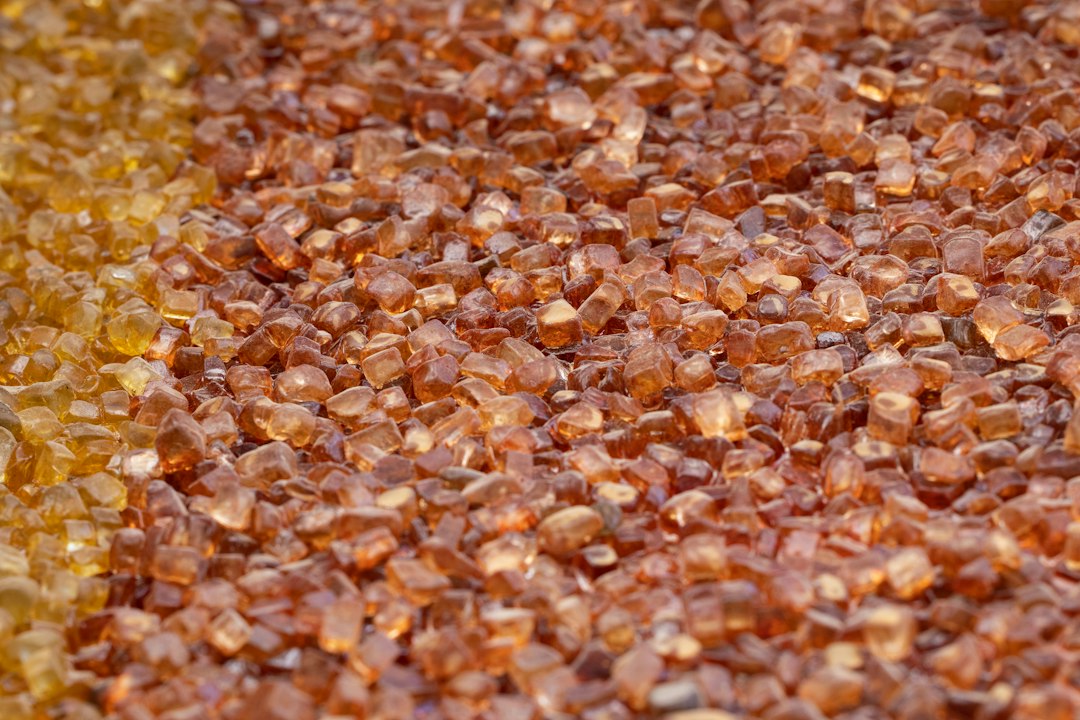
Why does quartz look so much more vibrant than plaster? Many modern quartz finishes use ceramic-coated granules. These are quartz pieces where pigments are baked onto the surface at extremely high temperatures. This process creates a permanent bond, ensuring the color doesn’t leach, bleed, or fade over time. As the “cream” of the cement wears away slightly over the first year, more of these lustrous quartz crystals are exposed, meaning your pool often looks better at year three than it did on day one.
Selecting the Right Color for Your Quartz Pool Finish Upgrade
Choosing a color is about more than just picking a shade of blue. The color of your finish interacts with sunlight, depth, and surrounding landscaping to create the final “water hue.”
- Light Blues and Whites: These provide a classic, crisp “resort” look. They reflect more sunlight, which can help keep the water slightly cooler in the Georgia or Florida heat.
- Medium Teals and Aquamarines: These create a tropical feel that can deepen and evolve as the sun moves across the sky.
- Dark Grays and Blacks: These create a “mirror” effect on the surface, perfect for modern, minimalist designs. They also act as natural solar heaters, absorbing warmth from the sun.
Because quartz finishes use pigmented cement and colored aggregates, you get a much more consistent look than dyed plaster, which is notorious for streaking and mottling.
Maximizing Your Quartz Pool Finish Upgrade Investment
To get the best “bang for your buck,” the installation process must be flawless. A quartz pool finish upgrade is only as good as the surface it’s bonded to.
- Substrate Preparation: If we are resurfacing an old pool, we perform “scarification.” This involves roughening the old shell to ensure a mechanical bond. We also address any “hollow” spots or delamination before the new finish goes on.
- Timing: The best time for an upgrade is typically during the “off-season” (late fall or early spring in the Southeast), though our crews operate year-round.
- Protection: We often recommend a microglass protectant to further seal the surface. This advanced treatment fills the microscopic pores in the cement, making the finish almost entirely immune to chemical erosion and staining.
Comparing Quartz to Plaster and Pebble Finishes
When evaluating the value of your upgrade, it helps to see how quartz sits in the middle of the “Good-Better-Best” spectrum.
| Feature | Marcite Plaster | Quartz Aggregate | Pebble Finish |
|---|---|---|---|
| Average Lifespan | 7-10 Years | 10-15 Years | 20+ Years |
| Upfront Cost | Baseline | 20-30% More | 45-60% More |
| Texture | Very Smooth | Smooth/Refined | Textured/Bumpy |
| Stain Resistance | Low | High | Very High |
| Maintenance | High Sensitivity | Moderate | Low Sensitivity |
Why Choose Quartz Over the Others?
Pebble is often the longest-lasting option, but some swimmers find it too rough on their feet, and its natural, textured look is not always the right fit for a formal pool design.
Quartz is the “Goldilocks” option. It offers a significant jump in durability over plaster without the high price tag or the rough texture of pebble. For families with young children who spend hours playing in the shallow end, the skin comfort of a quartz finish is often the deciding factor. It provides enough slip resistance for safety but remains silky enough to prevent “pool toe” (the raw skin caused by friction against rough surfaces).
You can learn more about the premium end of the spectrum in our guide to Pebble Tec pool finish options.
The Long-Term Value of a Quartz Pool Finish Upgrade
In the Southeast, our pools face a unique set of challenges. Between the salt air in Pensacola and the 90°F+ humidity in Atlanta, standard plaster often fails prematurely. In Florida specifically, standard plaster might only last 5 to 10 years before it becomes rough and stained. A quartz pool finish upgrade in these climates typically pushes that lifespan to 15 years or more.
Economic Benefits
While you will pay 20% to 30% more upfront for quartz, the math favors the upgrade over time.
- Reduced Chemical Use: Because quartz is less porous, it doesn’t “leach” calcium into the water as much as plaster. This means you spend less on balancing chemicals.
- Resale Value: A shimmering, well-maintained quartz finish is a major selling point. It tells a potential buyer that the pool has been upgraded with premium materials, reducing their immediate need for pebblecrete pool repairs or resurfacing.
- Fewer Resurfacings: Over a 20-year period, a plaster pool will likely need to be resurfaced twice. A quartz pool will likely only need it once. When you factor in the labor and water costs of draining and refilling a pool, the quartz finish pays for itself.
Resilience to the “Florida Factor”
For our clients in the Panhandle and coastal North Carolina, salt air and high heat are the enemies. Quartz is chemically inert, meaning it doesn’t react with the salt in the air or the salt-chlorine generators many modern pools use. It also holds its color under the intense UV exposure that typically bleaches dyed plaster within a few seasons.
Frequently Asked Questions about Quartz Pool Finishes
How long does a quartz pool finish typically last compared to other options?
On average, a quartz finish will last between 10 and 15 years. In contrast, traditional marcite plaster usually starts to show significant wear, staining, or “sandpaper” texture after 7 to 10 years (and often sooner in harsh climates). If you want a finish that lasts 20 years or more, you would need to look at a pebble finish, but quartz offers the best balance of longevity and smoothness for the price.
What maintenance is required to keep a quartz finish looking glossy?
The key to keeping your quartz pool finish upgrade looking like new is managing the Langelier Saturation Index (LSI). This is a fancy way of saying you need to keep your water balanced so it is neither “hungry” (corrosive) nor “oversaturated” (scale-forming).
- Brushing: Use a nylon brush regularly, especially in the first year, to remove any loose plaster dust and keep the quartz crystals exposed.
- Chemistry: Keep your pH between 7.4 and 7.6 and maintain proper calcium hardness. If the water is too soft, it will try to pull calcium out of your finish, leading to etching.
What warranties are typically offered for quartz pool upgrades?
Warranties vary by brand and applicator, but here is what you can generally expect:
- Product Warranty: Most manufacturers offer a 5 to 10-year limited warranty on the material itself.
- Applicator Warranty: Some brands offer a lifetime warranty if the finish is installed by an approved or “Platinum Level” certified applicator.
- Workmanship: At Neway Pools, we provide a 3-year warranty on hardscapes and plumbing, ensuring the structural integrity of your remodel is protected.
Note: Most warranties require you to register your pool within 30 days of installation, so don’t skip that paperwork!
Transforming Your Backyard Oasis
At Neway Pools, we don’t just build pools; we craft spaces where memories are made. Whether you are in the heart of Atlanta, the suburbs of Cumming, GA, or the beautiful beaches of Wilmington, NC, we understand that a pool is a significant investment in your home and your family’s happiness.
Upgrading to a quartz finish is one of the most effective ways to ensure that investment stays beautiful for a decade or more. Our team, led by Lucas Pimenta, specializes in custom gunite construction and premium renovations. We take pride in using materials that stand up to the unique demands of the Southeast climate while delivering the aesthetic you’ve always dreamed of.
If your current pool surface feels like sandpaper or looks dull and dated, it might be time to consider a Pensacola pool remodeling and renovation project. From the initial design to the final “shimmer” of your new quartz surface, we are here to guide you every step of the way.
Ready to Shimmer?
Your backyard deserves to be a luxurious escape. By choosing a quartz pool finish upgrade, you are choosing durability, beauty, and comfort. It truly is the best way to get the most “bang for your buck” in today’s pool market. Let’s build something inspiring together.