
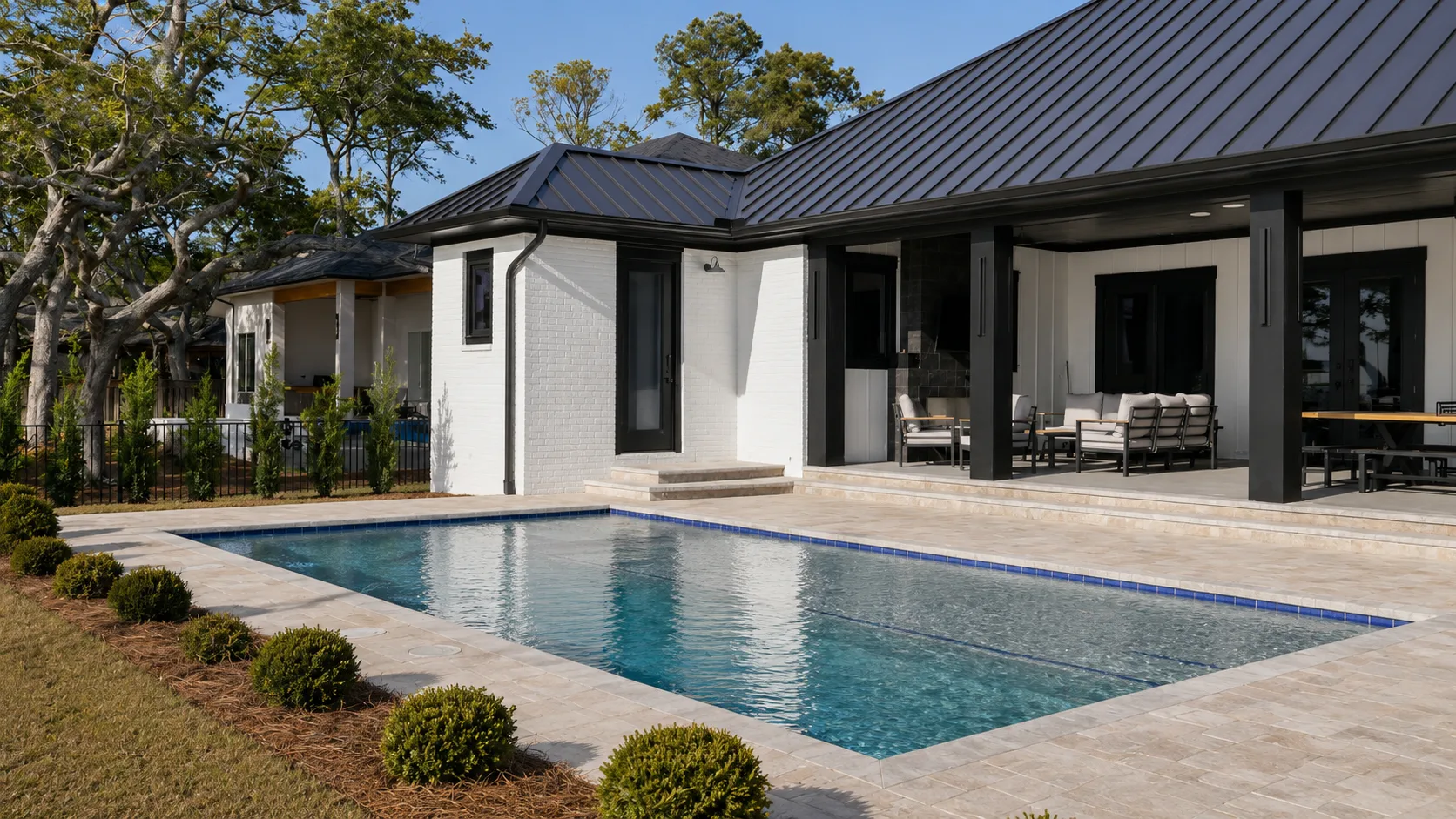
What Are Gunite Pools? The Complete Answer
Gunite pools are custom-built inground swimming pools constructed by spraying a dry mix of cement and sand onto a steel rebar framework, then adding water at the nozzle to create a seamless, rock-solid concrete shell.
Here’s what you need to know at a glance:
| Feature | Gunite Pools |
|---|---|
| Construction time | 3-6 months (realistic) |
| Lifespan | 50+ years with proper maintenance |
| Cost (2025) | $50,000-$120,000+ nationally |
| Resurfacing | Every 7-20 years ($10,000-$20,000) |
| Annual maintenance | $2,700+ per year |
| Best for | Custom shapes, luxury features, long-term investment |
| Key advantage | Unlimited design flexibility |
| Key drawback | Longer build time and higher upfront cost |
Unlike fiberglass pools that arrive pre-molded, or vinyl liner pools that rely on a replaceable membrane, gunite pools are built from scratch on your property. That means you control every dimension, curve, depth, and feature — from infinity edges to integrated spas.
The construction method has been the industry standard for custom pools since the 1940s, and it remains the go-to choice for homeowners who want a truly one-of-a-kind backyard experience that will last for generations.
I’m Lucas Pimenta, General Manager at Neway Pools, and over my 20+ years of hands-on experience designing and building custom gunite pools across North Carolina, Florida, Georgia, and Alabama, I’ve guided hundreds of families through every stage of this process. In this guide, I’ll walk you through everything you need to make a confident, informed decision.
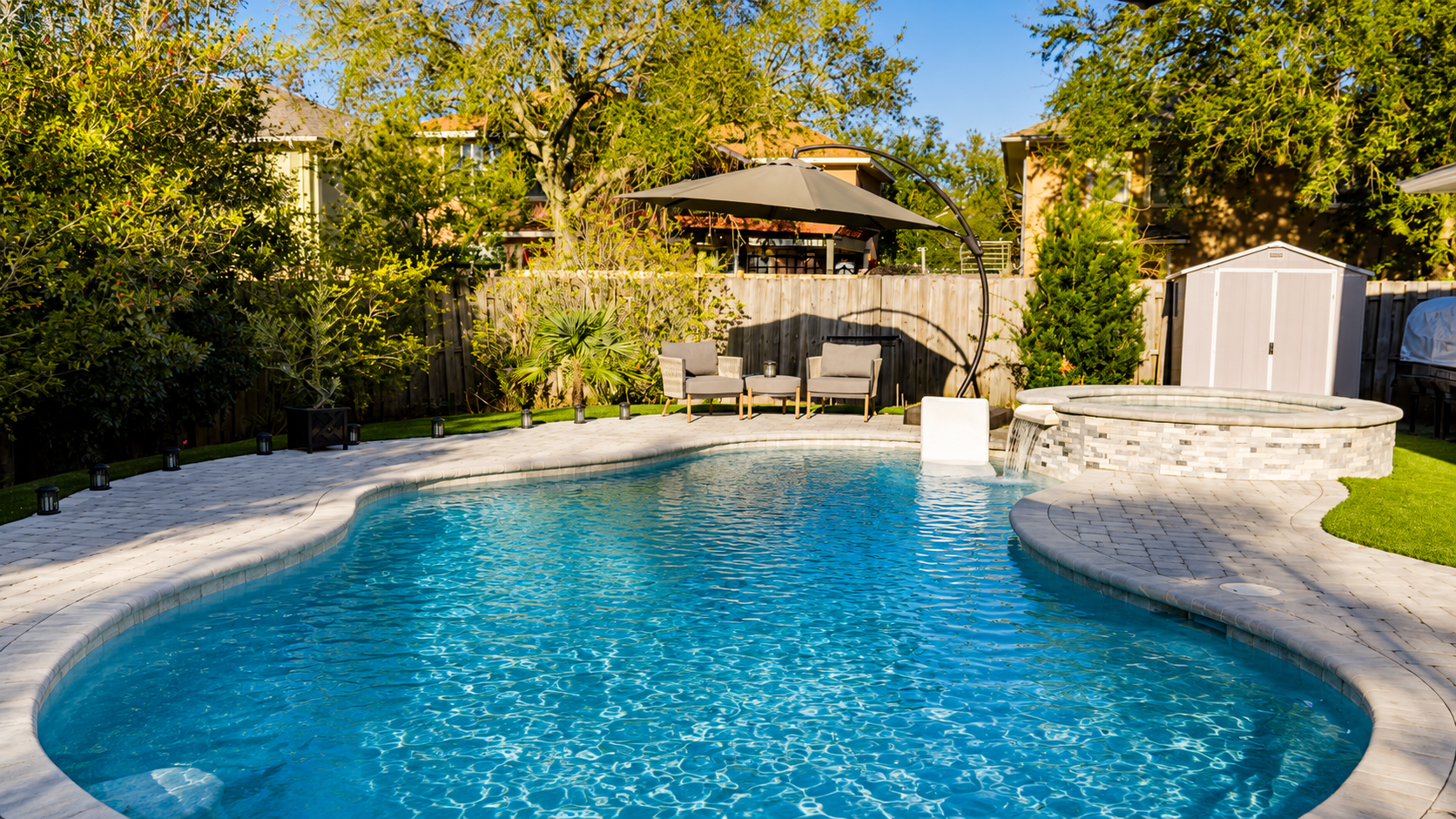
Simple guide to gunite pools:
Understanding the Composition of Gunite
When we talk about gunite pools, we are talking about a specific type of concrete application. While many people use the terms “concrete” and “gunite” interchangeably, there is a technical difference that matters for your pool’s longevity.
Gunite is a mixture of cement and sand (fine aggregate). The defining characteristic of gunite is the “dry-mix” process. Unlike traditional concrete, which is mixed with water in a truck before it arrives at your home, gunite is pushed through a hose using high-pressure compressed air as a dry powder. Water is only introduced at the very end, right at the nozzle, as the nozzleman sprays it onto the pool’s frame.
This method allows for incredible moisture control. Because the water is added at the last second, the resulting shell is much denser and stronger than poured concrete. It also means we can pause and resume the application without creating “cold joints”—those pesky seams where new concrete meets old, which are often the first places to crack.
According to All About Gunite Pools: Cost, Material and More, this pneumatic application creates a surface with superior structural density. For homeowners, this translates to a pool shell that can withstand the shifting soils of Georgia’s clay or Florida’s sandy coasts. If you want to dive deeper into why this matters, check out our more info about gunite pool builders.
The Step-by-Step Gunite Pool Construction Process
Building gunite pools is a marathon, not a sprint. While some builders might quote you 8 to 12 weeks, industry data and our own experience in the Southeast show that a realistic timeline is closer to 3 to 6 months (12 to 24 weeks). This timeline accounts for permitting, weather delays, and the essential curing phase.
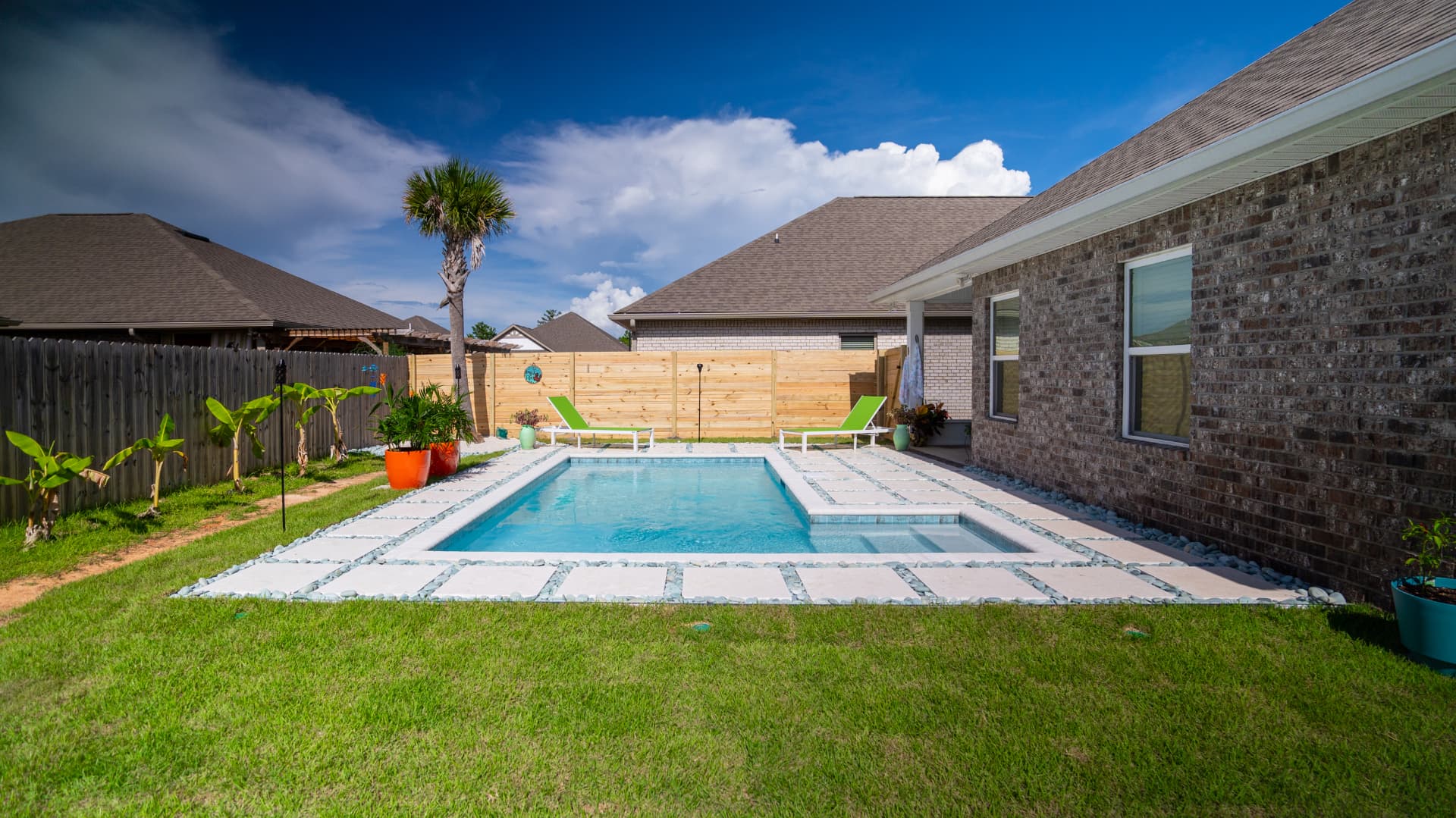
The process involves several distinct phases:
- Permitting and Design: 2-8 weeks depending on your local municipality (California takes longer, but in Florida and Georgia, we usually see 2-4 weeks).
- Excavation: 1-3 days.
- Plumbing and Electrical: 1-3 days.
- Steel Reinforcement (Rebar): 1-3 days.
- Gunite Application: 1-2 days.
- Curing: 28-30 days (non-negotiable).
- Tile and Coping: 5-10 days.
- Interior Finish (Plaster/Pebble): 1-3 days.
Excavation and Steel Reinforcement
Once the utility lines are marked and we’ve surveyed the site, we break ground. This is where your vision starts taking a physical shape. After the hole is dug, we install a “cage” made of steel rebar.
This rebar grid is the skeleton of your pool. It provides the tensile strength needed to hold thousands of gallons of water. We use a specific “steel schedule” to ensure the bars are spaced correctly to handle the weight and pressure of the earth around it. In areas with shifting soil, we often add extra steel to ensure the pool doesn’t move or crack over time.
Application and the 28-Day Curing Period
The day we “shoot” the gunite is the most exciting part of the build. A team of specialists uses high-velocity spray to fill the rebar cage. The skill of the nozzleman is critical here; they must adjust the water-to-cement ratio in real-time to ensure the gunite adheres perfectly to the vertical walls and tight curves.
Once the shell is sprayed, the “waiting game” begins. Gunite doesn’t just “dry”—it cures through a chemical reaction. This process takes 28 to 30 days to reach its full structural hardness. During the first 7 to 10 days, you’ll actually need to “water” your pool shell with a garden hose a few times a day. This keeps the concrete from drying too fast, which prevents surface shrinkage cracks.
Interior Finishes and Final Touches
After the shell has cured, we apply the decorative and functional layers. This includes the tile line (which prevents waterline stains) and the coping (the cap on the edge of the pool wall).
The final step is the interior finish. While traditional white plaster was the standard for years, many of our clients now opt for pebble finishes. These are more durable and offer a more natural look. If you ever run into issues with older surfaces, you can find more info about pebblecrete repairs on our site.
Custom Design and Luxury Features
The biggest reason homeowners choose gunite pools is the “freedom of the curve.” Because we aren’t limited by a factory mold, we can build a pool that fits perfectly into a narrow side yard or follows the natural slope of a hilly lot.
You can find more info about the versatility of custom gunite pool construction to see just how far this flexibility goes. Popular features include:
- Tanning Ledges (Baja Shelves): Shallow areas perfect for lounge chairs and umbrellas.
- Beach Entries: A sloped entry that mimics the ocean shore, great for kids and seniors.
- Waterfalls and Grottos: Natural rock features that add sound and movement.
Integrating Gunite Pools with Outdoor Living
At Neway Pools, we believe the pool is just the centerpiece of an outdoor living space. Because gunite is so sturdy, we can integrate it with other structures. We often build swim-up bars where the barstools are actually built into the pool floor. We also design sunken lounges or fire features that sit right up against the pool wall, creating a seamless transition between water and fire.
Automation is another key element. Modern systems allow you to control your heater, lights, and waterfalls from your smartphone. We always recommend including automation from day one, as retrofitting these systems later can cost twice as much.
Specialized Aquatic Engineering
For those looking for a “resort” feel at home, gunite allows for advanced engineering like:
- Infinity Edges (Vanishing Edges): Where water appears to drop off into the horizon. This typically adds $15,000 to $35,000 to the budget.
- Rimflow Spas: An elevated spa where water overflows on all sides into the pool.
- Glass Walls: Using thick acrylic panels to create a “window” into the pool.
The Advantages and Disadvantages of Gunite Pools
Choosing a pool material is a big decision. Gunite pools are widely considered the “gold standard,” but they aren’t perfect for everyone.
The Pros:
- Extreme Durability: A well-built shell can last 50+ years.
- Unlimited Customization: Any shape, any depth, any feature.
- Higher Home Value: Gunite pools typically increase property value by 5-7%, outperforming vinyl and fiberglass in appraisals.
- Aesthetic Appeal: They look and feel more premium than other options.
The Cons:
- Higher Cost: Initial investment is usually $60,000 to $110,000+.
- Longer Build Time: Expect 3 to 6 months of construction in your backyard.
- Maintenance: The porous surface requires more chemicals to prevent algae.
- Resurfacing: You will need to spend $10,000 to $20,000 every 10 to 15 years for a new finish.
It is also worth noting that prices have increased 30% since 2021 due to rising costs for concrete and rebar.
Why Gunite Pools Excel in Warm Climates
In Florida, Georgia, North Carolina, and Alabama, gunite pools are especially popular. According to research on warm climates and property value, these pools are viewed as luxury assets that make a home much more desirable.
In the humid Southeast, we enjoy a swimming season that can last 9 to 12 months. Gunite handles the intense heat and humidity of a Tallahassee summer or an Atlanta July much better than vinyl liners, which can become brittle and crack under heavy UV exposure.
Challenges: Porosity and Build Time
The main challenge with gunite is its porosity. Because the surface has tiny pores, algae can take hold more easily than on a smooth fiberglass surface. This means you’ll need to be diligent with your chemical balancing.
The build time is also a significant hurdle. While a fiberglass pool might be “swim-ready” in three weeks, a gunite project will turn your backyard into a construction zone for several months. We always tell our clients: plan for 6 months from start to finish to avoid frustration.
2025 Cost Analysis and Regional Pricing
The cost of a pool has changed significantly in the last few years. If you’re looking for more info about the cost to build a gunite pool, you should know that labor and materials now make up a 40/60 split of the total price.
The national average spans $50,000-$120,000, but where you live matters immensely.
Regional Variations in Construction Costs
In our service areas, pricing generally breaks down like this:
- Southeast (Florida, Georgia): A standard 15×30 pool typically starts with a base cost of $50,000 to $75,000. These regions have some of the most competitive pricing in the country due to the high volume of builders and favorable digging conditions.
- Northeast/Midwest: Base costs often jump to $80,000-$100,000 due to shorter building seasons and more difficult soil conditions.
- West Coast: In places like California, you can expect to pay $120,000 to $160,000 for the same pool due to stricter seismic engineering requirements and higher permit fees.
For more specifics on local pricing, check out more info about gunite pool costs in Florida.
The Long-Term Value of Gunite Pools
While the upfront cost is high, a gunite pool is a permanent structure. Unlike a vinyl liner pool, which is often viewed as a “temporary” addition, a gunite pool is an extension of the home’s foundation. This is why they increase property value by 5-7%.
However, you should budget for a small insurance increase: $50-$75 annually on your homeowners’ policy. You should also set aside about $125 a month into a “resurfacing fund” so that when the 10-year mark hits, you’re ready for the maintenance.
Frequently Asked Questions about Gunite Construction
How long does a gunite pool last?
The shell of a gunite pool can easily last 50 to 100 years. It is essentially a rock-solid bunker in your backyard. However, the “skin” (the plaster or pebble finish) needs to be replaced every 7 to 20 years to keep it waterproof and looking fresh.
What are the unique characteristics of gunite as a pool construction material?
Gunite is unique because it is “pneumatically applied.” This high-pressure application creates a tighter bond and a denser structure than traditional poured concrete. It also allows us to build vertical walls and complex curves without the need for expensive wooden forms.
How often does a gunite pool need resurfacing?
Standard white plaster usually lasts 7 to 10 years. Premium pebble finishes can last 15 to 20 years or even longer. You’ll know it’s time to resurface when the finish feels rough on your feet, shows stubborn stains, or begins to “delaminate” (peel away from the shell).
Crafting Your Backyard Masterpiece
At Neway Pools, we don’t just build pools; we craft environments where families come together. Whether you are in the rolling hills of North Georgia, the bustling suburbs of Atlanta, or the coastal beauty of the Florida Panhandle, our team is dedicated to premium quality.
As our General Manager Lucas often says, “A pool is a 50-year commitment. You want to make sure it’s built right the first time.” That’s why we offer a 3-year warranty on all hardscapes and plumbing, giving you peace of mind that your investment is protected. From the initial 3D design to the final “start-up” where we balance your chemicals, we are with you every step of the way.
If you are ready to transform your backyard into an inspiring retreat, start your project by contacting us today. We serve a wide range of locations, including Gulf Breeze, Tallahassee, Atlanta, Cumming, Wilmington, and many more across the Southeast. Let’s build something beautiful together.
For Florida information click here.
For Georgia information click here.