
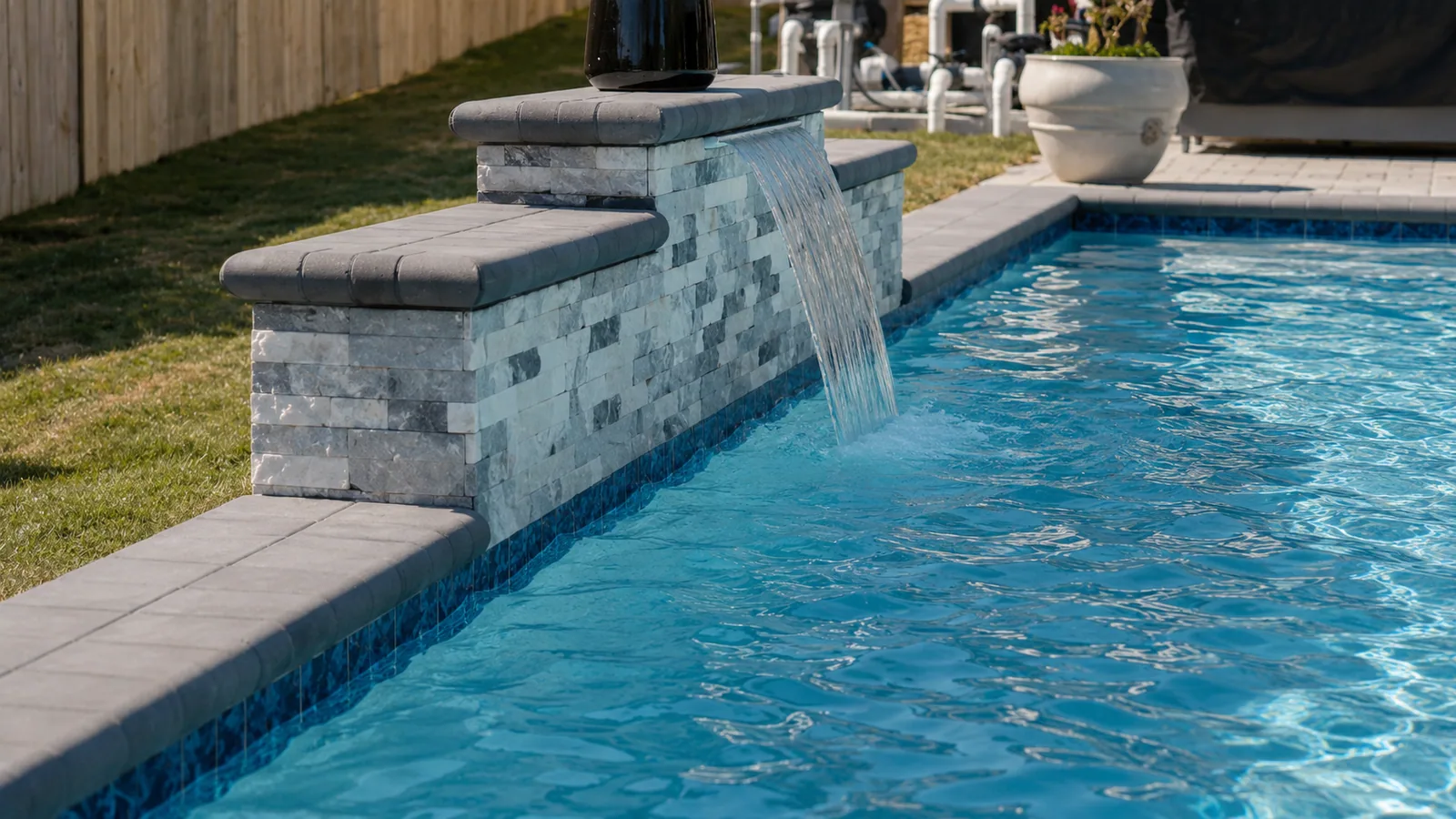
Why Pool Water Features Are One of the Best Upgrades for Your Backyard
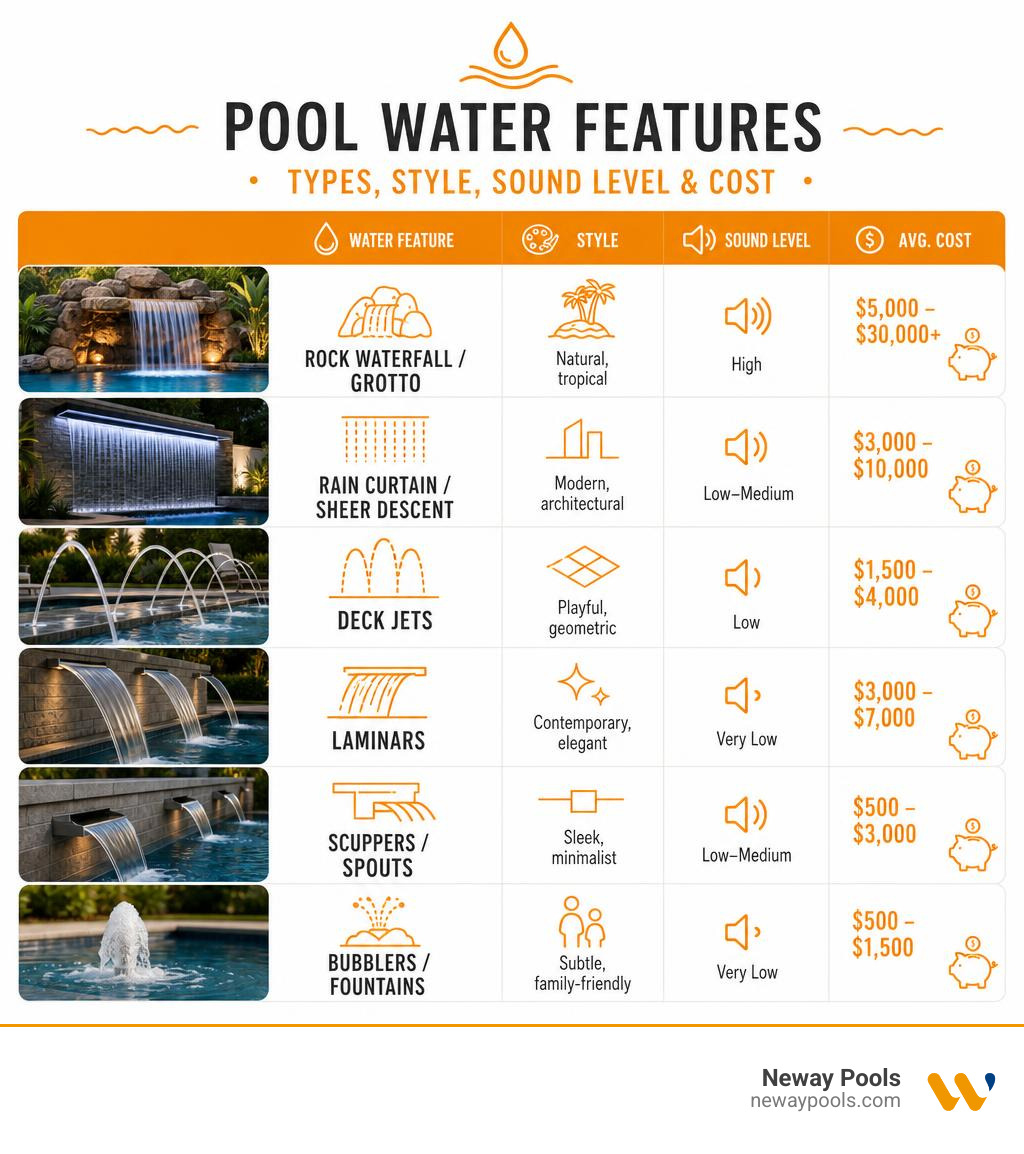
Pool water features are one of the most impactful upgrades you can make to any backyard pool. Here’s a quick overview of the most popular types and what sets them apart:
| Water Feature | Style | Sound Level | Avg. Cost |
|---|---|---|---|
| Rock Waterfall / Grotto | Natural, tropical | High | $5,000–$30,000+ |
| Rain Curtain / Sheer Descent | Modern, architectural | Low–Medium | $3,000–$10,000 |
| Deck Jets | Playful, geometric | Low | $1,500–$4,000 |
| Laminars | Contemporary, elegant | Very Low | $3,000–$7,000 |
| Scuppers / Spouts | Sleek, minimalist | Low–Medium | $500–$3,000 |
| Bubblers / Fountains | Subtle, family-friendly | Very Low | $500–$1,500 |
There’s something almost magnetic about moving water. The sound, the light, the sense of life it adds to a space — it’s hard to explain until you’re standing next to it in your own backyard.
That’s exactly what the right pool water features can do. They turn a functional pool into something you can’t stop looking at.
Beyond looks, water features serve real purposes: masking neighborhood noise, marking shallow areas for safety, boosting property value by an estimated 5–8%, and giving your outdoor space a resort-quality feel that makes you actually want to use it more.
Whether you’re building a new custom pool or upgrading an existing one, this guide breaks down every major option — from dramatic rock grottoes to sleek laminar jets — so you can make a confident, informed decision.
I’m Lucas Pimenta, General Manager at Neway Pools, and over the past 20 years I’ve helped hundreds of Southeast families design and build custom gunite pools with pool water features that truly transform how they live outdoors. In this guide, I’ll walk you through everything I’ve learned from those projects so you can choose the features that are right for your space, your style, and your budget.
Explore more about pool water features:
Popular Types of Pool Water Features for Modern Backyards
When choosing the right Water Feature for Pool Area, the first step is understanding how different options move water, create sound, and fit into your overall landscaping. The perfect feature should complement your home’s architecture while providing the exact sensory experience you are looking for—whether that is the roaring crash of a mountain stream or the whisper of a modern sheet of glass.
Natural Rock Waterfalls and Grottoes
If you want your backyard to feel like a hidden tropical lagoon or a mountain spring, a rock waterfall is the undisputed champion. These features use natural stone or highly engineered, lightweight imitation rocks to cascade water over multiple tiers directly into your pool.
For a truly immersive experience, a grotto takes things a step further by creating a rock cavern you can actually swim into. Modern pre-engineered options are molded from real stone formations (like Oklahoma sandstone) to deliver incredible realism without the massive weight of natural boulders. This particular kit features a built-in cave seating area that supports over 500 lbs and requires a robust water flow rate of 4,000 to 6,000 GPH to create a lush, full sheeting effect.
Whether you choose Natural Rock Waterfalls for Your Pool or opt for Natural Looking Imitation Rock Waterfalls, these rustic features excel at masking loud traffic or neighborhood noise with rich, layered acoustic tones.
Sleek Rain Curtains and Sheer Descents
For modern, geometric gunite pools, traditional rock piles can look out of place. That is where rain curtains and sheer descents shine.
A sheer descent projects a smooth, unbroken sheet of water that looks like a pane of glass extending from a raised wall or bond beam. A Rain Curtain Pool Water Feature, on the other hand, releases individual, heavy droplets of water from an elevated structure, mimicking the soothing sound and visual texture of a warm summer rain shower.
Because droplet-style curtains maintain their visual integrity over longer drops than sheer sheets (which break up in the wind at heights over 3 to 4 feet), they are often suspended from pergolas, pavilions, or custom structures 6 to 8 feet above the water. They require roughly 8 gallons per minute (GPM) per linear foot of width. You can also explore a Stainless Steel Water Curtain or a Rain Curtain Custom Fountain to add an ultra-modern, industrial edge to your pool deck.
Dynamic Deck Jets and Laminars
Deck jets and laminars are installed directly into your pool deck, shooting elegant streams of water through the air and into the pool. While they might look similar at first glance, their mechanics and visual effects are completely different:
- Deck Jets: These are simple, budget-friendly nozzles that spray a playful, arching stream of water typically reaching 4 to 5 feet high before breaking up into droplets. They are fantastic for kids to play under and add great movement to the pool.
- Laminars: These represent the deluxe version of deck jets. Utilizing internal motorized components and flow-straightening media, laminars project a perfectly smooth, glass-like, solid tube of water that holds its arc for 6 to 8 feet without a single splash.
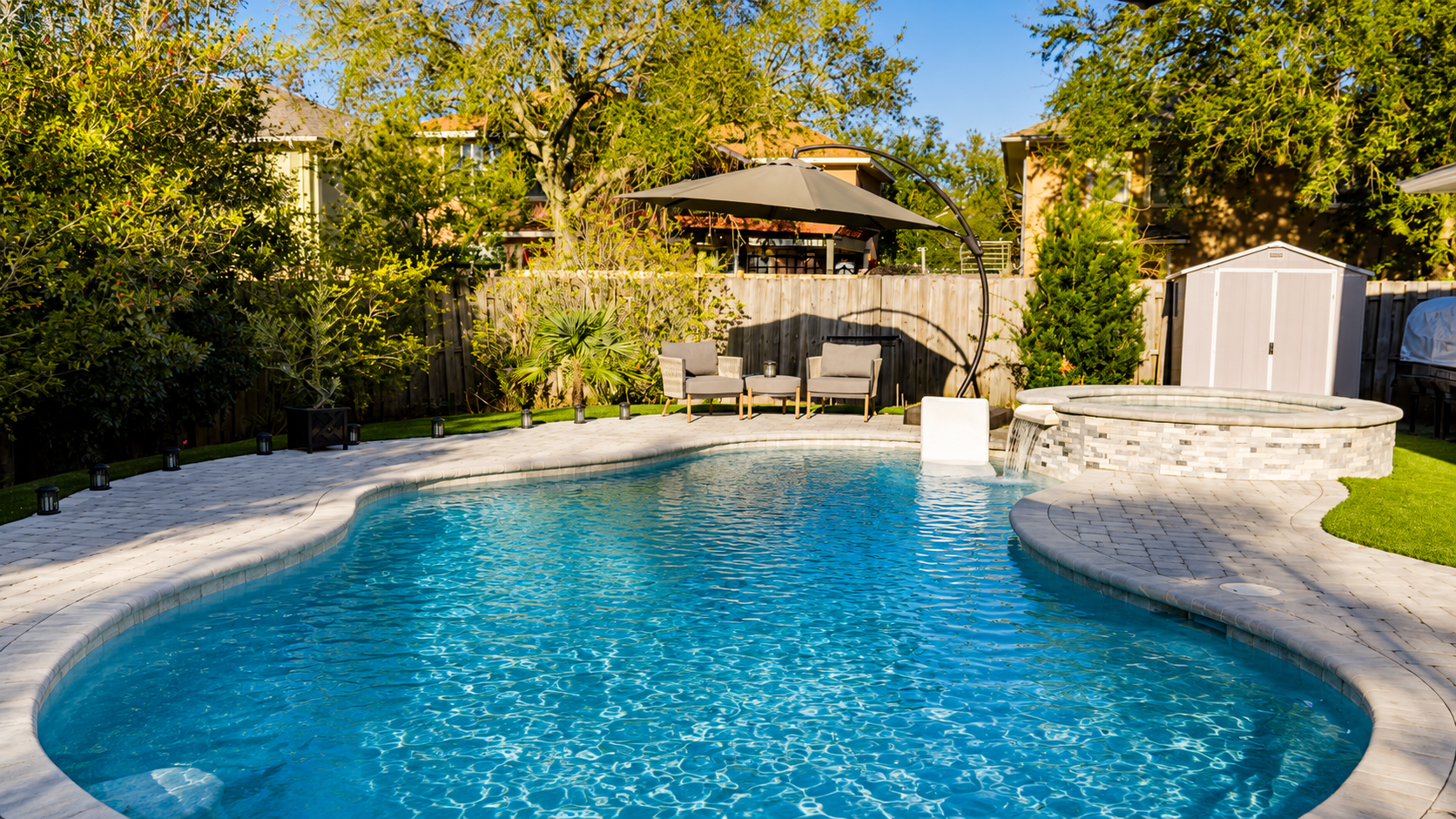
When paired with integrated LED lighting, laminars carry light through the entire stream like a fiber-optic cable, making the water glow in vibrant colors as it enters the pool.
Elegant Spouts and Scuppers as Pool Water Features
Scuppers and spouts are architectural fixtures mounted on raised walls, steps, or bond beams. Historically found in classic Mediterranean and Tuscan designs, modern spouts have evolved into sleek, minimalist accents.
These features are highly customizable. You can choose from oil-rubbed bronze, hammered copper, or marine-grade stainless steel to match your outdoor kitchen fixtures. For design ideas, you can check out our Pool Water Feature Spouts Design Inspiration gallery or read through our Decorative Pool Water Spouts Buying Guide to find the perfect style for your raised wall.
Soothing Bubblers and Fountains as Pool Water Features
If you have a pool with a tanning ledge (sun shelf) or a beach entry, bubblers are an absolute must-have. These small, low-profile nozzles sit in shallow water (typically 2 to 10 inches deep) and shoot a bubbling plume of water upward.
A smart Hayward option is a ColorLogic LED bubbler setup, which pairs low-voltage LED lighting with a soft bubbling plume for tanning ledges, beach entries, and shallow shelves.
Installing multiple bubblers side-by-side on a wide step creates a wonderful, interactive “splash-pad” experience for toddlers and pets. For deeper areas or traditional pool shapes, you can look into classic luxury pool fountains to add elegant vertical water movement.
Key Considerations When Choosing Pool Water Features
Adding a water feature is not just about picking what looks pretty in a photo. To ensure your feature performs flawlessly for years to change, we must design the engineering behind the beauty.
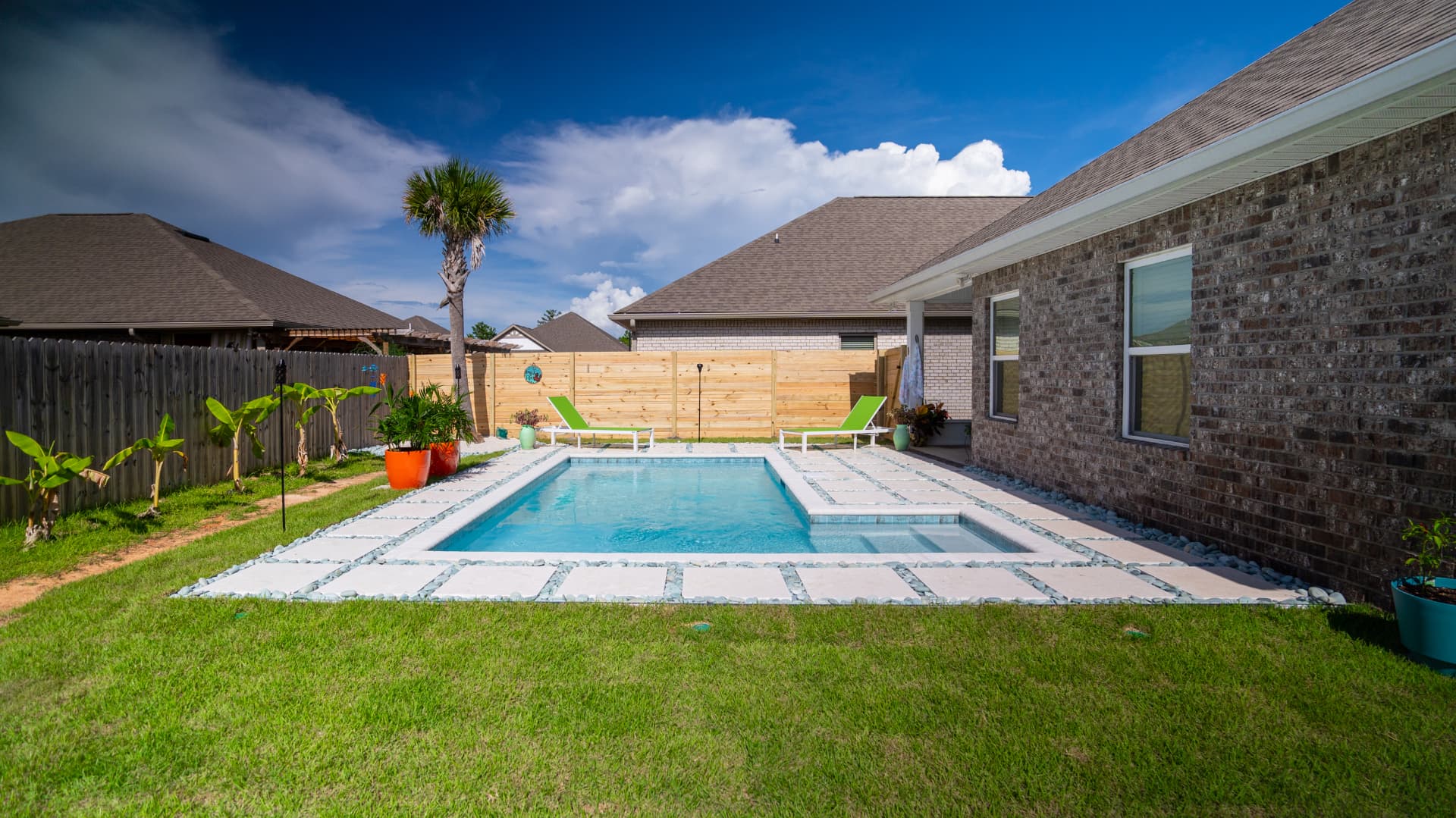
- Pool Size and Scale: A massive, towering rock waterfall will overwhelm a small plunge pool, while a single, tiny deck jet will get lost next to a sprawling geometric pool. The scale of the water feature must match the pool’s footprint.
- Budget and Value: While basic bubblers and deck jets can be installed for $500 to $1,500 each, complex rock grottoes and custom rain curtains can easily reach five figures. That high-end, professionally built features can recover up to 50–60% of their cost in home resale value.
- Equipment Compatibility and Pumps: Water features require substantial water flow. Running a large waterfall or a multi-nozzle rain curtain on a standard single-speed pool pump will spike your electric bill and wear out your filtration system. We strongly recommend utilizing a dedicated variable-speed pump for your water features. This allows you to dial in the exact flow rate needed, saving immense amounts of energy while letting you adjust the physical height and sound volume of the water.
- Automation Integration: In 2026, convenience is everything. By connecting your water features and LED lighting to an automation system (like Pentair IntelliCenter), you can turn on your waterfalls, activate your laminars, and change the light colors directly from an app on your smartphone or set them to a automatic evening schedule.
Technical Requirements, Chemistry, and Maintenance
To keep your backyard sanctuary running smoothly, it is important to understand how moving water interacts with your pool’s ecosystem.
- Water Chemistry and pH Levels: When water features throw water into the air, they introduce oxygen and release dissolved carbon dioxide. This process, known as aeration, naturally causes your pool’s pH levels to rise. If your pH gets too high, it can lead to calcium scaling on your tile lines and reduce the effectiveness of your chlorine. You will need to monitor your water chemistry weekly and occasionally add muriatic acid to keep the pH balanced.
- Saltwater Compatibility: If you have a saltwater pool system, you must select materials that can withstand salt exposure. Marine-grade 316 stainless steel, brass, bronze, and high-quality plastics are ideal. Avoid low-grade metals that can corrode quickly over time.
- Clogging and Filtration: Features with tiny nozzles—like laminars, deck jets, and rain curtains—are highly sensitive to debris. A single leaf fragment or grain of sand can clog a nozzle and ruin the stream. We always install a dedicated inline cartridge filter on the water feature plumbing line to catch fine debris before it ever reaches your fixtures.
- Winterization: Across our service areas in Georgia, North Carolina, and parts of North Florida, winter temperatures can drop below freezing. To prevent costly freeze damage, all plumbing lines leading to elevated water features must be blown out with air and sealed off before the winter season hits.
Frequently Asked Questions About Pool Water Features
Can water features be retrofitted into an existing pool?
Yes, water features can absolutely be retrofitted during a pool remodel. However, it is significantly more complex and costly than installing them during new construction.
Adding features like sheer descents, scuppers, or rock waterfalls usually requires cutting into your existing concrete pool deck, running new underground plumbing back to the equipment pad, and upgrading your pump system. If you are planning a major pool resurfacing or deck remodel, that is the absolute perfect time to integrate these upgrades.
Do pool water features increase home resale value?
They certainly do. On average, a beautifully designed pool with integrated water features can increase a home’s resale value by 5% to 8%.
In high-end real estate markets across the Southeast, buyers actively look for move-in-ready, resort-style backyards. A well-designed water feature makes your home stand out in listings and creates an unforgettable first impression during open houses.
How do water features impact pool safety for children?
When designed correctly, water features actually enhance safety. For example, bubblers on a shallow sun shelf provide an immediate visual cue to children (and adults) where the shallow ledge ends and the deep water begins.
Additionally, we install safety valves and adjustable flow controls on all our water features. This allows you to soften the flow of water when young children are swimming, ensuring there are no strong currents or heavy, overpowering cascades.
Bring Your Backyard Vision to Life with Neway Pools
At Neway Pools, we believe your pool should be more than just a place to cool off on a hot summer afternoon. It should be a custom-tailored sanctuary where your family gathers to build lifelong memories.
In Florida, we design and build premium custom gunite pools and outdoor living spaces across Pensacola, Gulf Breeze, and Panama City Beach. We focus on exceptional engineering, high-end materials, and unparalleled craftsmanship. If you are ready to elevate your backyard with stunning, custom-designed pool water features, let us help you design your perfect escape. Contact us today or explore our Neway Pools Water Features page to schedule your custom design consultation!
We also proudly serve families across Georgia (including Atlanta, Cumming, Alpharetta, and Marietta) and North Carolina (including Wilmington), delivering the same high-end craftsmanship.