
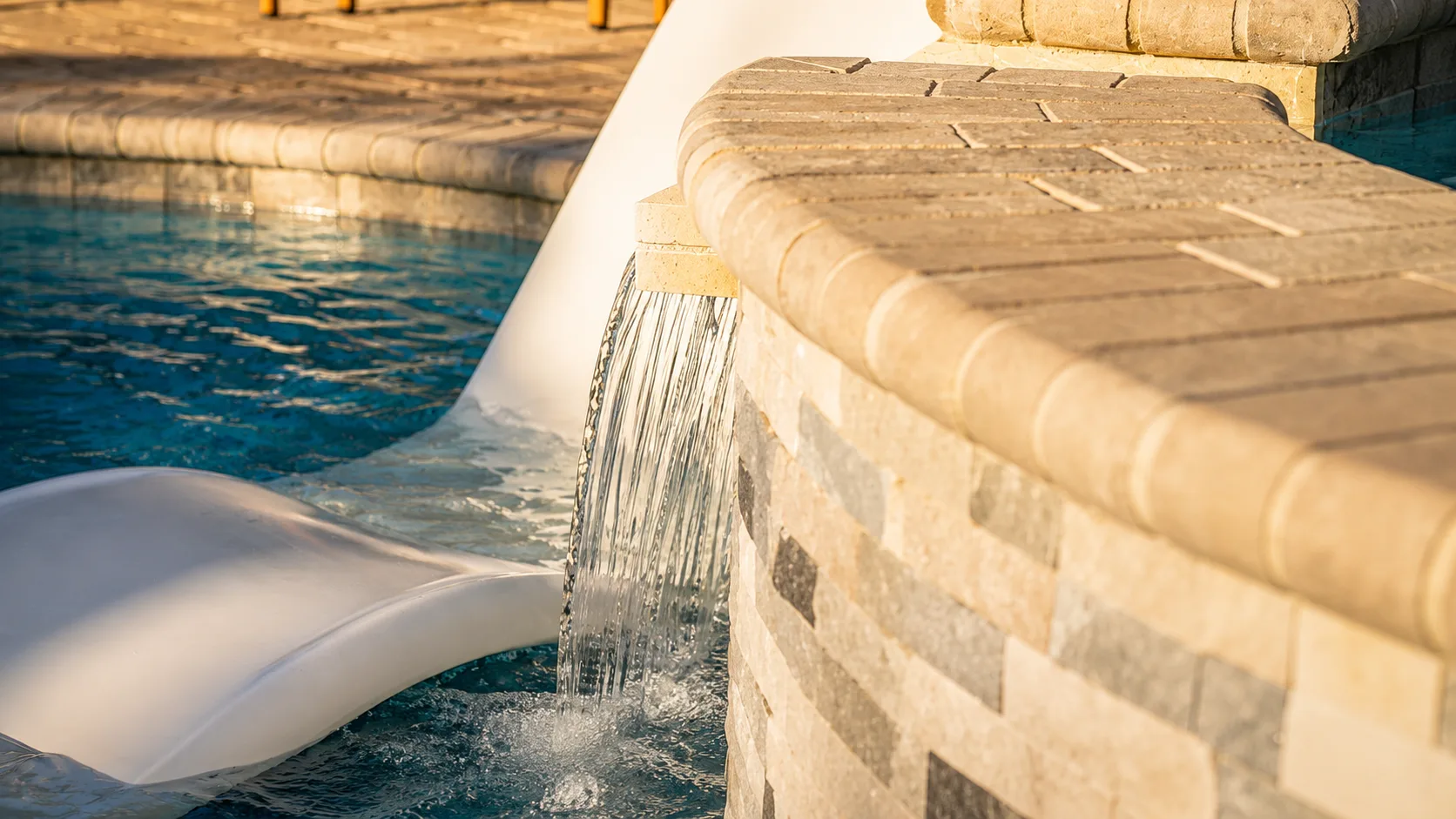
Why Homeowners Are Choosing an Artificial Rock Grotto for Their Pool
An artificial rock grotto is one of the most dramatic features you can add to a backyard swimming pool. It creates a shaded, cave-like hideaway beneath a waterfall — a space where kids can splash, adults can unwind, and your yard stops looking like every other yard on the block.
Here’s what you need to know upfront:
- What it is: A faux rock structure built over part of your pool, large enough to swim into, with a waterfall cascading from above
- How it’s built: Steel rebar framing, shotcrete shell, hand-carved texture, pigment staining, and waterproofing — or prefabricated modular panels bolted to the deck
- What it costs: Miniature prefab designs can run under $10,000; distinctive custom grottos typically fall in the $20,000–$40,000 range
- How long it lasts: With proper construction and waterproofing, 30–40+ years
- Key advantage over natural stone: A faux rock grotto can weigh as little as 400 lbs compared to 15 tons for real rock — cutting installation time and structural demands dramatically
This guide walks you through every stage of building one: planning, framing, texturing, installing water and lighting features, and keeping it looking great for decades.
I’m Lucas Pimenta, General Manager of Neway Pools, and over my 20+ years building custom gunite pools across Wilmington, NC, Gulf Breeze, FL, Alpharetta, GA, and Huntsville, AL, I’ve helped countless families design and construct an artificial rock grotto that looks like it grew right out of the ground. Whether you’re starting from scratch or retrofitting an existing pool, the process is more achievable than most homeowners expect — and the results are genuinely stunning.
What an Artificial Rock Grotto Is and Which Type Fits Your Pool
A pool grotto is essentially a cave-like pocket tucked beneath a waterfall or rock overhang. The appeal is obvious: shade, privacy, a fun swim-under feature, and a strong resort feel without needing a resort-sized property.
For most homes we serve in Florida, Georgia, coastal North Carolina, and Alabama, the right grotto comes down to three things:
- Pool size and depth
- Structural support available at the shell and deck
- The level of realism you want
Artificial rock grotto styles for swimming pools
There are three main types of artificial rock grotto construction used today.
Prefabricated modular grotto units
These are factory-made faux rock sections that are delivered in pieces and assembled on site. They are typically the lightest option and often the most budget-friendly. Some systems can create either a full cave or a walkthrough opening depending on how the supports are arranged.Structural castings
These use reinforced cast rock panels or shells over a structural frame. Industry sources note that some structural grottos are made with fiber-reinforced cementitious castings that get backfilled with concrete over rebar. This creates a more permanent, load-bearing feature with a realistic surface.Hand-sculpted concrete grottos
This is the most custom method and usually the best choice when the goal is “make it look like nature did it.” A steel rebar cage is shaped on site, covered, sprayed with concrete, then carved, textured, and colored by hand. This approach gives us the most freedom for ledges, benches, irregular cave openings, waterfall lips, and integrated features.
Appearance-wise, these styles differ too:
- Prefab units usually have consistent textures and predictable dimensions
- Structural cast systems look more architectural and cleanly engineered
- Hand-sculpted work looks the most site-specific and organic when done well
How faux rock differs from natural stone grottos
Natural stone has undeniable beauty, but it also brings major engineering demands. Real rock is heavy. Very heavy. One cited lightweight faux grotto system weighs about 400 pounds, compared to roughly 15 tons for a similar natural-stone look. That is more than a 97% reduction in weight.
That matters because less weight usually means:
- Less structural stress on the pool and surrounding deck
- Easier access in tighter backyards
- Faster installation
- Less need for cranes and heavy hauling
- Lower labor costs
Artificial grottos can also cut installation time and labor by more than half compared to building with natural stone.
Here is the short version:
| Factor | Artificial rock grotto | Natural stone grotto |
|---|---|---|
| Weight | Much lighter | Extremely heavy |
| Installation time | Faster | Slower |
| Custom shaping | High | Moderate to high |
| Structural demand | Lower | Higher |
| Surface realism | Excellent when well crafted | Naturally authentic |
| Repairability | Usually easier to patch/recolor | Stone replacement can be harder |
| Cost predictability | More controllable | More variable |
Aesthetically, natural stone still has bragging rights. But modern faux rock can be highly convincing when color, shadowing, texture, and surrounding landscaping are done right. In other words: if fake rock looks fake, the problem is usually craftsmanship, not the idea.
Best pool conditions for adding a grotto
Not every pool is a grotto pool. The best candidates usually include:
- Gunite pools with a sound shell and bond beam
- Enough water depth at the entry zone
- Enough deck or footing area for support loads
- Good access for materials and crews
- Room to maintain visibility and safe swimmer circulation
New builds are easier because we can plan the grotto from day one. Remodels are absolutely possible too, especially with gunite construction, but they require more careful evaluation of the shell, plumbing routes, and attachment points.
If you’re in the early planning phase, start with custom pool design services.
How to Plan a Realistic Artificial Rock Grotto Before Construction
A realistic grotto starts long before any concrete is sprayed. Planning is where the project either becomes a backyard masterpiece or a giant rock-shaped regret.
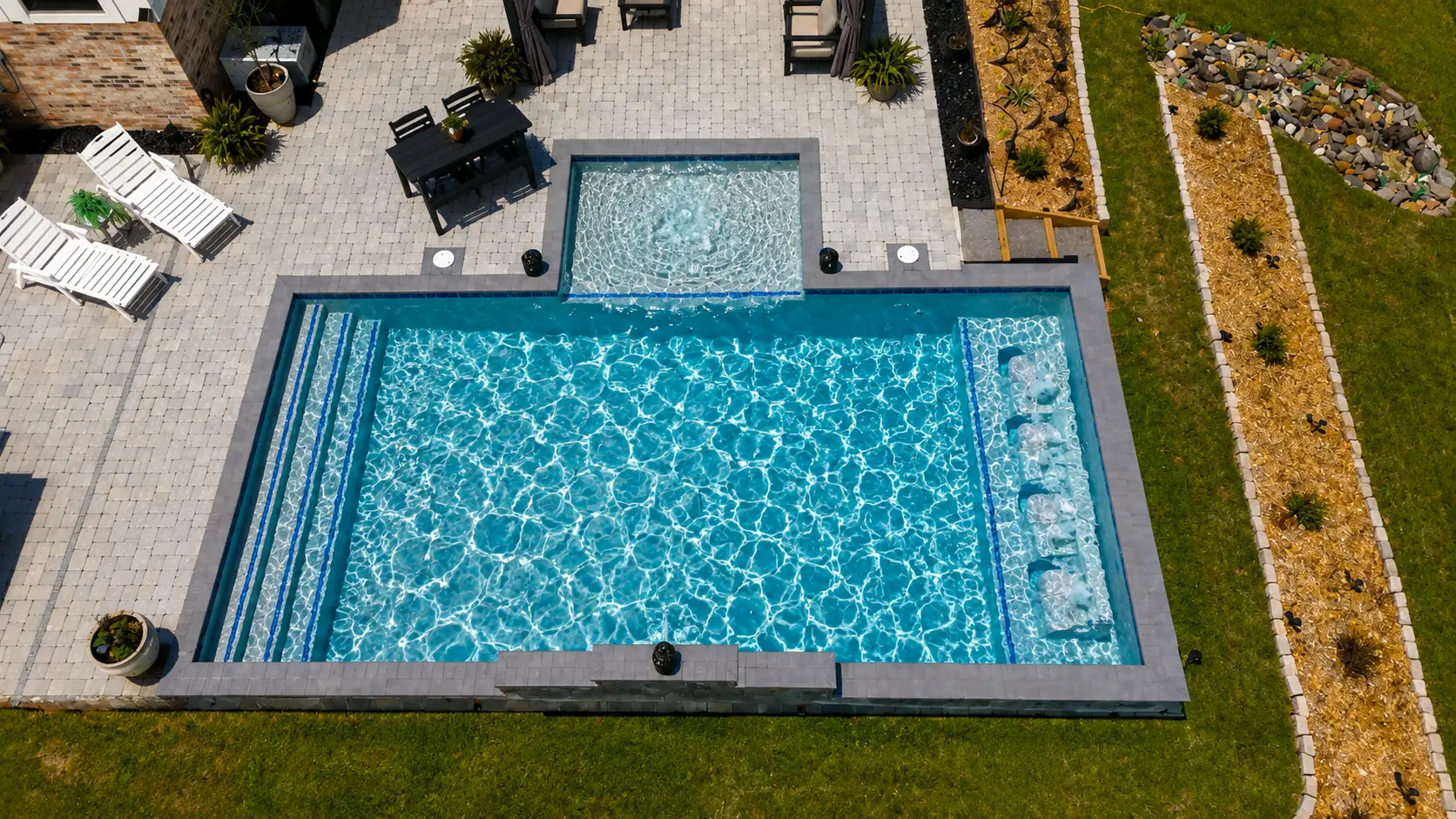
Before construction begins, we map out:
- Footings and support points
- Pool shell tie-ins
- Plumbing for the waterfall
- Electrical conduit for lighting
- Drainage around the feature
- Access for forming, finishing, and future repairs
- Sightlines from the house, spa, and patio
Size, clearance, and swimmer safety rules
This is where excitement needs a little supervision from common sense.
A good grotto should feel sheltered, not cramped. Important design points include:
- Enough headroom so swimmers do not feel boxed in
- A clear and visible entry
- A practical escape path instead of one dead-end hole
- Slip-resistant walking or seating surfaces
- Adequate interior lighting if the cavity is deep
- No sharp edges or low projections at head level
Inside clearance is often less than the outside rock height suggests. Some prefabricated systems note that interior clearance may be about 1 foot less than the listed height. So a “6-foot” grotto may not feel 6 feet tall inside.
For families with children or older adults, we recommend:
- Gentle entries
- Visible cave openings
- Seating ledges
- Good underwater and accent lighting
- Avoiding overly deep, dark enclosures
Ventilation matters too. An outdoor grotto is naturally more ventilated than an enclosed room, but the deeper and tighter the cave gets, the more important airflow and visibility become.
Structural and site considerations that prevent failures
An artificial rock grotto may look playful, but structurally it is serious business.
The main structural elements usually include:
- Rebar skeleton shaped to the final form
- Concrete footings or support points
- Secure tie-in to the pool shell or surrounding structure
- Waterproofing where water sits or flows
- Load planning for people climbing, sitting, or standing on it
In custom concrete work, rebar is often bent into the desired rock shape, tied together, and connected into the shell. On remodels, dowels can be epoxied into existing concrete. From there, mesh and support layers help hold the sprayed concrete shell in place.
One useful construction rule from field practice: areas below the waterline should generally be solid enough to protect reinforcement from moisture intrusion and corrosion risk.
We also plan for surcharge loads from adjacent deck areas and the very real possibility that someone will climb on the “forbidden” rock. Because someone always does.
Budget planning and the biggest cost drivers
In 2026, the biggest cost variables for a grotto are not just the rock itself. They include all the hidden work around it.
Common cost drivers include:
- New build vs. remodel
- Prefab vs. hand-sculpted construction
- Pool shell modifications
- Plumbing complexity and pump upgrades
- Lighting and electrical runs
- Spa or jet integration
- Crane or limited access conditions
- Amount of custom carving and coloring
- Size of the cave and waterfall span
- Engineering and permit requirements
As a broad guide:
- Small modular grotto features may come in under $10,000
- Basic custom grotto designs with seating often start around $10,000
- Distinctive custom grottos commonly fall in the $20,000 to $40,000 range
- Luxury projects with spas, slides, bars, or elaborate rockwork can go higher
If you’re budgeting the whole backyard, our custom pool design approach helps keep the grotto integrated with the larger project instead of becoming an expensive afterthought.
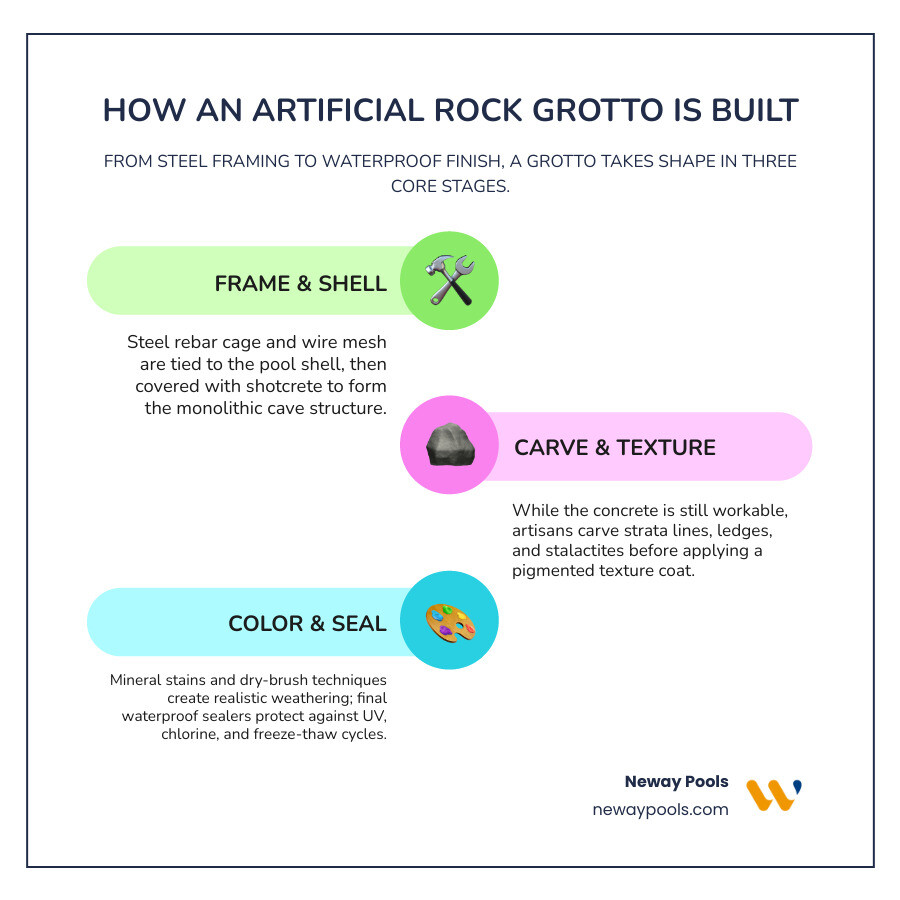
How an Artificial Rock Grotto Is Built Step by Step
A realistic faux rock hideaway is built in layers. The exact sequence varies by design, but the overall process is fairly consistent.
Framing the grotto with steel, mesh, and concrete
For a hand-built grotto, the process generally looks like this:
Layout and structural prep
We mark the footprint, verify elevations, and prepare the footing and tie-in points.Rebar shaping
Steel reinforcement is bent and tied into a three-dimensional cage. In many field-built faux rock projects, rebar spacing in the rock form may run roughly 8 to 10 inches apart.Mesh and support layers
Installers may use wire mesh and, in some methods, burlap or backing materials to help hold concrete during application, especially on vertical areas.Plumbing and conduit rough-in
Before concrete closes everything up, we place PVC lines for the waterfall and conduit for lights or speakers.Shotcrete or hand-applied cement shell
Concrete is sprayed or applied over the frame to create the structural body. This shell becomes the monolithic base for the feature.Carving and texture work
While the material is still workable, the surface is shaped into strata, fractures, ledges, weathered faces, and cave contours.Waterproofing
Areas that carry or hold water need proper treatment. In hands-on construction practice, that can involve both penetrating products and membrane-style waterproofing.Finish coat and coloring
A final texture layer and mineral-toned coloring complete the illusion.
Prefab and structural cast units skip some of this field sculpting but still require solid anchoring, plumbing coordination, and finish blending.
Materials that make faux rock lightweight yet durable
Modern faux rock is not one thing. It is a category.
Common materials include:
- Reinforced concrete and shotcrete
- GFRC or similar fiber-reinforced cement systems
- Fiberglass and resin shells
- FRP components
- Polymer-modified cement coatings
- Integral pigments and acrylic stains
Small or factory-made features are often built from fiberglass/resin-based materials. Large outdoor installations are more commonly concrete-based. Structural cast systems may combine fiber reinforcement with concrete backfill for strength.
The goal is to balance three things:
- Low enough weight for practical installation
- High enough strength for outdoor use
- A surface that can be carved and colored realistically
When built correctly, artificial rock grottos can last 30 to 40 years or longer.
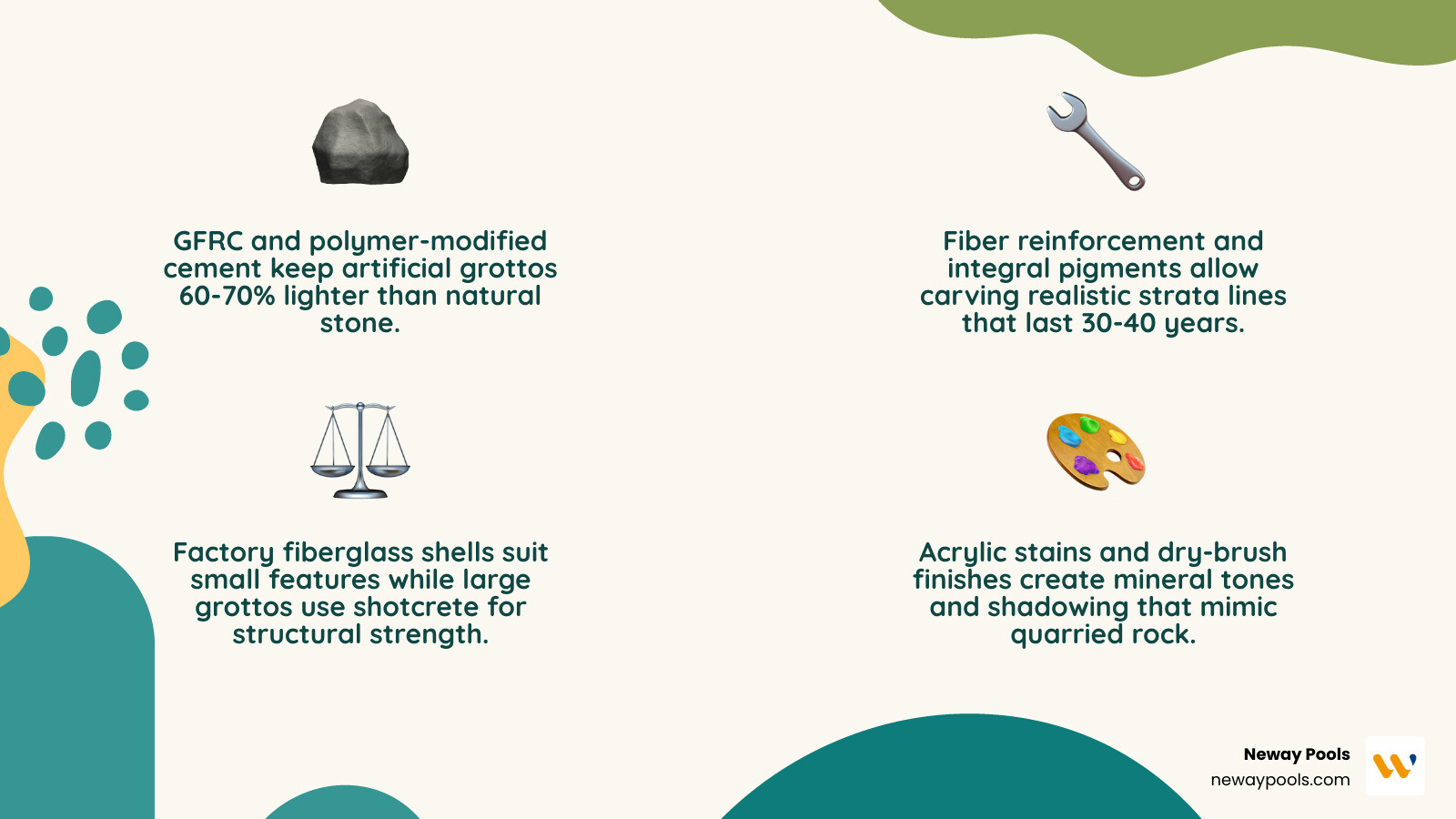
Coloring, texturing, and detailing for a natural look
This is the step that separates “wow” from “why does my pool have a giant baked potato?”
Realism comes from layered imperfection:
- Mixed earth tones rather than one flat color
- Darker shadowing in cracks and recesses
- Lighter dry-brushed highlights on ridges
- Horizontal or angled strata lines
- Rounded erosion at water paths
- Mineral staining near spill edges
- Irregular ledges and broken planes
Good faux rock also responds to the local setting. A grotto in Gulf Breeze, Cumming, or Wilmington should not feel like it was imported from an alpine cliff face unless the whole yard supports that look. The most believable designs match nearby decking, planting, and home architecture.
For more ideas on realistic finishes, see natural looking imitation rock waterfalls.
Installing the Grotto and Integrating Water, Light, and Comfort Features
Once the rock body is built or delivered, installation is about more than putting it in place. This is where performance, comfort, and safety come together.
How installation works on new pools versus remodels
On new pools:
- The shell, bond beam, and footings can be designed for the grotto from the beginning
- Plumbing routes are cleaner
- Rebar tie-ins are easier
- Finish transitions are more seamless
On remodels:
- We inspect the existing gunite shell carefully
- Deck areas may need demolition
- Core drilling or epoxy dowels may be used for structural attachment
- New plumbing and conduit must be routed around existing systems
- Surface finishes need careful blending
For modular grottos, installation may involve setting support pieces, positioning the top section, anchoring the unit to the deck, and hiding fasteners with matching rock covers. Some systems use lag screws and recommend securing the structure to prevent movement if climbers get adventurous.
Custom features that elevate the experience
A grotto can be much more than a dark nook under a waterfall.
Popular upgrades include:
- Bench seating inside the cave
- Therapy jets
- Integrated spa zones
- LED accent lighting
- Color-changing lights
- Hidden speakers
- Slide integration
- Tanning ledge adjacency
- Dramatic waterfall spillways
- Resort-inspired bar concepts nearby
These upgrades can improve both aesthetics and usability, especially if the grotto doubles as an adult retreat and a kid magnet.
For related backyard water ideas, visit water feature for pool area.
Designing the grotto to match the whole backyard
The best grotto is not the biggest one. It is the one that looks like it belongs.
Design approaches we often consider in our service areas include:
- Lagoon-style pools with tropical planting in Florida
- Natural woodland palettes in parts of Georgia and North Carolina
- Boulder groupings that tie into retaining walls or raised spas
- Hardscape colors that echo the house exterior
- Sightlines from windows, patios, and outdoor kitchens
Elevation changes are especially helpful. Sloped lots make rock features feel more natural because the grotto can emerge from a grade transition instead of looking perched on a flat deck.
If you want the whole setting to feel cohesive, our guide to natural looking swimming pools is a good next read.
Costs, Longevity, Maintenance, and Sustainability
A grotto is a long-term feature, so it pays to think beyond installation day.
Typical artificial rock grotto price ranges in 2026
For homeowners in our Florida, Georgia, North Carolina, and Alabama markets, these are reasonable planning ranges for 2026:
- Under $10,000: small modular or miniature faux rock units with limited customization
- $10,000+: basic grotto designs with seating and simple water flow
- $20,000 to $40,000: custom, visually distinctive grottos with stronger architectural presence
- Above $40,000: larger or more complex installations with spas, slides, premium lighting, and extensive rock sculpting
Price is also influenced by:
- Freight and site access
- Engineering needs
- Labor intensity
- Finish quality
- Equipment upgrades
- Electrical scope
Cleaning, repairs, and long-term durability
Artificial rock is durable, but it is not maintenance-free.
Typical long-term care needs include:
- Removing calcium buildup near spillways
- Cleaning algae or organic staining from shaded wet zones
- Inspecting sealers and finish coats over time
- Touching up chips, cracks, or color fading where needed
- Monitoring waterproofed areas that carry constant flow
Well-built faux rock can resist UV exposure and weather for decades, but standing water, poor drainage, or bad waterproofing can shorten that lifespan fast.
In our service regions, freeze-thaw is usually less aggressive than in colder states, but coastal humidity, sun exposure, storms, and water chemistry still matter.
Environmental tradeoffs versus quarried stone
From a sustainability standpoint, faux rock has tradeoffs, not magic powers.
The advantages:
- Much lower transport weight in many cases
- Less need for heavy quarrying and hauling
- Reduced use of large lifting equipment
- Easier integration with recirculating water systems
- Compatibility with efficient pumps and LED lighting
The tradeoffs:
- Concrete and resin products still have manufacturing impacts
- Cement-based systems carry a carbon footprint
- Pumps and lighting add ongoing energy use
In short, artificial grottoes often reduce extraction and transportation burdens compared to massive natural stone builds, but responsible design still matters. Efficient hydraulics, right-sized pumps, and recirculated water all help.
Historically, humans have been building artificial cave environments for centuries. The Venus Grotto at Linderhof Palace, built in 1875-77, stretched about 90 meters long and up to 14 meters high. Even earlier landscape examples such as Painshill Park’s Crystal Grotto used over 10,000 crystals to create theatrical effects. So while your backyard version may be smaller, the design impulse is wonderfully old: people love a little mystery, sparkle, and shelter near water.
Frequently Asked Questions About Artificial Rock Grotto Construction
Can you add an artificial rock grotto to an existing gunite pool?
Yes, in many cases you can. Retrofit work is common with gunite pools because concrete shells can accept structural tie-ins when properly evaluated. The key steps are checking the existing shell, planning deck modifications, routing plumbing and conduit, and engineering the attachment points. Remodels are more complex than new builds, but very achievable.
How long does an artificial rock grotto last?
A properly built grotto can last 30 to 40 years or more. Longevity depends on structure, waterproofing, surface finish quality, drainage, and water chemistry. Cheap construction usually gets expensive later.
Is an artificial rock grotto safe for kids and older swimmers?
It can be, if it is designed correctly. We recommend:
- Non-slip surfaces
- Good visibility
- Proper lighting
- Open, easy-to-navigate entries
- Seating ledges for rest
- No sharp or low head-strike hazards
- Active supervision for children
A safe grotto should feel inviting, not confusing or claustrophobic.
Turn a Poolside Cave Idea Into a Backyard Showpiece
A great grotto is not just a rock feature. It is a place. A shady hideaway. A waterfall backdrop. A favorite swimming spot your family will remember long after nobody can recall what the patio furniture looked like.
At Neway Pools, we design and build custom gunite pools and outdoor living spaces across Florida, Georgia, North Carolina, and Alabama, with a focus on premium materials, smart engineering, and family-first design. If you’re imagining a realistic faux rock hideaway, we can help you think through the structure, style, and backyard layout so it all works together beautifully.
Explore Beyond Basic Custom Pool Solutions or contact us to start planning a poolscape that feels anything but ordinary.
View Florida Pool Water Features