
Why Pool Rain Curtains Are Transforming Modern Backyards
A rain curtain pool is a custom water feature that creates a dramatic sheet or pattern of falling water—either as individual droplets or a smooth cascade—descending from an elevated structure into your swimming pool. Also called rain walls, water curtains, or rain descents, these features typically stand 6 to 8 feet tall and span 4 to 8 feet wide, using a closed-loop recirculation system that requires approximately 8 gallons per minute per foot of width.
Quick Overview:
- What it is: A tall, free-standing water feature producing a curtain of falling water
- How it works: Closed-loop system with pump and gravity, feeding water through nozzles
- Best for: Modern geometric pools, space-limited yards, contemporary aesthetics
- Key benefit: Dramatic visual appeal with soothing sound, using less deck space than traditional waterfalls
- Main drawback: Higher evaporation risk in dry or windy climates
- Typical cost drivers: Width (1-8 feet), structural frame material, plumbing complexity, automation integration
Unlike common rock waterfalls, rain curtains offer a sleek, architectural look that perfectly complements contemporary pool designs. They can be integrated into pergolas, mounted on custom frames made of metal or concrete, or even built into roof structures during home construction. The result is an upscale, rare feature that adds both visual drama and relaxing ambient sound to your outdoor living space.
I’m Lucas Pimenta, General Manager at Neway Pools, and over the past 20 years I’ve helped countless families across the Southeast design and install custom gunite pools with premium water features including rain curtain pools. In this guide, I’ll walk you through everything you need to know—from mechanics and installation to costs and design integration—so you can decide if a rain curtain pool is the right choice for your backyard.
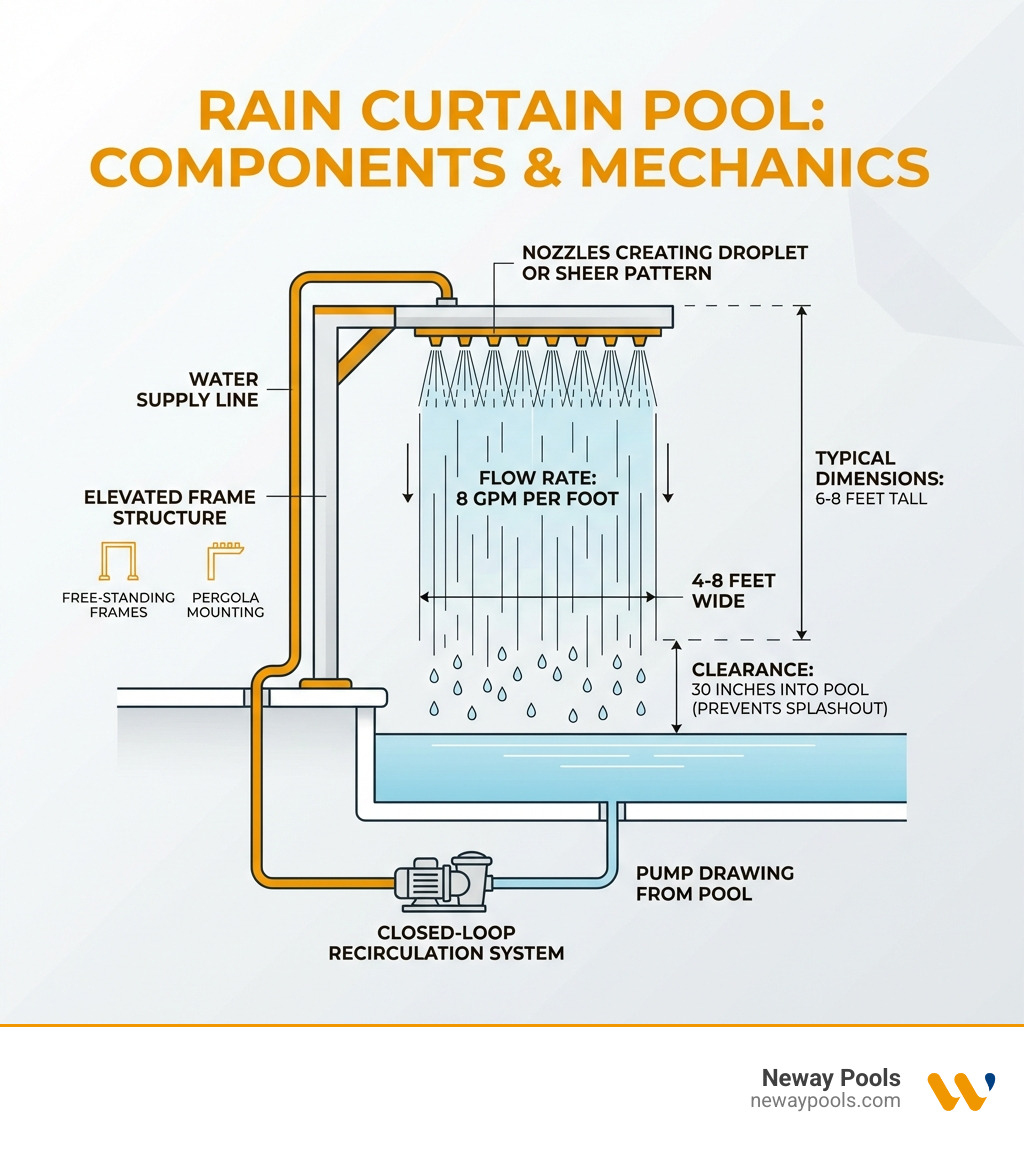
Key Rain curtain pool vocabulary:
Defining the Rain Curtain Pool Experience
When we talk about a rain curtain pool, we aren’t just talking about a simple fountain. We are describing a sophisticated architectural element that bridges the gap between art and utility. Unlike a standard waterfall that might spill over a ledge, a rain curtain is typically elevated—often six to eight feet above the water’s surface—creating a literal “curtain” of water that users can swim through, lounge behind, or simply admire from the patio.
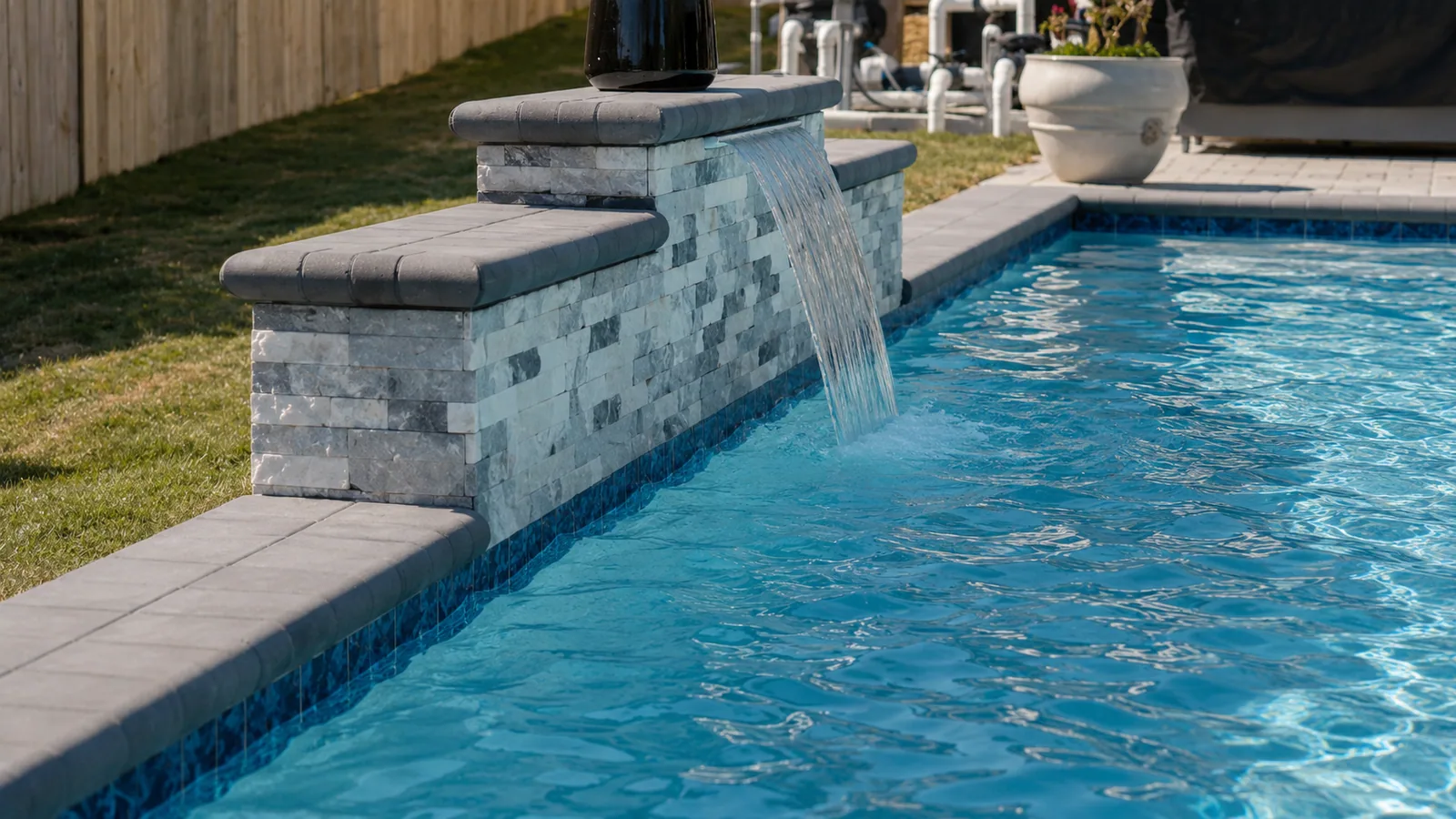
In our work across Florida, Georgia, North Carolina, and Alabama, we’ve seen a massive shift toward custom pool design that favors clean lines and vertical drama. The rain curtain fits this trend perfectly. It offers a “sun shower” effect that is both visually stunning and acoustically pleasing. Whether it is mounted to a free-standing frame on your deck or integrated into a custom-built pergola, the rain curtain serves as a focal point that commands attention without overwhelming the yard’s footprint.
The Difference Between Droplets and Sheer Descents
One of the most common questions we get is: “What does the water actually look like?” The answer depends on the type of nozzle or “descent” unit you choose.
- Droplet-Style (Rain Descent): This is the most popular choice for homeowners wanting that “rainy day” ambiance. The unit features individual nozzles that break the water into distinct droplets. It creates a softer, more textured look and a rhythmic, pattering sound.
- Sheer Cascade (Water Curtain): This style produces a solid, glass-like sheet of water. It is remarkably quiet and offers a very sleek, high-end look. However, because it relies on surface tension to stay “solid,” it is more susceptible to breaking up if there is a breeze or if the drop is too high.
According to The Ins and Outs of Rain Curtains, droplet-style curtains are often preferred for higher elevations because they maintain their visual integrity better than sheer sheets, which tend to “shred” or turn into mist after falling more than three or four feet.
Why a Rain Curtain Pool is a Modern Design Staple
For years, the “lagoon” look dominated the industry, featuring heavy natural rock waterfalls. While those are still beautiful, many of our clients in growing areas like Alpharetta, GA or Wilmington, NC are opting for contemporary, geometric shapes.
A rain curtain pool is the perfect partner for a geometric pool. Its straight lines and verticality mirror the sharp angles of a modern home. Furthermore, it is a massive space-saver. A rock waterfall might require a massive “footprint” of three to five feet of depth behind the pool coping. A rain curtain, especially when integrated into a pergola or a slim metal frame, takes up almost zero ground space. This makes it an ideal solution for tighter backyards in places like Marietta or Panama City Beach.
Engineering the Perfect Flow: Mechanics and Installation
To the casual observer, a rain curtain looks like magic. In reality, it’s a finely tuned piece of hydraulic engineering. To get that perfect “rain” effect, you need consistent water pressure and a very specific flow rate.
| Feature Specification | Requirement/Range |
|---|---|
| Water Flow Rate | 5 to 15 GPM per foot (8 GPM is standard) |
| Typical Widths | 1 to 8 feet (in 1-foot increments) |
| Lip Sizes | 1″, 6″, or 12″ (depending on projection needs) |
| Head Loss | 7 to 10 feet of resistance |
| Pump Type | Variable-speed (highly recommended) |
Most rain curtains operate on a closed-loop system. This means the pump draws water directly from the pool, pushes it through a filter (to keep those tiny nozzles from clogging), and sends it up to the distribution bar. From there, gravity does the rest of the work. For the best results, we always recommend pool equipment that includes a variable-speed pump. This allows you to adjust the “intensity” of the rain—from a light drizzle for a romantic dinner to a heavy downpour for a kid’s birthday party.
Technical Requirements for a Rain Curtain Pool
You can’t just “plug and play” a rain curtain. It requires dedicated plumbing, usually involving 1.5-inch or 2-inch PVC piping to ensure the volume of water is sufficient.
As noted in Incorporating Custom Rain Curtains into Pool and Landscape Designs, filtration is the unsung hero of this feature. Because the nozzles in a rain descent are quite small, even a tiny bit of debris—like a stray leaf or a grain of sand—can clog a nozzle and ruin the “curtain” effect. We install dedicated inline filters specifically for the water feature to prevent this. Additionally, we have to account for “head loss,” which is the friction and gravity the pump must overcome to get the water six or eight feet into the air.
Positioning Your Rain Curtain Pool for Maximum Impact
Positioning is where many DIYers or inexperienced builders get into trouble. We follow a strict “30-inch rule.” We recommend placing the rain curtain so the water falls at least 30 inches away from the pool edge (the coping).
Why? Splashout. Even on a calm day, falling water creates a “splash zone.” If the curtain is too close to the edge, it will constantly soak your deck, which can lead to slippery surfaces or even “spalling” (surface damage) on certain types of stone over time.
Additionally, we have to consider the wind. In coastal areas like Perdido Key or Wrightsville Beach, the sea breeze can turn a beautiful rain curtain into a giant squirt gun that soaks your patio furniture. We often suggest integrating a wind anemometer—a sensor that automatically shuts off the pump if the wind speed exceeds a certain threshold. For more on how we integrate these into your layout, check out our guide on water feature for pool area options.
Aesthetic and Functional Benefits of Rain Features
Beyond the “wow” factor, a rain curtain pool serves several functional purposes that can significantly improve your backyard experience.
- Sound Buffering: If you live in a bustling area like Atlanta or near a busy road in Cumming, the white noise of a rain curtain is a lifesaver. It creates a consistent, soothing sound that can drown out traffic and noisy neighbors.
- Privacy Screening: A wide rain curtain acts as a visual “scrim.” It allows light through but obscures the view, making it harder for people to see into your pool area from a distance.
- Zoning: You can use a rain curtain to separate different “rooms” of your pool. For instance, you might place one between the shallow play area and the deeper lounging zone.
Creating Intimacy with a Rain Curtain Pool
One of our favorite ways to use this feature is to create an “audible cave.” By placing a rain curtain behind a set of swim-up bar stools or a submerged bench, we create a pocket of privacy. The sound of the water falling in front of you creates an intimate environment perfect for conversation.
In our modern backyard oases, we often integrate these curtains into the architecture of the home itself. Imagine a rain curtain falling from a second-story balcony directly into the pool below—it’s a level of drama that few other features can match.
Enhancing the Nighttime Vibe with Lighting and Automation
A rain curtain is beautiful by day, but it is magical at night. By using color-changing LED systems, we can “light up” the individual droplets as they fall. It looks like falling diamonds or liquid neon, depending on your color choice.
Automation makes this even better. With modern beyond basic pool solutions, you can control the entire feature from your smartphone. You can set a schedule so the “rain” starts just as you get home from work, or sync the water flow with your outdoor music system.
Practical Considerations: Costs and Environmental Factors
We believe in being transparent with our clients. While a rain curtain pool is a stunning addition, there are practical realities to consider.
Budgeting for Your Water Feature
The cost of a rain curtain is influenced by several factors:
- The Unit Itself: While the plastic or metal distribution bar isn’t prohibitively expensive, metal (specifically stainless steel or copper) units are a “splurge” that offers better durability and a crisper water flow.
- The Structure: If we are building a custom concrete or tiled wall to house the curtain, that adds to the labor and material cost.
- Plumbing and Pumps: A dedicated pump and the necessary valves/filters for a 6-foot wide curtain will typically add a few thousand dollars to the equipment budget.
Generally, homeowners should expect a professionally installed, automated rain curtain system to start in the mid-four-figure range and go up based on the complexity of the support structure.
Managing Wind and Climate Challenges
Aeration is a double-edged sword. When water falls through the air, it picks up oxygen. In hot climates like Tallahassee or Panama City, this has a cooling effect on the pool water, which is great in July. However, it also significantly increases the evaporation rate.
In drought-prone areas or during the hottest months, you will notice your pool’s water level dropping faster if you run the rain curtain constantly. This is why we emphasize automation—you want the ability to run the feature when you’re actually using the pool, rather than letting it run 24/7 and wasting water.
Frequently Asked Questions about Rain Curtains
How much water does a rain curtain typically require?
Most standard units require 8 gallons per minute (GPM) for every linear foot of the curtain. So, a 5-foot wide rain curtain needs about 40 GPM to look “full.” This is why we usually install a dedicated pump for the feature rather than trying to run it off the main filter pump.
Can a rain curtain be integrated into an existing pool?
It is possible, but it is much more complex (and expensive) than doing it during a new build. Retrofitting requires cutting into the existing deck to run plumbing and potentially adding a new equipment pad. If you are planning a major pool remodeling project, that is the perfect time to add one.
Are rain curtains louder than traditional waterfalls?
It depends on the height and the style. A sheer cascade is very quiet—almost a “hissing” sound. A droplet-style curtain from 8 feet up can be quite loud, similar to a heavy thunderstorm. This is why variable-speed pumps are so important; they allow you to “turn down the volume” by reducing the water flow.
Craft Your Masterpiece with Neway Pools
At Neway Pools, we don’t just build swimming pools; we craft inspiring backyards that bring families together. Whether you are in Gulf Breeze, FL, the suburbs of Atlanta, GA, or the coastal beauty of Wilmington, NC, our team is dedicated to providing expert design and premium materials.
Under the guidance of our General Manager, Lucas, we ensure that every rain curtain pool we build is engineered for longevity. We stand behind our work with a 3-year warranty on hardscapes and plumbing, giving you peace of mind that your investment is protected. From the initial 3D design to the final “splash,” we handle every detail of your custom gunite construction.
We serve a wide range of locations, including:
- Florida: Pensacola, Navarre, Panama City Beach, Tallahassee, and surrounding counties like Escambia, Santa Rosa, and Bay. View Florida Pool Water Features
- Georgia: Atlanta, Alpharetta, Marietta, Cumming, Milton, and Johns Creek. View Georgia Pool Water Features
- North Carolina: Wilmington, Wrightsville Beach, Leland, Hampstead, and Oak Island. View NC Pool Water Features
- Alabama: Huntsville.
Are you ready to turn your backyard into a private resort? Start your backyard transformation today by reaching out for a custom design consultation. Let’s build something extraordinary together.