
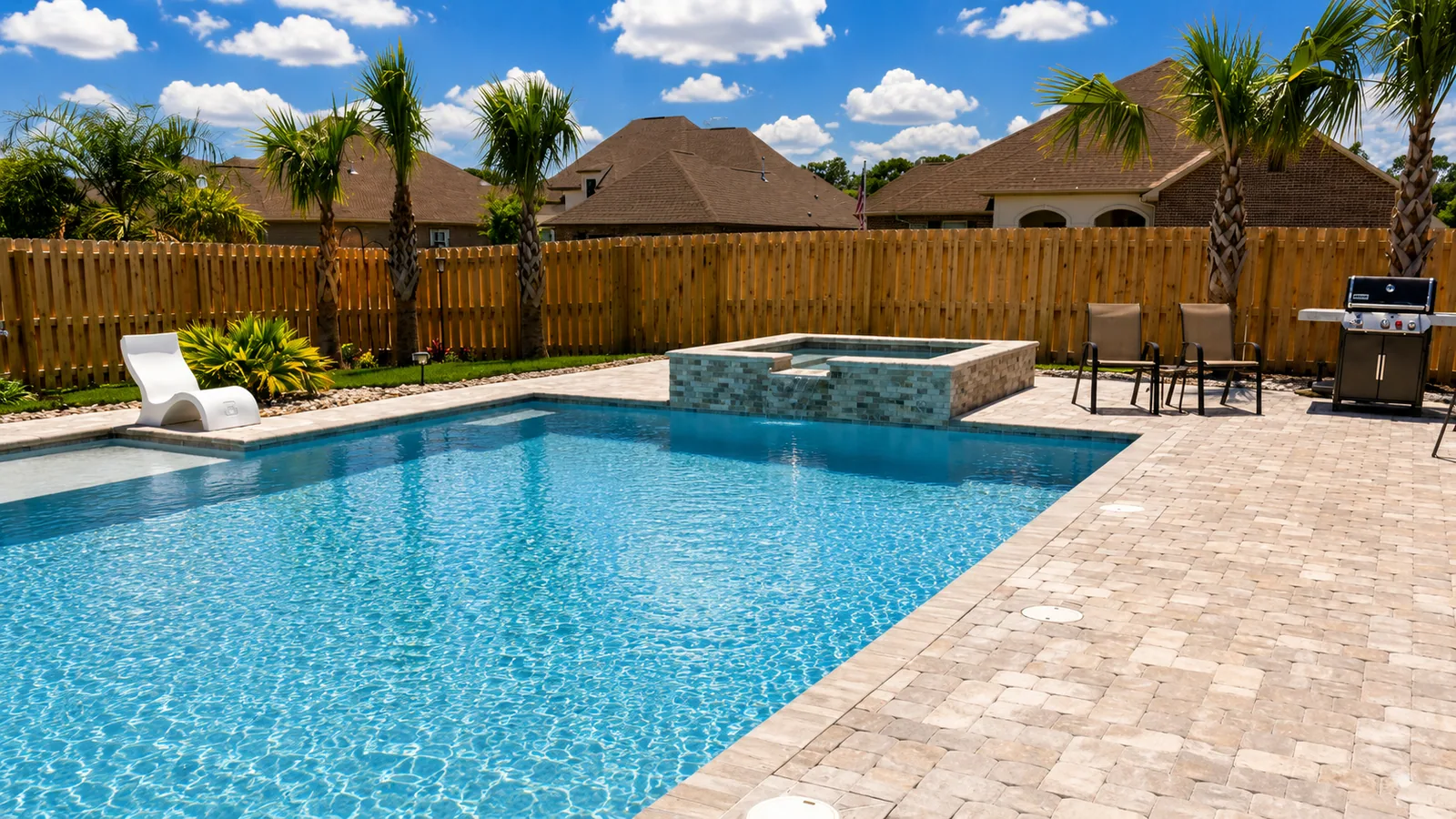
Is It Possible to Add a Spa to an Existing Pool?
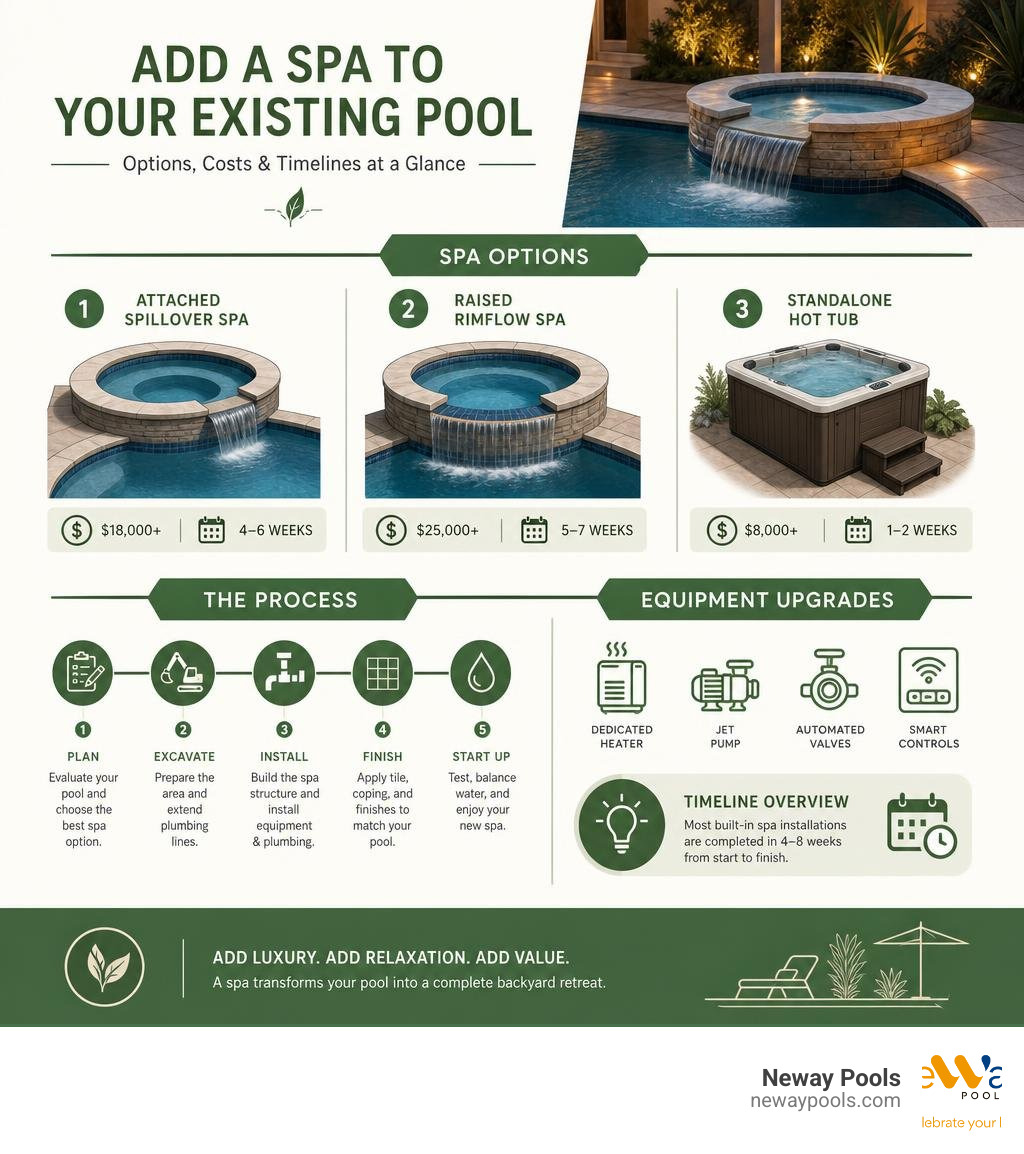
Adding a spa to a pool you already own is absolutely possible — and more common than you might think. Here’s a quick snapshot of what the process looks like:
- Yes, it’s feasible. Most inground pools — especially gunite/concrete — can be retrofitted with an integrated spa.
- Multiple options exist. You can choose an attached spillover spa, a raised rimflow spa, or a standalone above-ground hot tub.
- Budget accordingly. Costs range from around $18,000 for a prefabricated spillover spa to $55,000+ for a fully integrated custom gunite spa.
- Expect 4–8 weeks for a typical built-in spa installation from excavation to final finish.
- Equipment upgrades are usually required — including a dedicated heater, jet pump, and automated valves.
Many pool owners discover, a year or two after their pool is built, that they wish they had added a spa from the start. The good news? It’s rarely too late. Whether you want the visual drama of a cascading spillover or the therapeutic power of a heated gunite spa steps from your pool, a professional retrofit can deliver exactly that — often without touching the rest of your existing backyard.
I’m Lucas Pimenta, General Manager at Neway Pools, and over more than 20 years of designing and building custom gunite pools across North Carolina, Florida, Georgia, and Alabama, adding a spa to a pool is one of the most rewarding upgrades I’ve seen homeowners make. In this guide, I’ll walk you through every decision — from structure and equipment to cost and timeline — so you can move forward with confidence.
Feasibility and Design: How to Add spa to pool Structures
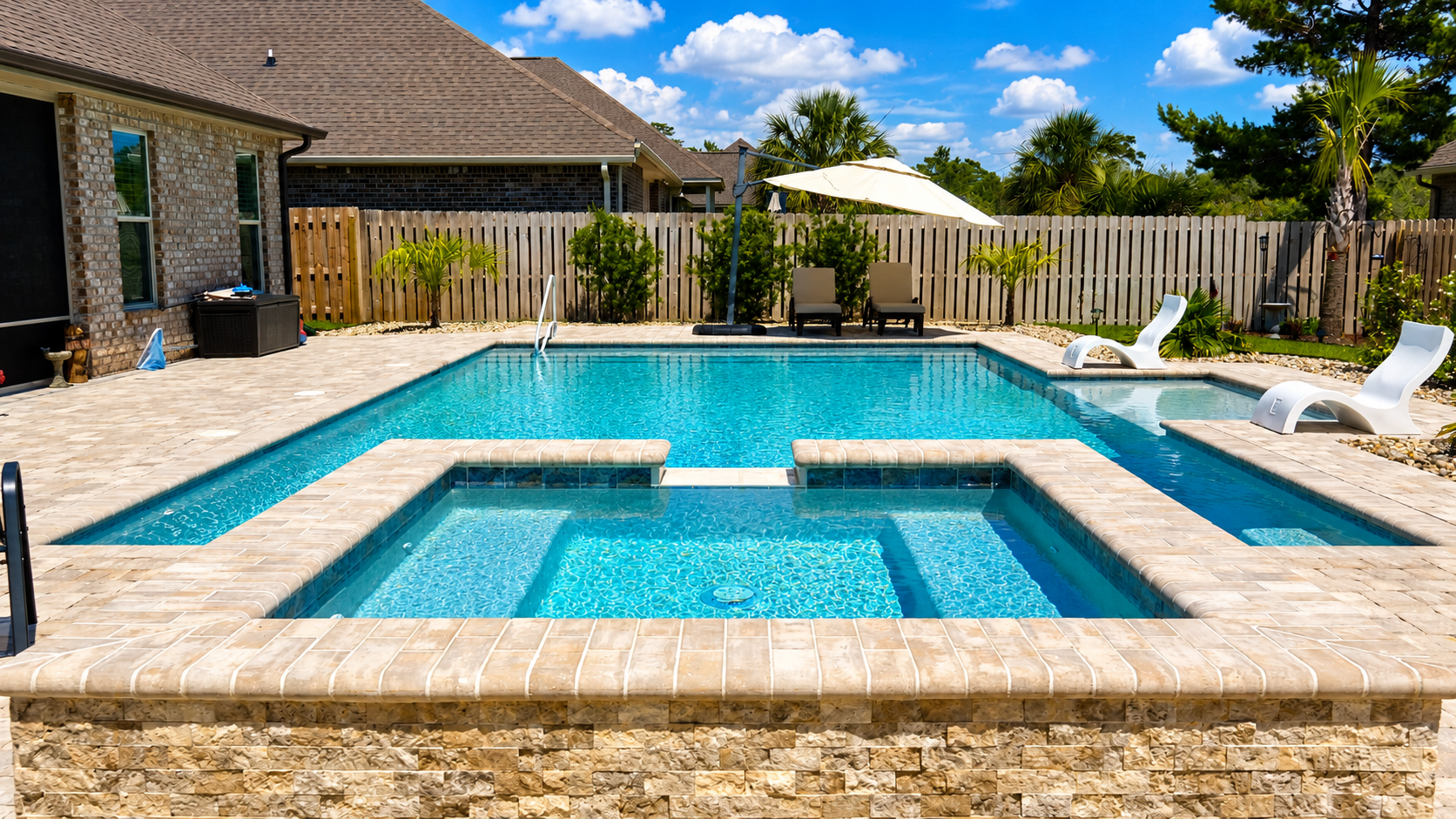
When homeowners ask us about the logistics to Add spa to pool structures, the very first step is evaluating the existing backyard canvas. It is not just about digging a hole; it is about structural harmony, soil conditions, and spatial design.
A custom gunite pool provides the absolute best foundation for a retrofit. Because concrete is highly adaptable, we can structurally tie a new spa shell directly into your existing pool structure. This level of customization is much more difficult to achieve with vinyl liner or fiberglass pools, which are manufactured in fixed shapes and do not easily accept post-construction concrete bonding.
Structural Feasibility: Can You Add spa to pool Shells Post-Construction?
Yes, but it requires highly specialized structural engineering. To safely Add spa to pool structures after the initial build, we must assess the pool’s shell material, soil stability, and deck space.
For a concrete or gunite pool, the process involves carefully chipping away a portion of the existing pool deck and coping, exposing the original steel rebar, and utilizing non-contact lap splices to tie the new spa’s steel reinforcement grid directly into the pool’s structural bond beam. This prevents the two structures from settling at different rates, which would otherwise cause devastating structural cracking and water loss.
According to structural engineering standards, a filled concrete spa with occupants can easily exceed 20,000 pounds. This massive weight concentration requires a solid foundation. Before we begin any excavation for an Inground Pool Installation or retrofit, we conduct a soil load capacity analysis. This is especially critical in our coastal service areas like Wilmington, NC, or Gulf Breeze, FL, where sandy soils require careful load distribution. We construct a concrete foundation slab that is 100mm to 150mm thick with a minimum compressive strength of 2,500 PSI to support the new weight safely.
Choosing Your Spa Type: Attached, Spillover, and Raised Integrated Spas
Once structural feasibility is confirmed, you get to choose how your new spa will interact with your pool. The design you choose dictates the visual flow, water acoustics, and even how your pool equipment must be configured.
- Attached Spillover Spa: This is the classic, highly sought-after design. The spa is built directly adjacent to the pool, sharing a common wall (known as a dam wall). The spa’s water level is slightly higher than the pool’s, allowing water to cascade over a custom weir or spillway blade directly into the pool. This creates a stunning water feature effect.
- Rimflow Spa (Perimeter Overflow): Also known as a mirror spa, this represents the height of luxury. The water in a rimflow spa overflows across the entire 360-degree perimeter into a hidden catch trough (usually 4 to 9 inches wide) concealed beneath a cantilevered deck. It creates a seamless “liquid mirror” look that reflects the sky beautifully, especially when finished with dark glass tiles.
- Flush / Inground Spa: Built completely level with the pool deck, this style is subtle and clean. It does not obstruct backyard views and offers a minimalist aesthetic.
The table below breaks down the key characteristics of these custom gunite spa configurations:
| Feature / Type | Spillover Spa | Rimflow Spa | Flush Integrated Spa |
|---|---|---|---|
| Visual Style | Traditional luxury, dynamic movement | Ultra-modern, seamless mirror effect | Minimalist, clean deck lines |
| Acoustic Benefit | Moderate to high (trickling waterfall sounds) | Whispering, subtle water trickling | Minimal sound |
| Hydraulic Complexity | Moderate | Very High (requires precision perimeter trough) | Low to Moderate |
| Best Suited For | Families seeking a classic resort feel | Modern architectural homes | Homeowners prioritizing unobstructed views |
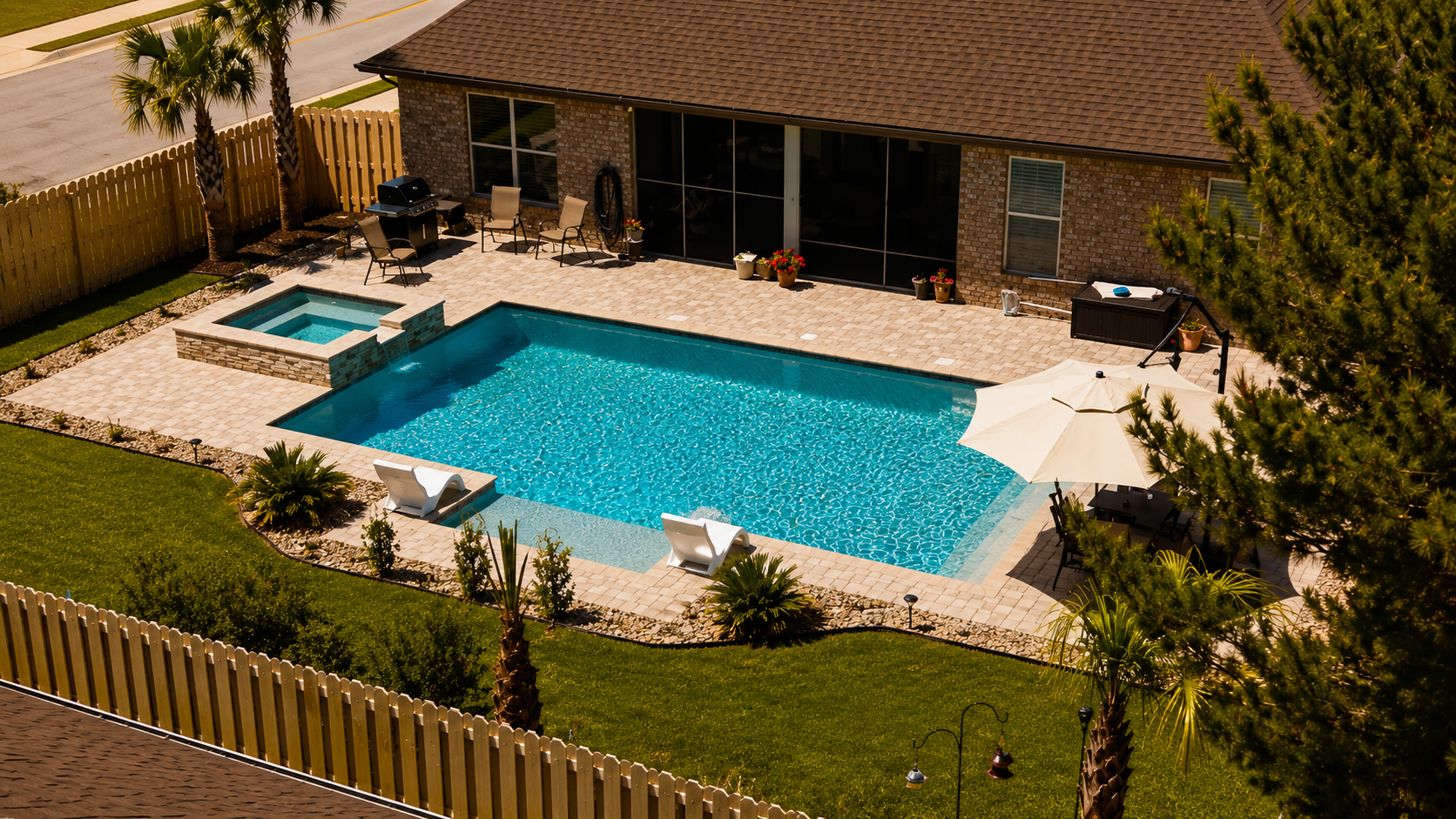
Whether you are dreaming of a raised spillover that mimics a natural waterfall or a sleek flush design, choosing the right style depends on your existing layout and personal style. You can learn more about the initial steps of planning these projects in our Guide to Custom Pool Quotes.
Mechanical, Plumbing, and Equipment Upgrades
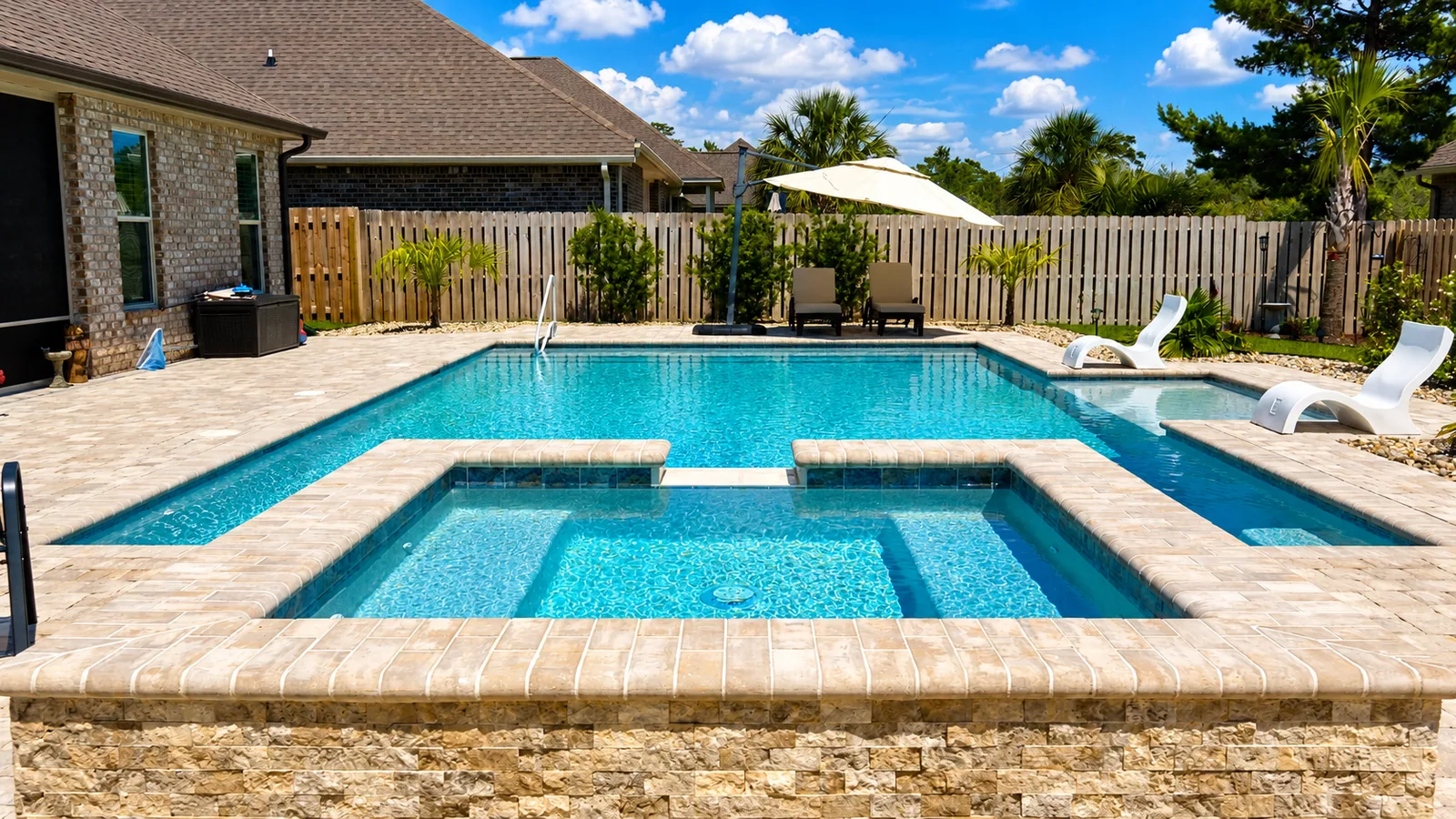
The beauty of an integrated spa is that it can share your pool’s filtration and sanitation systems. However, this convenience requires a major mechanical upgrade behind the scenes. You cannot simply run a hot, high-pressure spa on standard pool equipment.
Retrofitting a spa means transforming your equipment pad into a dual-zone powerhouse.
Heating and Hydraulic Systems
The thermodynamic demands of a pool and a spa are completely different. While a swimming pool is kept at a comfortable 78°F to 82°F, a therapeutic spa needs to heat up rapidly to 100°F or 104°F.
To achieve this, we install a high-capacity gas heater or propane heater. While a standard heat pump is great for maintaining pool temperatures, a gas heater is essential for the rapid temperature rise required for spontaneous spa use. A typical 5kW heater only increases water temperature by 3°F to 6°F per hour, which is too slow for a spa. A high-BTU gas heater, however, can heat a 400-gallon spa in under an hour.
Hydraulics are the next critical piece. A standard pool circulation pump is designed for high-volume, low-pressure filtration and is typically under 1HP. Spa hydrotherapy jets, however, require high-pressure water flow to deliver a true massage. We install a dedicated auxiliary jet pump (minimum 2HP) specifically to power the spa jets.
We also integrate 3-port automated actuated valves (such as those controlled by smart automation systems). These valves allow you to switch from “Pool Mode” to “Spa Mode” with a single tap on your smartphone. When activated, the valves isolate the spa’s plumbing loop, stopping water from overflowing into the pool so the heater can warm only the spa’s water without losing heat to the larger pool.
Water Chemistry, Safety, and VGB Compliance
When a pool and spa share water, chemical management becomes much simpler because you are only testing and treating one body of water. However, the high heat of a spa accelerates chemical consumption and organic waste breakdown. To counteract this, we highly recommend integrating advanced sanitation systems, such as Ozone or UV systems, which destroy organic contaminants without relying solely on high chlorine levels.
Safety is paramount during any structural pool modification. Retrofitting a built-in spa triggers modern building code updates, most notably the Virginia Graeme Baker (VGB) Pool and Spa Safety Act. This federal law requires that any spa have a dual-suction drain system or an unblockable drain to prevent suction entrapment hazards.
During the plumbing rough-in, we install two separate suction outlets spaced at least three feet apart, covered with ASME/ANSI-compliant anti-entrapment grates. If you are also addressing older structural elements of your pool during this time, you can find more about our structural restoration services at Pool Repairs and Renovations Near Me.
The Installation Process, Timelines, and Financial Investment
Adding a custom gunite spa is a major construction project. It is not a “plug-and-play” weekend job; it requires excavation, steel reinforcement, plumbing, concrete shooting, and fine finish work. Understanding the steps and financial commitment helps ensure a smooth, stress-free backyard transformation.
Step-by-Step Process to Add spa to pool Decks
A professional gunite spa retrofit follows a precise, engineered sequence to ensure long-term structural integrity and seamless beauty:
- Site Assessment & Engineering: We analyze your yard, check local zoning setbacks, obtain permits, and map out the utility lines (gas, electrical, water).
- Excavation & Demolition: We carefully remove a portion of the existing pool deck. We excavate the area for the new spa shell, ensuring we do not disturb the main pool’s structural support.
- Steel Reinforcement (Rebar): We build a dense cage of steel rebar. We structurally tie this new steel directly into the existing pool shell’s bond beam using heavy-duty anchoring systems.
- Plumbing Rough-In: We run the new plumbing lines for the hydrotherapy jets, dual-suction drains, air blowers, and returns back to the equipment pad.
- Shotcrete/Gunite Application: We pneumatically apply concrete (gunite) to form the spa’s steps, benches, and walls.
- Tile, Coping, & Interior Finish: We install matching or complementary tile and coping. Finally, we apply a premium plaster or aggregate interior finish to seal the structure.
- Equipment Integration & Startup: We install the new heater, pumps, and automation systems, fill the spa, balance the water chemistry, and test all functions.
This highly detailed process ensures your new spa is built to last. You can read more about our meticulous standards for new structures at Custom Pool Installation.
Cost Breakdown and Project Timelines
Because of the heavy construction, plumbing integration, and utility upgrades involved, adding a built-in gunite spa to an existing pool typically costs between $30,000 and $55,000 or more, depending on the complexity of the design, material choices, and local permitting requirements.
In comparison, a standalone portable hot tub on a concrete pad adjacent to the pool is often a more budget-friendly option (ranging from $8,000 to $25,000), but it lacks the seamless, resort-style aesthetic and permanent home equity value of a custom gunite build.
The timeline for a custom gunite spa retrofit typically ranges from 4 to 8 weeks from the start of excavation to the final plaster finish. This timeline can be affected by local permitting offices, utility hookups (such as running a new 240V electrical line or a high-capacity gas line), and weather conditions.
To help you plan your budget, you can explore our detailed breakdown of regional construction factors at Pool Construction Costs Florida Georgia North Carolina.
Frequently Asked Questions About Pool-Spa Retrofits
Will the new spa match my existing pool’s design and materials?
Yes, absolutely. When we design a retrofitted gunite spa, our primary goal is to make it look as though it was built at the same time as the original pool. We work closely with you to match or elegantly complement your existing waterline tile, deck coping (such as travertine, pavers, or poured concrete), and interior plaster or aggregate finish.
In some cases, homeowners choose to bundle their spa addition with a complete pool resurfacing project. This is a highly efficient choice because the pool must already be drained for the spa construction, allowing us to apply a fresh, perfectly matching interior finish across both the pool and the new spa simultaneously. Discover more about our artistic design process at Custom Pool Design.
Is adding a spa a worthwhile investment for home value?
Adding a custom gunite spa is one of the most impactful upgrades you can make to your property. Unlike portable hot tubs, which depreciate quickly and are typically taken with the homeowners when they move, a permanent, built-in gunite spa is classed as a capital improvement. It increases your home’s equity, boosts curb appeal, and extends your outdoor swim season into the cooler autumn and winter months.
It transforms your backyard into a true luxury retreat. You can read more about how custom water features elevate your property at Custom Luxury Swimming Pools.
How long does it take a retrofitted spa to heat up?
With a properly sized gas or propane heater, a standard 400- to 600-gallon custom spa will heat up from pool temperature (around 80°F) to a luxurious 102°F in approximately 30 to 45 minutes.
Heating times depend on the ambient air temperature and whether you use a high-quality, insulated spa cover when the system is warming up. Because we isolate the spa plumbing loop during the heating cycle, you only heat the small volume of water in the spa, making it incredibly energy-efficient and fast compared to heating the entire pool.
Elevate Your Backyard with Custom Gunite Craftsmanship
Adding a spa to your pool is more than just a home improvement project; it is an investment in your family’s health, relaxation, and quality time. At Neway Pools, we specialize in making these complex structural and hydraulic retrofits seamless, beautiful, and built to stand the test of time.
All of our structural gunite work, hardscapes, and plumbing installations are backed by our industry-leading 3-year warranty, giving you complete peace of mind.
Whether you are looking to add a raised spillover spa to your pool in Gulf Breeze, Cumming, or Wilmington, our team is ready to bring your vision to life.
Ready to start planning your custom pool and spa transformation? Contact our team today to schedule your design consultation: