
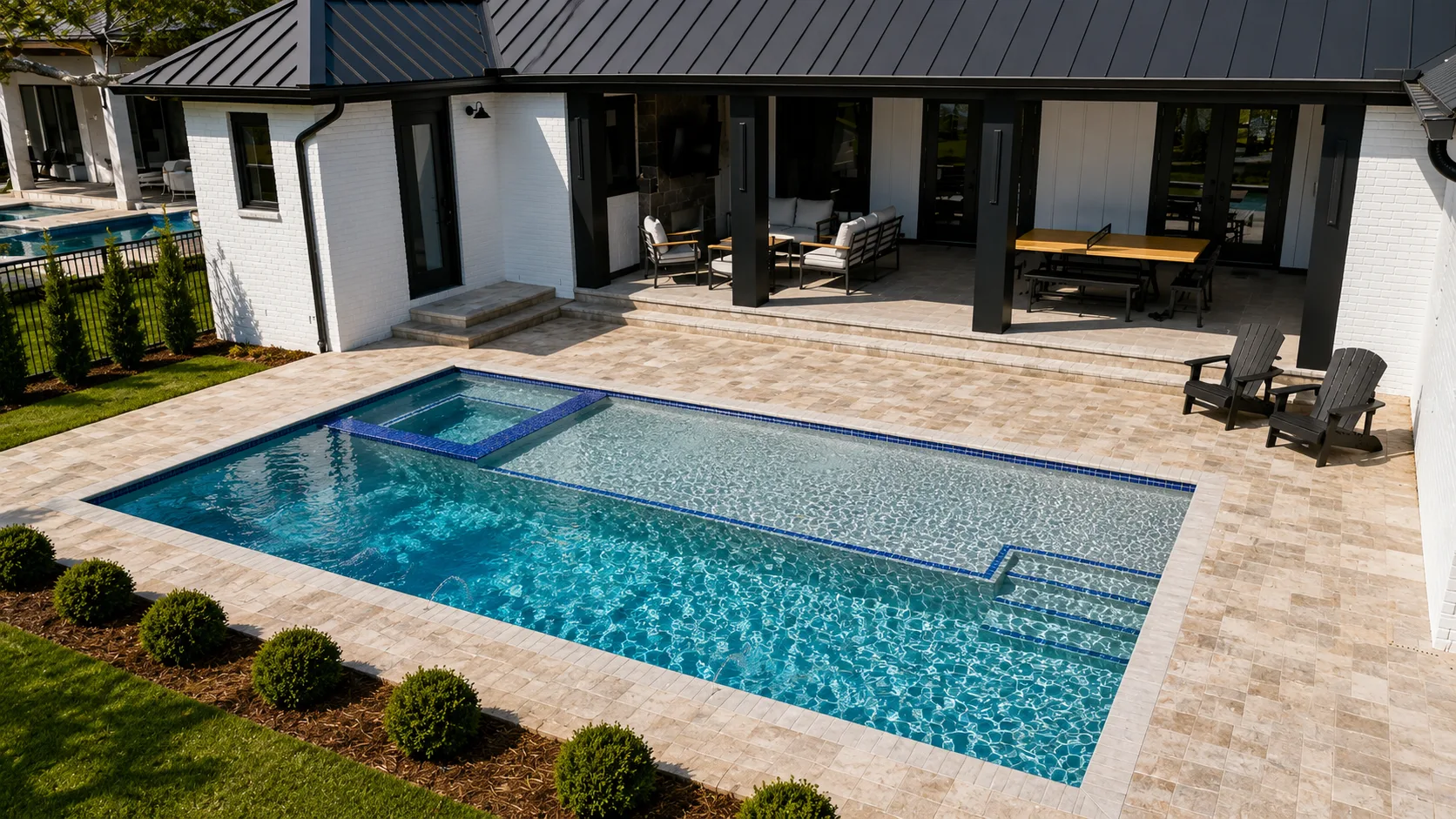
What to Expect From a Pool Inground Installation
Pool inground installation is a multi-phase construction process that transforms your backyard into a permanent, custom outdoor living space. Here’s a quick overview of what’s involved:
- Design and permitting – Site assessment, engineered drawings, and local permits
- Excavation – Digging the hole to precise dimensions (typically 1-3 days)
- Structural framework – Rebar, plumbing rough-ins, and electrical bonding
- Shell construction – Gunite application, fiberglass shell placement, or vinyl liner installation
- Finishing – Tile, coping, decking, and interior surface application
- Startup – Filling, chemical balancing, and equipment testing
Total timelines vary by pool type:
| Pool Type | Typical Timeline |
|---|---|
| Fiberglass | 3-6 weeks after permits |
| Vinyl liner | 4-8 weeks |
| Gunite/concrete | 8-12 weeks (includes 28-day cure) |
Installing an inground pool is one of the biggest investments you’ll make in your home. Done right, it adds lasting value, creates a space for family memories, and elevates how you experience your property every day. Done wrong, it leads to structural problems, voided warranties, and costly repairs.
This guide walks you through every stage of the process – from choosing the right pool material to understanding permits, timelines, costs, and what to realistically expect in your backyard during construction.
I’m Lucas Pimenta, General Manager at Neway Pools, and with over 20 years of hands-on experience overseeing pool inground installation projects across North Carolina, Florida, Georgia, and Alabama, I’ve guided hundreds of families through this exact process. Everything in this guide reflects what we’ve learned building custom gunite pools in real backyards, with real site challenges, across three distinct regional markets.
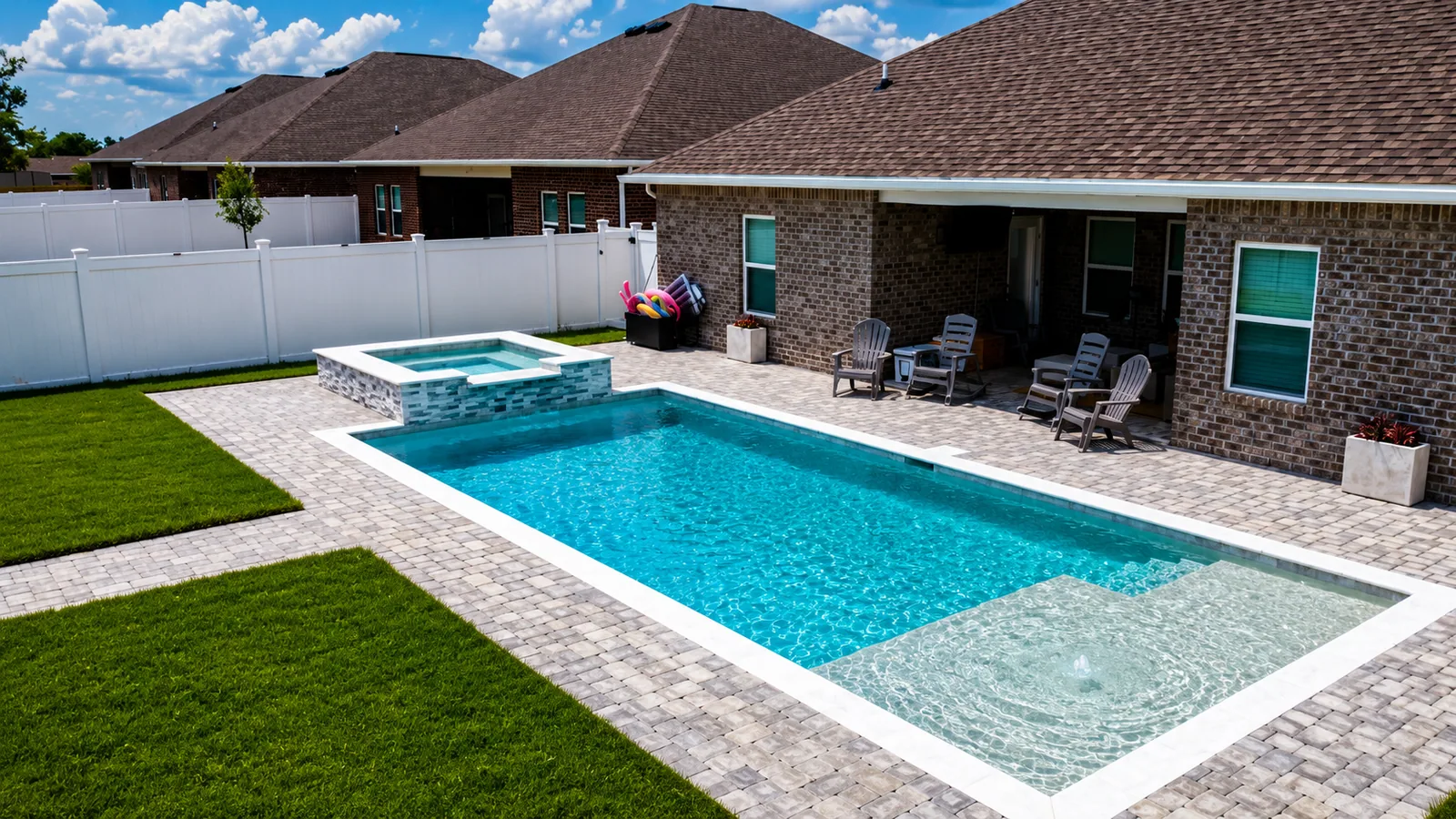
Choosing the Right Material for Your Pool Inground Installation
Selecting the material for your pool is the most significant decision you’ll make, as it dictates the longevity, maintenance requirements, and aesthetic potential of your backyard. In our service areas—from the sandy coastal soils of Wilmington and Gulf Breeze to the red clay of Cumming—material choice is often influenced by local geography.
Gunite and Concrete: The Gold Standard
At Neway Pools, we specialize in gunite because it offers unparalleled structural integrity. Gunite is a mixture of sand and cement sprayed at high velocity over a steel rebar cage. This creates a monolithic (one-piece) shell that can be shaped into any design imaginable. Whether you want a “sports pool” with two shallow ends for volleyball or a vanishing edge overlooking the water in Gulf Breeze, gunite makes it possible.
Fiberglass and Vinyl Liners
Fiberglass pools consist of a pre-manufactured shell delivered by truck and set into the ground via crane. While they offer a quicker “shell-in-the-ground” phase, you are limited to the shapes produced by the manufacturer. Vinyl liner pools use steel or polymer wall panels with a custom-fit vinyl sheet draped over them. While they have a lower initial cost, the liners typically require replacement every 7 to 12 years.
| Feature | Gunite (Concrete) | Fiberglass | Vinyl Liner |
|---|---|---|---|
| Durability | 50+ Years | 25+ Years | 20+ Years (Shell) |
| Customization | Unlimited | Limited to Molds | Moderate |
| Interior Finish | Pebble, Plaster, Tile | Gel Coat | Vinyl |
| Installation Time | 8–12 Weeks | 3–6 Weeks | 4–8 Weeks |
For those looking for a long-term investment, gunite is the clear winner. It allows for premium interior finishes like pebble surfaces, which offer superior texture and can last 15–20 years before needing a refresh, compared to standard plaster.
The Step-by-Step Construction Journey
Understanding the inground pool installation process helps manage the “construction fatigue” that can set in when your backyard looks like a moonscape. We follow a strict linear sequence to ensure every structural dependency is met before moving to the next phase.
Phase 1: Design and Permits for Pool Inground Installation
Before a single shovel hits the dirt, we must navigate the regulatory landscape. This begins with a site assessment to evaluate terrain, drainage, and sun exposure.
In jurisdictions like Gulf Breeze or Cumming, zoning laws dictate strict property setbacks—often requiring the pool to be at least 5 to 10 feet from property lines or existing structures. We also coordinate with your HOA to ensure the design meets community standards.
Crucially, we call 811 for utility marking to identify underground gas, water, or electric lines. Once the engineered drawings are approved, we secure the building permits. This phase typically takes 1 to 4 weeks, depending on local government backlog.
Phase 2: Structural Framework and Pool Inground Installation Mechanics
Once the site is cleared, excavation begins. We dig the hole slightly wider (about 8–12 inches) than the final pool dimensions to leave room for the structural “guts” of the pool.
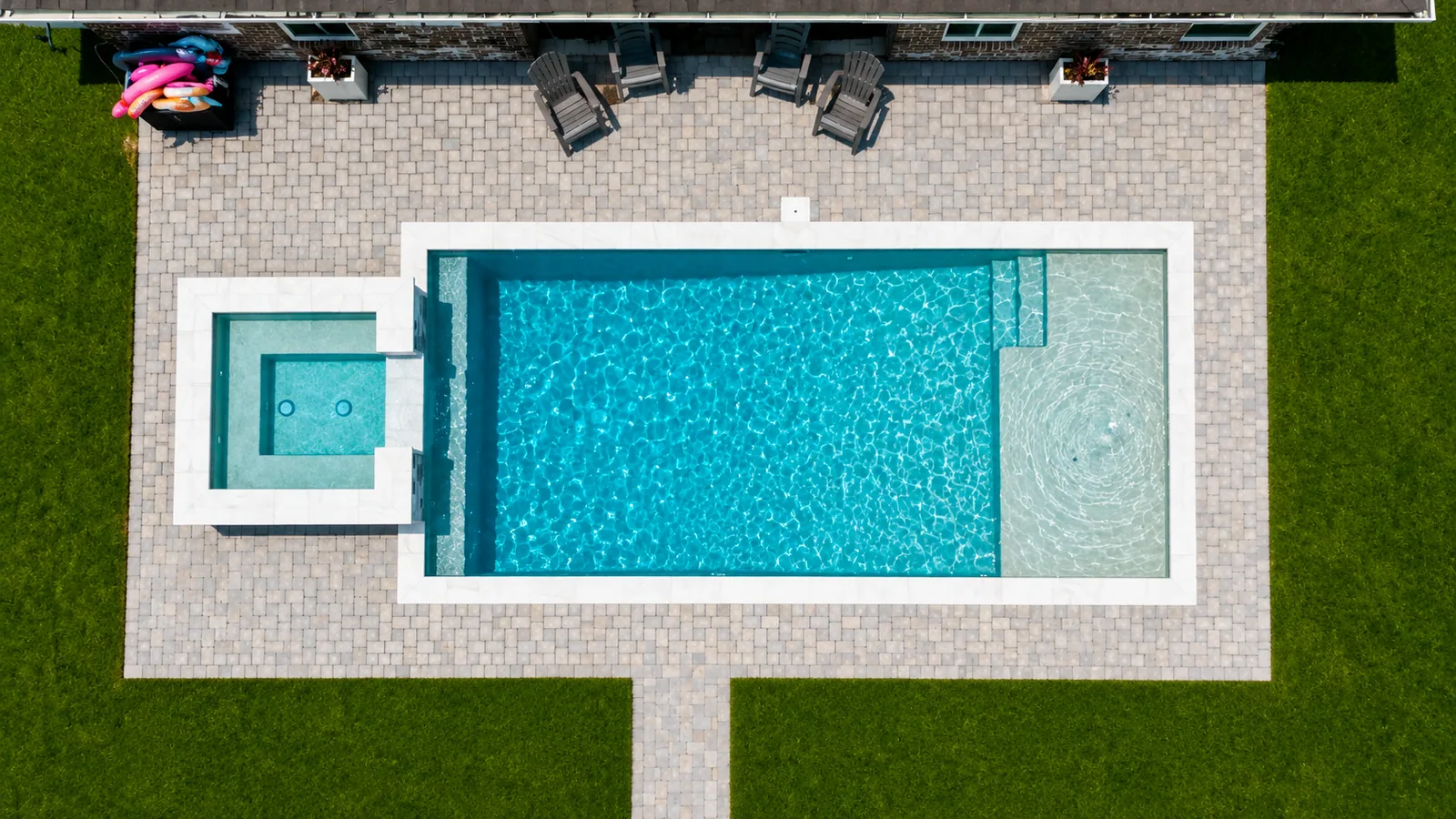
Rebar and Plumbing We install a grid of reinforcing steel rebar per engineer-approved schedules. This “skeleton” is what gives a gunite pool its strength. Simultaneously, we run heavy-duty Schedule 40 PVC plumbing lines. These lines are pressure-tested early to ensure there are no leaks before they are encased in concrete.
The Gunite Application This is the most exciting day for many homeowners. A specialized crew sprays the gunite mixture onto the rebar. Unlike traditional poured concrete, gunite is highly compressed, making it incredibly dense and water-resistant.
The 28-Day Curing Cycle This is the “patience phase.” According to the Step-by-Step Process & Timeline Guide, gunite requires a 28-day cure to reach its full structural PSI. During the first week, you’ll actually help by “watering” your pool shell twice a day to slow the hydration process and prevent surface cracks.
Factors Influencing Timelines and Costs
When planning your budget, it is important to realize that the “sticker price” of a pool can be influenced by what lies beneath your grass. In areas like Wilmington, we often deal with high water tables, while in parts of Georgia, we might encounter bedrock.
- Soil Conditions: If we find expansive clay or unstable sandy soil, we may need to bring in compacted gravel or additional steel reinforcement to ensure the pool doesn’t shift.
- Bedrock Removal: Encountering solid rock can require a hydraulic hammer (hoe-ram), which adds both time and equipment rental costs to the project.
- Backyard Access: Can we get a full-sized excavator into your yard? If we have to use smaller “Bobcat” equipment because of a narrow side gate, excavation can take 2 to 5 times longer.
- Custom Features: Adding tanning ledges, built-in spas, or water features increases the complexity of the plumbing and the time required for tile and coping work.
Many homeowners choose to finance their pool project to spread the cost over several years, treating it as a home improvement loan that adds to the property’s equity.
Essential Safety and Regulatory Requirements
A pool inground installation isn’t just about fun; it’s a highly regulated safety environment. We ensure every project complies with the Virginia Graeme Baker (VGB) Pool and Spa Safety Act, which mandates specific types of drain covers to prevent suction entrapment.
Barriers and Fencing
Most municipalities in our service areas, including Gulf Breeze and Cumming, require a safety fence at least 48 to 54 inches high. These fences must have self-closing and self-latching gates where the latch is out of reach of small children.
Alarms and Non-Slip Surfaces
If your house forms one side of the “barrier,” we often install door alarms that sound when a child opens a door leading to the pool area. Additionally, we prioritize non-slip materials for the pool decking—such as textured pavers or stamped concrete—to prevent slips in the “splash zone.” Final inspections by the county are required for structural, electrical, and safety barrier compliance before the pool is legally cleared for use.
Why Professional Expertise Outperforms DIY Methods
The “DIY pool kit” is a tempting idea on paper, but in practice, it often becomes a homeowner’s worst nightmare. Pool inground installation involves high-stakes licensed trades, including specialized plumbing, high-voltage electrical bonding, and structural engineering.
As our General Manager, Lucas, often points out, a single mistake in the electrical bonding phase (connecting all metal components to prevent electrical shock) can be life-threatening. Furthermore, most pool equipment manufacturers—like those making your pumps and heaters—will void their warranties if the equipment isn’t installed by a licensed professional.
At Neway Pools, we provide:
- Subcontractor Coordination: We manage the 5 to 7 different crews needed for a single build, ensuring no one is “standing around” waiting for the next phase.
- Warranty Protection: We offer a 3-year warranty on our hardscapes and plumbing, giving you peace of mind that we stand behind our custom builds.
- Heavy Machinery Management: We handle the logistics of bringing 20-ton machines into residential neighborhoods without destroying your neighbors’ property or the city’s curbs.
Frequently Asked Questions about Pool Inground Installation
How long does the installation process typically take?
For a custom gunite pool, you should expect 8 to 12 weeks from the day we start digging. This accounts for the excavation, plumbing, steel, gunite application, the mandatory 28-day cure, and the final finishing of tile and decking. Weather is the biggest variable; heavy rain can delay excavation or concrete work.
What is the most durable material for an inground pool?
Gunite (concrete) and fiberglass are considered the most durable. However, gunite is the only material that is truly a permanent, monolithic structure that can last 50+ years with proper structural care. It is the gold standard for high-end residential pools.
Do I need a permit for a backyard pool installation?
Yes. In all 50 states, and specifically in the Florida, Georgia, North Carolina, and Alabama counties we serve, a building permit is legally required. Installing a pool without a permit can lead to fines, the inability to sell your home later, and potential insurance denials.
Start Your Backyard Transformation Today
At Neway Pools, we don’t just build swimming pools; we craft the backdrop for your family’s most cherished memories. From the initial 3D design to the moment you take your first dive, our team is dedicated to providing a seamless, professional experience.
Whether you are in Gulf Breeze, Cumming, or Wilmington, we bring the same commitment to premium materials and expert craftsmanship to every backyard. Ready to stop dreaming and start digging? Start your project with Neway Pools and let us help you design the private sanctuary you deserve.