
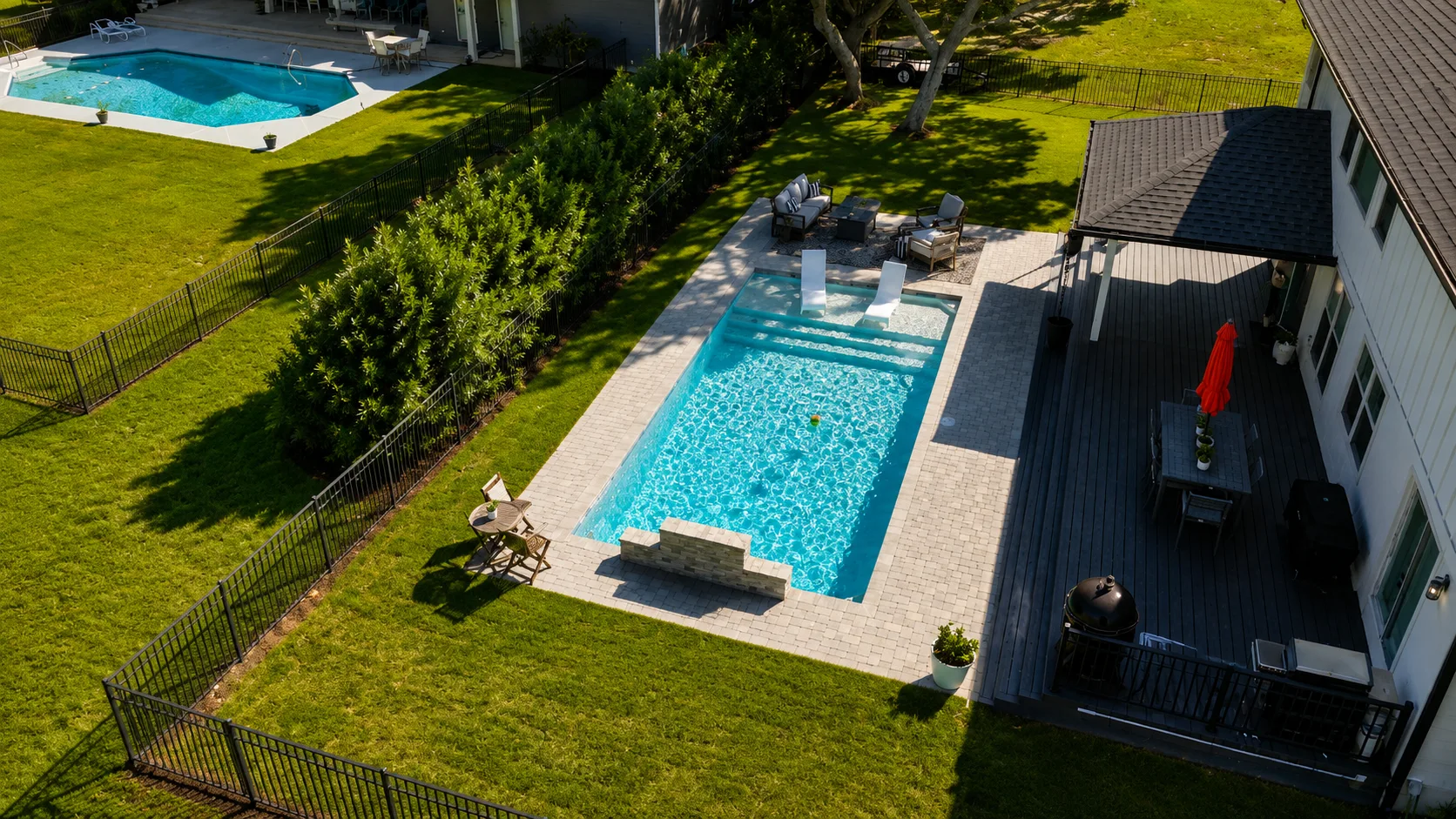
Why an Outdoor Fireplace is the Ultimate Backyard Upgrade
Outdoor fireplace design creates a warm, inviting focal point that extends your living space. When planning, consider these essential elements:
- Type: Choose between a traditional fireplace (vertical, with chimney) or a fire pit (lower profile, 360-degree viewing)
- Fuel Source: Gas offers convenience; wood provides authentic ambiance
- Materials: Natural stone, brick, stucco, or concrete—each with different durability and aesthetics
- Placement: Position 10-20 feet from your home, with proper clearance from combustibles
- Budget: Expect to invest $3,000-$20,000+ depending on size, materials, and construction
- Style: Match your home’s architecture (modern, rustic, traditional, or Mediterranean)
The primal attraction to fire transforms a backyard into a destination—a place for family gatherings on cool evenings and where friends linger long after dinner. The changing seasons no longer dictate when you can enjoy your outdoor space.
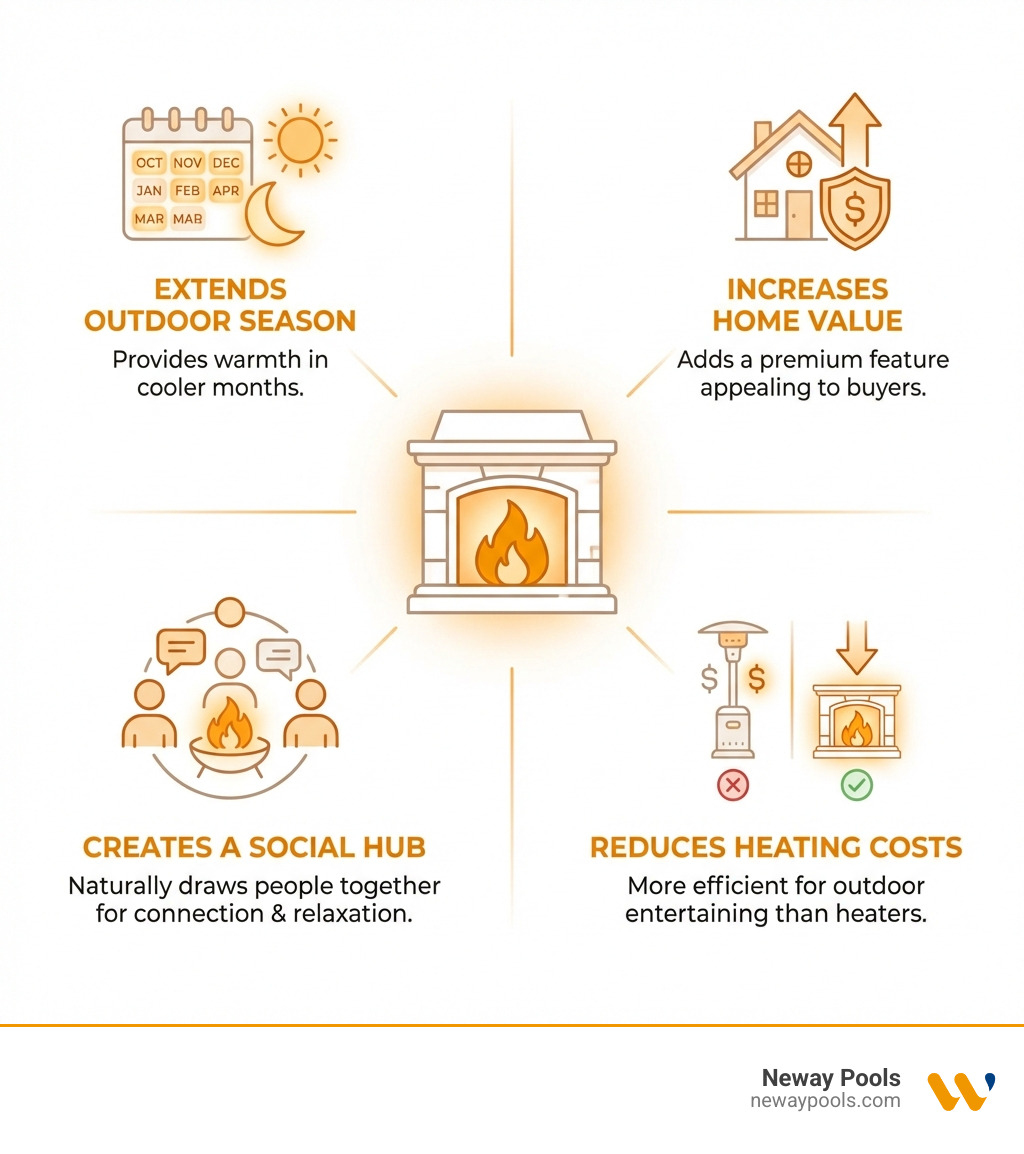
Beyond ambiance, outdoor fireplaces deliver tangible benefits. They extend your outdoor season, create a natural gathering point, and can significantly boost your home’s resale value. It’s no surprise that fire features appear in 70% of professional landscape designs today, combining function, beauty, and timeless comfort.
The key to a successful outdoor fireplace is thoughtful design that balances aesthetics, safety, and your needs. Whether you envision a grand stone fireplace or a cozy fire pit, the right design will feel like a natural extension of your home.
I’m Lucas Pimenta, General Manager at Neway Pools. For over two decades, we’ve designed and built complete outdoor living environments across Florida, Georgia, North Carolina, and Alabama. Our experience shows that fireplaces work best when integrated into a larger vision—connecting with patios, pools, and outdoor kitchens to create a cohesive, year-round space.
Outdoor fireplace design further reading:
- Explore our custom pool solutions in Florida, Georgia, North Carolina, and Alabama.
Choosing Your Fire Feature: Types, Fuel, and Materials
Understanding your options is the first step in any outdoor fireplace design. Your choice influences aesthetics, functionality, and maintenance. We’ll explore the differences between fireplaces and fire pits, the pros and cons of fuel sources, and the best materials for beauty and durability.
Fireplace vs. Fire Pit: What’s the Difference?
Outdoor fire features fall into two primary categories: fireplaces and fire pits. Both offer warmth and ambiance, but their design and function differ significantly.
An outdoor fireplace is a vertical structure with a chimney, acting as a strong focal point. It directs smoke up and away, making it ideal for covered patios. Fireplaces create a formal, intimate setting suited for smaller gatherings. The visual impact of a grand stone or brick fireplace provides a sense of permanence and luxury, often echoing the home’s architecture.
Fire pits are lower to the ground and designed for 360-degree seating, fostering an informal, communal atmosphere perfect for larger gatherings. Their open design accommodates more people and offers unobstructed views. Fire pits are also a more budget-friendly option for many homeowners in Florida, Georgia, North Carolina, and Alabama.
The choice depends on your intended use, space, and desired aesthetic. For a cozy retreat, a fireplace provides intimacy. For a lively gathering spot, a fire pit is hard to beat.
For more insights into designing outdoor fire features, we recommend reviewing resources like Designing Outdoor Fireplaces and Fire Pits.
The Great Debate: Gas vs. Wood-Burning Fireplaces
After choosing a type, the next decision in your outdoor fireplace design is the fuel source. The choice between gas and wood impacts convenience, ambiance, maintenance, cost, and safety.
| Feature | Gas-Burning Outdoor Fireplace | Wood-Burning Outdoor Fireplace |
|---|---|---|
| Convenience | Instant ignition, adjustable flame with a switch or remote | Requires gathering, chopping, and tending to wood; slower to start |
| Ambiance | Clean, consistent flame; modern aesthetic; can use crushed glass or ceramic logs | Authentic crackling sounds, smoky aroma, natural flickering flame; traditional feel |
| Maintenance | Low maintenance; annual burner cleaning; no ash or soot buildup | Higher maintenance; regular ash removal; periodic chimney cleaning for soot |
| Cost | Higher upfront installation (gas line); lower fuel costs (natural gas); higher fuel costs (propane) | Lower upfront unit cost; ongoing cost for firewood |
| Safety | No sparks or embers; controlled flame; ventless options available | Risk of stray sparks/embers; requires careful placement and monitoring |
Gas features offer unparalleled convenience with instant, remote-controlled flames. They burn cleanly, eliminating sparks and smoke, which is a major advantage in many areas we serve. Gas is also easier to maintain, and ventless options offer flexible placement without a chimney.
Many homeowners, however, crave the sensory experience of a wood-burning fire—the smell, crackle, and radiant heat create an ambiance gas can’t replicate. While requiring more effort, wood offers a traditional, satisfying experience. Be aware of local ordinances in Florida, Georgia, North Carolina, and Alabama, as some areas restrict wood fires.
Essential Materials for Your Outdoor Fireplace Design
Your material choice is paramount for durability, longevity, and integration with your landscape. In the climates of Florida, Georgia, North Carolina, and Alabama, selecting weather-resistant materials is crucial.
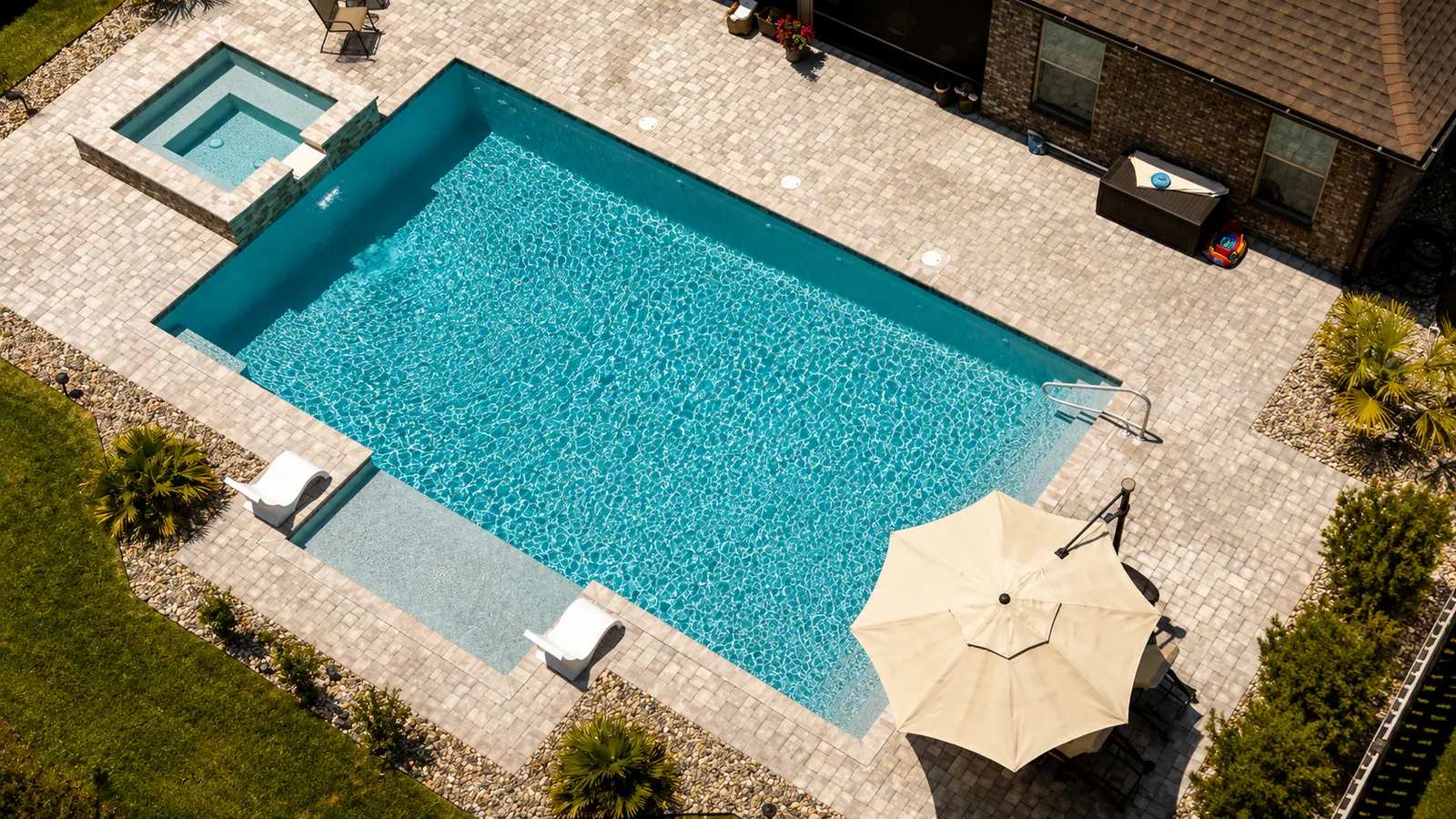
We often recommend materials that complement your home’s architectural style. Some of the best materials for outdoor fireplace design include:
- Natural Stone: Offers a timeless, organic look from rustic to modern. It’s incredibly durable and weather-resistant.
- Brick: Classic and versatile, brick provides a traditional feel. It’s robust and requires minimal maintenance.
- Poured Concrete: For a contemporary aesthetic, poured concrete offers clean lines and high durability.
- Stucco: Often seen in Mediterranean designs, stucco provides a smooth, neat finish that can be painted to match any color palette.
- Metal Accents: Stainless steel or Corten steel can add a modern, industrial touch. Stainless steel is rust-resistant, while Corten develops a protective rust-like patina.
The best materials depend on your house’s architecture. Integrating materials that match or thoughtfully contrast your home’s exterior will create a cohesive outdoor living space.
Key Elements of Outdoor Fireplace Design
A successful outdoor fireplace design also hinges on safety, budget, and scale. We emphasize these aspects to ensure your investment in a custom fire feature from Neway Pools brings lasting enjoyment and value.
Safe and Strategic Fireplace Placement
Safety is paramount when installing an outdoor fire feature. Improper placement can create serious hazards, especially during dry spells in Florida, Georgia, North Carolina, and Alabama.
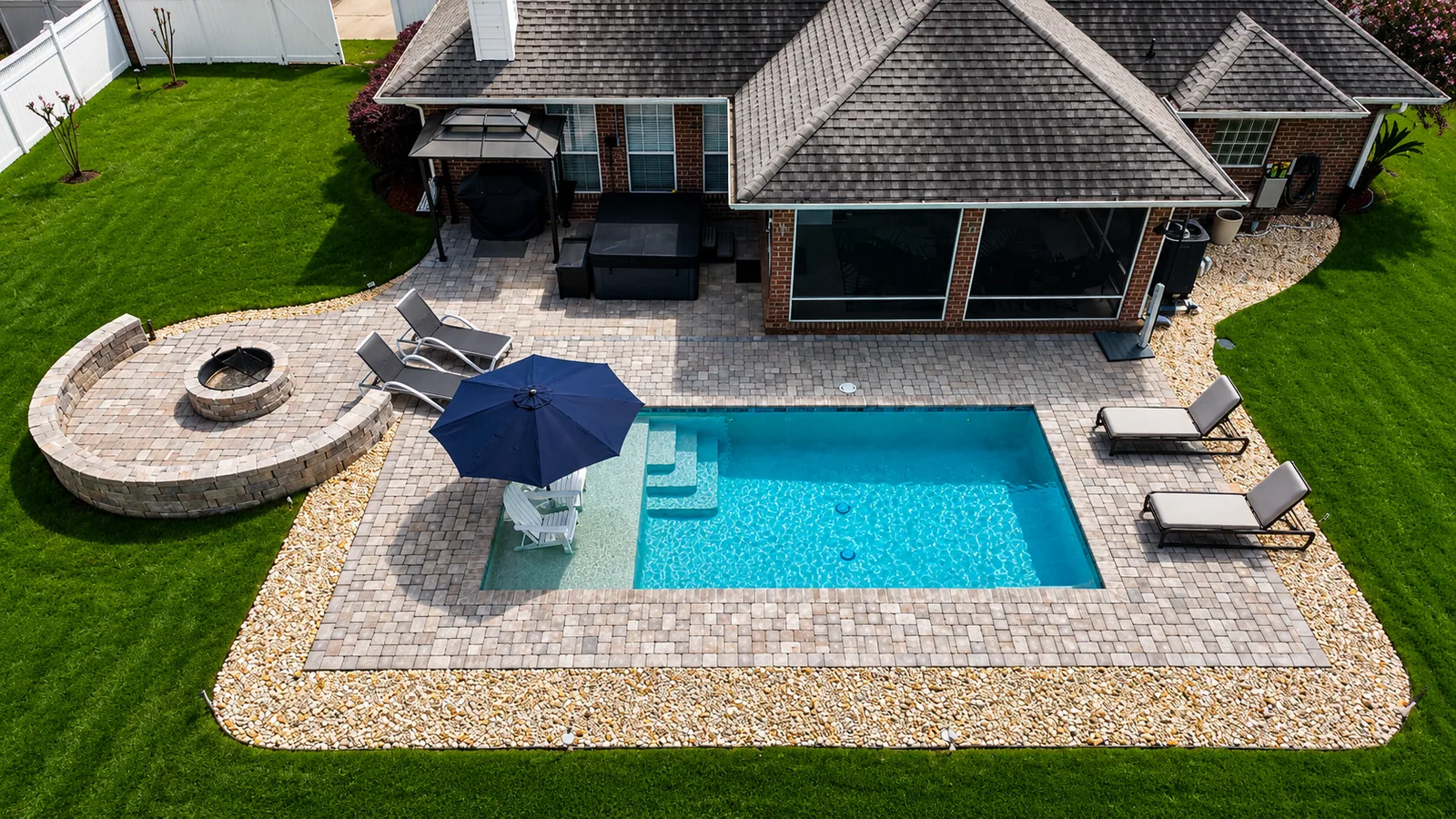
Here are key considerations for safe placement:
- Distance from Combustibles: Place your fireplace at least 10 feet from any combustible structure like your home, fences, or dense plantings. Some experts recommend a minimum of 20 feet.
- Overhead Clearance: For covered areas, a wood-burning unit needs a full chimney extending at least 24 inches above the roofline to vent smoke and embers. Vented gas fireplaces also require proper ventilation per manufacturer specs.
- Prevailing Wind Direction: Position your fireplace so that smoke is carried away from your primary seating areas and home.
- Local Building Codes: This is a non-negotiable step. Before construction, check with your local code enforcement and HOA in your Florida, Georgia, North Carolina, or Alabama community for requirements on setbacks, permits, and fuel types.
A well-placed fireplace improves the flow and function of your outdoor area. For more detailed guidance, you can refer to resources like How to Build an Outdoor Wood-Burning Fireplace.
Budgeting for Your Backyard Oasis
Understanding the costs of an outdoor fireplace design is crucial for planning. Prices vary, but we can provide estimates to help you budget for your backyard oasis in Florida, Georgia, North Carolina, or Alabama.
The total cost can range from $3,000 to over $20,000. A general estimate is about $12,000, with most projects in 2025 projected to fall between $10,000 and $20,000.
Factors influencing the cost include:
- Prefabricated Kits vs. Custom Builds:
- Prefab units: More cost-effective, often under $10,000. A high-quality wood-burning unit can range from $1,500 to $4,500, with faster assembly saving on labor.
- Custom builds: Offer limitless design possibilities but can exceed $20,000, allowing for seamless integration with your landscape.
- Material Costs: Natural stone and high-end finishes are more expensive than brick or stucco.
- Labor Costs: Professional installation by experienced contractors like Neway Pools ensures quality, safety, and code adherence.
- Fuel Source Infrastructure: Gas fireplaces may require installing a gas line, adding to the initial cost.
- DIY vs. Professional: While DIY saves on labor, it requires significant skill and adherence to codes. For complex designs, professional installation is the safer, more durable choice.
We offer transparent pricing and discuss all options to help you achieve your dream. Explore our financing options for your project to make your vision a reality.
Tailoring Your Outdoor Fireplace Design to Your Yard Size
The size and layout of your yard are crucial for determining the ideal outdoor fireplace design. A feature that works in a large yard might overwhelm a small patio.
-
Designs for Small Yards:
- Compact Fireplaces: Emphasize verticality to make a small space feel larger.
- Chimeneas: Freestanding and perfect for limited patio space, they heat up quickly and direct smoke upwards.
- Fire Bowls: A simple fire bowl offers a high-impact look without demanding much space.
- Integrated Designs: Build a fireplace into a wall or corner to maximize floor space.
-
Designs for Large Yards:
- Grand Scale Fireplaces: Large yards can accommodate impressive, oversized fireplaces as a dramatic focal point.
- Multi-functional Structures: Combine your fireplace with other elements like our custom outdoor kitchens (available in Florida, Georgia, North Carolina, and Alabama) or pool decks.
- Double-Sided Fireplaces: Enjoy the fire from two different areas, serving multiple zones.
- Sculptural Fire Pits: An artistic fire pit can become a central gathering point with ample seating.
The goal is to balance scale with functionality. We specialize in creating custom fire features in Florida, Georgia, North Carolina, and Alabama that are perfectly suited to your space, ensuring your fireplace improves your backyard’s appeal.
Crafting the Perfect Ambiance: Style, Seating, and Lighting
The magic of an outdoor fireplace is its ability to transform a backyard. This section covers crafting the perfect ambiance by integrating style, seating, and lighting into your outdoor fireplace design.
Matching Your Fireplace to Your Landscape Style
Your outdoor fireplace should feel like an extension of your home and landscape. Matching its style to your existing aesthetic creates a harmonious look.
Here are some popular landscape styles and complementary fireplace designs:
- Modern Style: Characterized by clean lines and geometric shapes. A modern fireplace might feature smooth concrete, stucco, or sleek metal, such as a linear gas fireplace with ribbon flames.
- Rustic Style: Accepts natural, raw materials for a cozy, rugged feel. For a rustic outdoor fireplace design, use natural stacked stone, rough-hewn timber, or weathered brick.
- Formal Style: Features symmetrical layouts and refined materials. A formal fireplace might be built with classic brickwork or cut stone, with a mantle and hearth echoing traditional designs.
- Mediterranean Style: Evokes coastal European warmth with earthy tones and natural materials. A Mediterranean fireplace could feature a stucco finish, terracotta tiles, or mosaic details.
The best materials depend on your house’s architecture. You can either match your home’s exterior or create a deliberate contrast. The goal is a fireplace that feels like it belongs. For visual inspiration, explore resources like These 33 Outdoor Fireplace Ideas Will Spark the Coziest Fall Hangouts.
Designing Functional and Comfortable Seating
An outdoor fireplace is a natural gathering spot, so thoughtful seating is essential for comfort. As the saying goes, “design ideas are one thing; creating an outdoor furniture set up that’s actually comfortable is another.”
- Proximity to Heat: Outdoor fireplaces don’t project heat as far as indoor units. Our experience shows that placing seating as close as safely possible is key for warmth.
- Variety of Seating: Offer a mix of seating options. Lightweight, portable furniture allows for flexibility.
- Built-in Seating Walls: A popular, durable option that defines the space and provides ample seating, often built from materials that match your fireplace.
- Arrangement for Conversation: A semi-circle or U-shaped layout facing the fireplace encourages interaction.
- Weather-Resistant Materials: In Florida, Georgia, North Carolina, and Alabama, choose cushions and fabrics that are weather-resistant, UV-protected, and quick-drying.
By focusing on aesthetics and practicality, we create outdoor spaces where everyone can enjoy the fire’s warmth and ambiance.
Illuminating Your Space: Lighting Techniques
Lighting is pivotal for enhancing the mood and function of your fireplace area after sunset. Strategic lighting highlights features, improves safety, and creates a magical atmosphere.
- Low-Level Ambient Lighting: The fire should be the star. Complement it with soft, low-level ambient lighting like lanterns or path lights, which create a warm glow without overpowering the flames.
- Uplighting the Fireplace Structure: Directing subtle lights onto the fireplace can emphasize its texture and architectural details.
- Pathway Lighting: Ensure safe access to and from the fireplace area with discreet pathway lighting.
- Integrated LED Strips: For a modern touch, integrate LED strip lighting under seating or along a hearth for a soft, continuous glow.
- Candles: Don’t underestimate the power of flickering candles to add an extra layer of charm and intimacy.
The goal is a layered lighting scheme that improves the fire’s beauty, improves safety, and lets you enjoy your outdoor space well into the night.
Frequently Asked Questions About Outdoor Fireplaces
Here are answers to common questions we receive about outdoor fireplace design and ownership from homeowners in Florida, Georgia, North Carolina, and Alabama:
How do you maintain an outdoor fireplace?
Outdoor fireplaces are low-maintenance, but consistent care ensures longevity and performance.
- For Wood-Burning Units: Regularly scoop out ashes and debris from the firebox to ensure proper airflow. A professional chimney sweep can remove soot buildup. Keep the surrounding area clear of combustible materials.
- For Gas Units: Annually, clean the burners and fire media. Ensure fire pits have proper drainage and air holes. An annual professional check-up is a best practice for safety and efficiency.
- General Maintenance: Protect your fireplace with a high-quality, weather-resistant cover when not in use to shield it from the elements and preserve its appearance.
What is the expected lifespan of a well-maintained outdoor fireplace?
A quality, professionally built masonry fireplace can last for decades, potentially the lifetime of your home. This is why Neway Pools prioritizes premium materials and expert installation, backed by a 3-year warranty on hardscapes and plumbing. Prefabricated units can last 10-15 years or more with proper care. Regular maintenance is key to maximizing lifespan.
Can an outdoor fireplace be installed under a covered patio?
Yes, an outdoor fireplace can be installed under a covered structure, but it requires careful planning and adherence to safety guidelines.
- Wood-Burning Fireplaces: These require a full chimney that extends well above the roofline (typically 24 inches taller than any surrounding structure) to safely vent smoke and embers.
- Gas Fireplaces: Vented gas fireplaces also need a proper flue system per manufacturer and local code specifications. Some ventless outdoor gas fireplaces offer more flexibility but still have clearance requirements.
In all cases, adhering to manufacturer’s clearances and local building codes in Florida, Georgia, North Carolina, and Alabama is essential. We work with you to ensure your covered fireplace design is both beautiful and completely safe.
Your Backyard Awaits: A Year-Round Retreat
An outdoor fireplace is more than a heating element; it’s a statement piece and a lifestyle improver. We’ve seen thoughtful outdoor fireplace design transform backyards across Florida, Georgia, North Carolina, and Alabama into year-round havens.
By considering the type, fuel, materials, placement, budget, and style, you can create an outdoor living space that extends your seasons, improves home value, and provides countless cherished moments. The journey from initial idea to the radiant glow of a finished fire is an exciting one.
At Neway Pools, we pride ourselves on crafting inspiring backyards that bring families together. Our expertise in creating integrated outdoor living spaces, including custom fire features, pools, and outdoor kitchens, ensures every element works in harmony. We are dedicated to delivering premium quality and lasting enjoyment.
Are you ready to transform your backyard into the ultimate year-round retreat? Contact us to start designing your dream backyard today. Let’s ignite your imagination and build a space where memories are made.
Ready to take the first step toward a stunning outdoor fireplace? Explore services and start your transformation in Florida, Georgia, North Carolina, or Alabama today.