
Why a Garden Reflecting Pool Transforms Your Outdoor Space
A garden reflecting pool is a shallow, still water feature designed to mirror the sky, surrounding landscape, and architectural elements, creating a sense of tranquility and visual expansion in your outdoor space. These neat features typically require only 6-12 inches of depth to achieve their signature mirror-like surface and can be scaled to fit any garden size—from compact courtyards to sprawling estates.
Quick Guide to Garden Reflecting Pool Benefits:
- Creates serenity through still, calm water surfaces
- Amplifies space by creating the illusion of depth and expansiveness
- Improves light by reflecting sky and surroundings
- Provides cooling through natural evaporation
- Adds elegance with timeless, sophisticated design
- Connects architecture to the natural landscape seamlessly
For thousands of years, architects and garden designers have used reflecting pools to create breathtaking views. From the ancient Persian gardens to the iconic Taj Mahal, these water features have symbolized purity, contemplation, and the serene beauty of still water.
The allure of a reflecting pool lies in its simplicity. Unlike fountains or waterfalls, it doesn’t demand attention with movement or sound. Instead, it invites quiet contemplation—a horizontal mirror that captures ever-changing reflections of clouds drifting overhead, the colors of sunset, or the neat lines of your home’s architecture.
I’m Lucas Pimenta, and over my 20+ years designing and building custom gunite pools across the Southeast, I’ve seen how a thoughtfully designed garden reflecting pool can transform an ordinary backyard into a sophisticated outdoor sanctuary. Whether you’re drawn to formal geometric designs or naturalistic organic shapes, understanding the key elements of reflecting pool design will help you create a feature that brings lasting beauty and calm to your property.
The Timeless Allure: History and Benefits of Reflecting Pools
What exactly is a garden reflecting pool and what purpose does it serve in garden design? Simply put, it’s a water feature characterized by a shallow, undisturbed surface that acts as a mirror, reflecting its surroundings. Its primary purpose is to create a serene, visual extension of the landscape, architecture, or sky, enhancing the overall aesthetic and atmosphere of a space.
The concept of reflecting pools is far from new; it’s a design element with a rich and fascinating history. We can trace their origins back to ancient Persian gardens, where water features were essential elements of well-balanced environments. These early pools often served practical purposes, like irrigation, but their reflective qualities were quickly appreciated for their aesthetic value. Later, they became central to the grand Mughal gardens, famously seen at the Taj Mahal, where they symbolize eternal beauty and symmetry. In medieval European monastic gardens, reflecting pools were incorporated for peaceful contemplation, representing purity and a connection to the divine. For instance, the reflecting pool at Villa Pisani in Venice, Italy, commissioned in 1735, is original to the site and exemplifies this historical significance. Even a natural “cow pond” at Dumbarton Oaks was sculpted into an oval reflecting pool in 1926 by Beatrix Farrand, showing how even organic features can be refined for reflection.
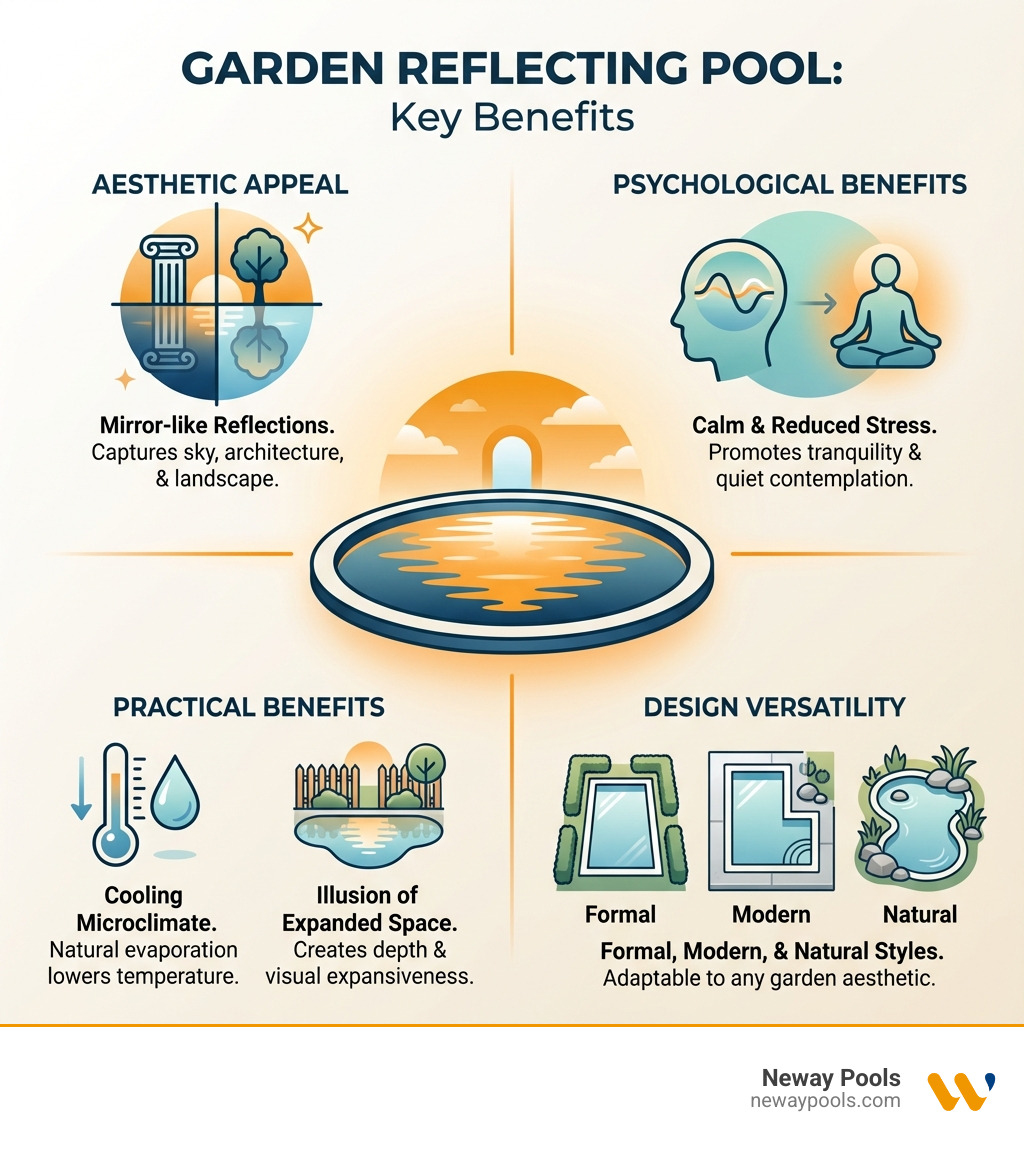
Reflecting pools offer a wealth of benefits, both aesthetic and psychological, that lift a garden’s atmosphere:
- Aesthetic Appeal: They create striking visual interest, providing a dynamic “second view” of your garden, home, or the sky. The calm, glass-like surface adds a touch of elegance and sophistication.
- Illusion of Space: By mirroring the surroundings, a reflecting pool can trick the eye, making a garden appear larger, deeper, and more expansive than it actually is. This is especially valuable in smaller spaces.
- Serenity and Calm: The stillness of the water creates an immediate sense of peace and tranquility. The absence of splashing or rushing water encourages quiet contemplation and mindfulness, helping to reduce stress.
- Amplifies Light: Reflecting pools capture and amplify natural light, brightening darker areas of the garden and creating a luminous quality, especially at dawn and dusk.
- Cooling Effect: Through evaporation, these water features can create a microclimate, slightly cooling the surrounding area, which is a welcome benefit in the warm climates of Florida, Georgia, North Carolina, and Alabama.
- Connects Architecture to Landscape: A well-placed reflecting pool seamlessly integrates structures with their natural surroundings, blurring the lines between built and natural environments.
For a beautiful example of how a reflecting pool can become the centerpiece of a garden, we can look to historical estates. The reflecting pool at Dumbarton Oaks is a prime illustration, designed to be admired from all angles and encouraging contemplation of its reflections.
Designing Your Ideal Garden Reflecting Pool
Designing a garden reflecting pool is an art form that blends aesthetics with practicality. The goal is to create a feature that complements your garden’s overall style and improves its natural beauty.
Design Styles
Reflecting pools can be adapted to various garden aesthetics:
- Formal: These pools often feature geometric shapes—rectangles, squares, or perfect circles—with clean lines and structured edges. They typically use materials like stone, concrete, or tile, emphasizing symmetry and order. Formal pools are ideal for manicured gardens and classical architectural settings common in some of the grander homes across Florida, Georgia, North Carolina, and Alabama.
- Naturalistic: Mimicking a calm pond, naturalistic pools have organic, irregular shapes and soft, often vegetated edges. They blend seamlessly into the landscape, using natural stone, pebbles, and sometimes aquatic plants (though minimal to preserve reflection). These are perfect for gardens aiming for a more relaxed, integrated look.
- Modern/Architectural: Characterized by sleek, minimalist lines and often integrated directly into the architecture of a home or patio. Materials like polished concrete, dark tiles, or even glass are used to achieve a sophisticated, understated elegance. These designs often play with negative space and strong visual statements, perfect for contemporary homes in Atlanta or Wilmington.
Here’s a quick comparison of these styles:
| Style | Key Features | Common Materials | Best Suited Garden Types |
|---|---|---|---|
| Formal | Geometric shapes, symmetry, clean edges | Stone, concrete, tile | Classical, manicured, traditional, architectural |
| Naturalistic | Organic shapes, soft edges, integrated plants | Natural stone, pebbles, earth-toned liners | Cottage, woodland, informal, eco-friendly |
| Modern/Architectural | Clean lines, minimalist, integrated with structure | Polished concrete, dark tile, glass, gunite | Contemporary, urban, minimalist, luxury home landscapes |
Key Elements for an Effective Garden Reflecting Pool
Regardless of the style, certain key elements are crucial for maximizing the effectiveness and beauty of your reflecting pool:
- Stillness: The most critical factor for a good reflection is a perfectly still water surface. This means avoiding features like fountains or waterfalls that disturb the water. We design our reflecting pools to minimize ripples, often with slightly deeper outer edges to suppress wave formation.
- Shallow Depth: Reflecting pools do not need to be very deep. A depth of just 6 to 12 inches (15-31 cm) is sufficient to provide a stunning reflection. This shallow depth also makes them easier to maintain and safer.
- Color & Depth: A dark bottom is essential for enhancing the mirror-like quality. We often use black pebbles, dark-colored gunite finishes, or specialized dyes to create a deep, reflective surface that truly captures the sky and surroundings. According to Pebble Technology International, black pebbles add a sense of depth and improve reflections.
- Materials: For durability and a seamless finish, we often recommend gunite or concrete for the pool structure. These materials allow for custom shapes and sizes and can be finished with various tiles or coatings. Stone coping around the edges provides a refined look and helps define the pool’s boundaries. High-quality pool liners are also an option for certain designs, offering flexibility and cost-effectiveness.
- Lighting: Thoughtful lighting can transform your reflecting pool into a magical feature at night. Underwater LEDs can create a subtle glow, while perimeter lighting can highlight the pool’s shape and its surroundings. We often integrate lighting to showcase architectural features or surrounding plant life, creating dramatic contrast.
Scaling a Garden Reflecting Pool for Any Space
One of the great advantages of reflecting pools is their adaptability to different garden sizes:
- Large Estates: On expansive properties, a garden reflecting pool can be a grand focal point. Long, linear pools, like the Lincoln Memorial Reflecting Pool (which is approximately 1.2 miles around), can stretch across vast landscapes, reflecting distant monuments or sweeping vistas. These grand designs can create breathtaking views and lead the eye through the landscape.
- Suburban Gardens: For medium-sized backyards, reflecting pools can be artfully integrated with patios, seating areas, or as a central feature within a garden bed. Proportional shapes—perhaps a wide rectangle or a graceful oval—work best, ensuring the pool improves the space without overwhelming it.
- Small Patios/Courtyards: Even the most compact spaces can benefit from a reflecting pool. We can design contained features, such as raised basins made from gunite or concrete, or simple, neat bowls. These smaller pools still offer the same reflective beauty and calming presence, proving that you don’t need a palace to enjoy a reflecting pond.
From Plan to Perfection: Installing Your Water Feature
The journey to your perfect garden reflecting pool begins with careful planning and expert installation. We pride ourselves on guiding our clients through every step, ensuring a beautiful and lasting water feature that integrates seamlessly with your outdoor living space.
Planning Phase
This initial stage is crucial for the success of your reflecting pool:
- Site Selection: We help you choose the ideal location. Key considerations include:
- Sunlight: Adequate sunlight improves reflections, but avoiding deep shade can prevent excessive algae growth.
- Views: What do you want the pool to reflect? Your home’s architecture, a favorite tree, or the open sky?
- Away from Deciduous Trees: To minimize maintenance, we recommend locating the pool at least 10 feet away from deciduous trees to reduce leaf accumulation and debris.
- Ground Stability: The chosen site must have stable, level ground to support the pool structure.
- Proximity to Utilities: We consider proximity to water sources and electrical outlets (ideally within 20 feet) for filling, filtration, and lighting.
- Size and Shape Determination: We work with you to determine dimensions that are proportionate to your garden’s layout and available space. Whether it’s a sleek rectangle or a custom organic shape, the pool should harmonize with its surroundings.
Installation Steps
Once the design is finalized, our skilled team gets to work:
- Excavation and Leveling: The chosen area is carefully excavated to the desired shallow depth, typically 6-12 inches. The base is carefully leveled to ensure a perfectly still water surface.
- Sand Base Layer: A 1-2 inch layer of sand or fine gravel is spread and compacted to provide a stable, protective base for the liner or gunite shell.
- Liner or Gunite Installation:
- Liners: If using a liner, we carefully position a durable, UV-resistant material like EPDM rubber or PVC. The edges are secured with stones or coping.
- Gunite/Concrete: For a permanent, custom-shaped pool, we apply gunite, a robust concrete mixture, to form the shell. This allows for unparalleled design flexibility and durability.
- Edging and Coping: The pool’s edges are finished with your chosen material—be it natural stone, neat pavers, or poured concrete—to create a clean, defined look and seamlessly integrate with the surrounding landscape.
- Filling and Finishing: The pool is slowly filled with water, allowing for any final adjustments. The dark bottom materials (pebbles, dyes, or dark plaster) are already in place to optimize reflection.
Filtration and Pumps
While reflecting pools are defined by their stillness, a gentle filtration system can be beneficial for water clarity and health.
- Optional for Water Clarity: A small, unobtrusive pump and filter system can help circulate the water, removing fine debris and preventing stagnation, which is particularly useful in the humid climates of Florida, Georgia, North Carolina, and Alabama.
- Mosquito Prevention: Moving water is a natural deterrent for mosquitoes, as they prefer to lay eggs in stagnant water. Even a very subtle flow from a pump can significantly reduce mosquito breeding. Alternatively, we can advise on eco-friendly mosquito deterrents suitable for reflecting pools.
Integrating a reflecting pool into your landscape is a significant project, and our team ensures a smooth process. You can learn more about our comprehensive approach to new pool construction in Florida, Georgia, North Carolina, and Alabama.
Maintaining the Mirror: Common Challenges and Solutions
A pristine reflecting pool truly lives up to its name, offering crystal-clear reflections. However, like any water feature, it requires some attention to maintain its beauty. We’ve seen it all, and we have solutions for the common challenges you might encounter, especially in our service areas of Florida, Georgia, North Carolina, and Alabama.
Debris Management
The most common challenge is keeping the water surface clear.
- Leaves and Pollen: Fallen leaves, blossoms, and pollen can quickly obscure the reflective surface.
- Solution: Regular skimming with a fine-mesh net is essential, ideally daily during seasons with heavy shedding. Strategic placement away from deciduous trees during the planning phase is the best preventative measure.
- Dust and Dirt: Airborne particles can settle on the water.
- Solution: A gentle filtration system can help, along with occasional vacuuming of the pool bottom.
Water Quality
Maintaining clear water is key to optimal reflection.
- Algae Control: Algae growth is a natural occurrence in still water, especially in warm, sunny climates.
- Solution: We recommend eco-friendly algae treatments or, for more persistent issues, a UV clarifier integrated into a filtration system. Regularly checking and maintaining optimal water pH levels is also crucial. Dark pool bottoms can help inhibit algae by absorbing sunlight.
- Maintaining Water Level: Evaporation, especially during hot Florida summers, can cause water levels to drop.
- Solution: Regularly check the water level and refill as needed to maintain the desired depth and reflective quality. Automated autofill systems can be installed for convenience.
Seasonal Care
Depending on your location within Florida, Georgia, North Carolina, or Alabama, seasonal care may vary.
- Winterization in Colder Climates: For areas in northern Georgia or North Carolina that experience freezing temperatures, proper winterization is vital.
- Solution: This typically involves draining the pool, cleaning it thoroughly, and protecting the structure with a cover or freeze-resistant liner to prevent damage from ice expansion.
- Year-Round Maintenance (Warmer Climates): In warmer Florida regions, pools often require year-round cleaning and water balance management.
- Solution: Consistent skimming, filtration, and water chemistry checks are usually sufficient.
Leaks
While rare with professional installation, leaks can occur.
- Solution: Proper gunite application and sealing, or correct liner installation, are critical preventative measures. If a leak is suspected, prompt inspection and repair are necessary to avoid water loss and potential damage to the surrounding landscape.
Don’t let upkeep worries deter you from the beauty of a garden reflecting pool. With thoughtful design choices and quality construction, your water feature can stay sparkling and reflective year-round with minimal effort.
Global Inspiration: Famous Reflecting Pools
The allure of the reflecting pool transcends cultures and centuries, leaving an indelible mark on architectural and landscape design worldwide. These magnificent water features serve as powerful examples of how stillness and reflection can lift a space.
Here are just a few inspiring reflecting pools from around the world that showcase their diverse applications and timeless beauty:
- The Taj Mahal, Agra, India: Perhaps the most iconic reflecting pool globally, it perfectly mirrors the majestic mausoleum, creating a breathtaking double image that symbolizes eternal beauty and symmetry. Flanked by cypress trees, it is a testament to Mughal garden design.
- Lincoln Memorial Reflecting Pool, Washington D.C., USA: This monumental pool stretches between the Lincoln Memorial and the Washington Monument, calmly reflecting both sites and the vast sky. It’s a powerful civic element and a site of historical significance, with a lap around it measuring approximately 1.2 miles (1.9 km).
- Chehel Sotoun Palace, Isfahan, Iran: Completed in 1646, a long pool leads up to the entrance of this reception hall. Its name, “Forty Pillars,” refers to the twenty pillars supporting the entrance pavilion, which appear as forty when reflected in the pool. This demonstrates the architectural ingenuity of using reflection to amplify grandeur.
- The Alhambra, Granada, Spain: Within the Generalife gardens of the Alhambra, the Patio de la Acequia features a long, narrow reflecting pool that perfectly mirrors the surrounding arcades and plantings, embodying the serene beauty of Islamic garden design.
These examples, and countless others, demonstrate the universal appeal and design versatility of reflecting pools. For a deeper dive into more examples, you can explore Reflecting pools Wikimedia Commons has media related toReflecting pools..
Frequently Asked Questions about Garden Reflecting Pools
We often get questions about integrating these beautiful water features into homes across Florida, Georgia, North Carolina, and Alabama. Here are some of the most common inquiries we receive:
How deep does a reflecting pool need to be for a good reflection?
Surprisingly, a garden reflecting pool doesn’t need to be very deep at all! A depth of just 6 to 12 inches (15-31 cm) is typically all that’s required to achieve that stunning, mirror-like surface. The key isn’t depth, but rather stillness and a dark bottom, which helps to absorb light and create a perfect reflective quality.
How do you keep a reflecting pool clean and prevent mosquitoes?
Keeping your reflecting pool pristine involves a few straightforward steps:
- Debris Removal: Regularly skim the surface with a fine-mesh net to remove leaves, pollen, and other floating debris. Strategic placement away from deciduous trees during installation significantly reduces this task.
- Algae Control: Algae can be managed with eco-friendly treatments or by incorporating a UV clarifier into a gentle filtration system. Maintaining proper water chemistry and ensuring a dark pool bottom can also help inhibit algae growth by limiting light penetration.
- Mosquito Prevention: Mosquitoes prefer stagnant water. To deter them, we can install a subtle circulation pump to create a very gentle, almost imperceptible water movement. Alternatively, specific non-toxic mosquito deterrents (like mosquito dunks) can be used, which are safe for wildlife but prevent mosquito larvae from developing.
Can a custom reflecting pool add value to my property?
Absolutely! A thoughtfully designed and expertly installed custom garden reflecting pool can significantly boost your property’s value and appeal. It’s considered a luxury outdoor amenity that improves aesthetics, creates a tranquil atmosphere, and showcases sophisticated landscape design. For potential buyers, it signals a well-maintained and neat home, making it a highly desirable feature in the competitive real estate markets of Florida, Georgia, North Carolina, and Alabama. It adds a unique selling point that sets your home apart.
Your Next Step: Shaping a Mirror-Calm Garden Retreat
A garden reflecting pool is much more than just a water feature; it’s a statement of style, a source of serenity, and a dynamic piece of living art that transforms your outdoor space. From its ancient origins to its modern interpretations, the reflecting pool has continually proven its power to captivate and calm. Its versatility allows it to be scaled for any garden size, while its simple beauty offers profound aesthetic and psychological benefits.
At Neway Pools, we are experts in designing and building custom gunite pools and inspiring outdoor living spaces throughout Florida, Georgia, North Carolina, and Alabama. We understand the unique climate and design preferences of our region, and we are dedicated to crafting bespoke water features that bring your vision to life.
Ready to bring mirror-like elegance to your garden and create a calm, personal oasis? Explore our custom water features and let’s design the reflecting pool that fits your home and lifestyle—then connect with the team nearest you: